
Guide to Buying Rental Property: How to Buy Your First Profitable Investment
Contents
Table of Contents
The real estate part of buying an STR is straightforward. The STR part of buying real estate is where most first-time investors get it wrong, and by the time the problems surface, they're being solved with cash flow that hasn't been earned yet.
A property that clears standard due diligence can still fail as a short-term rental. Wrong market, missing permit, no cleaner within range, occupancy modeled at 80% instead of 55%.
None of those show up on an inspection report. All of them determine whether the deal actually works.
This guide covers the acquisition checklist STR operators need before making an offer.
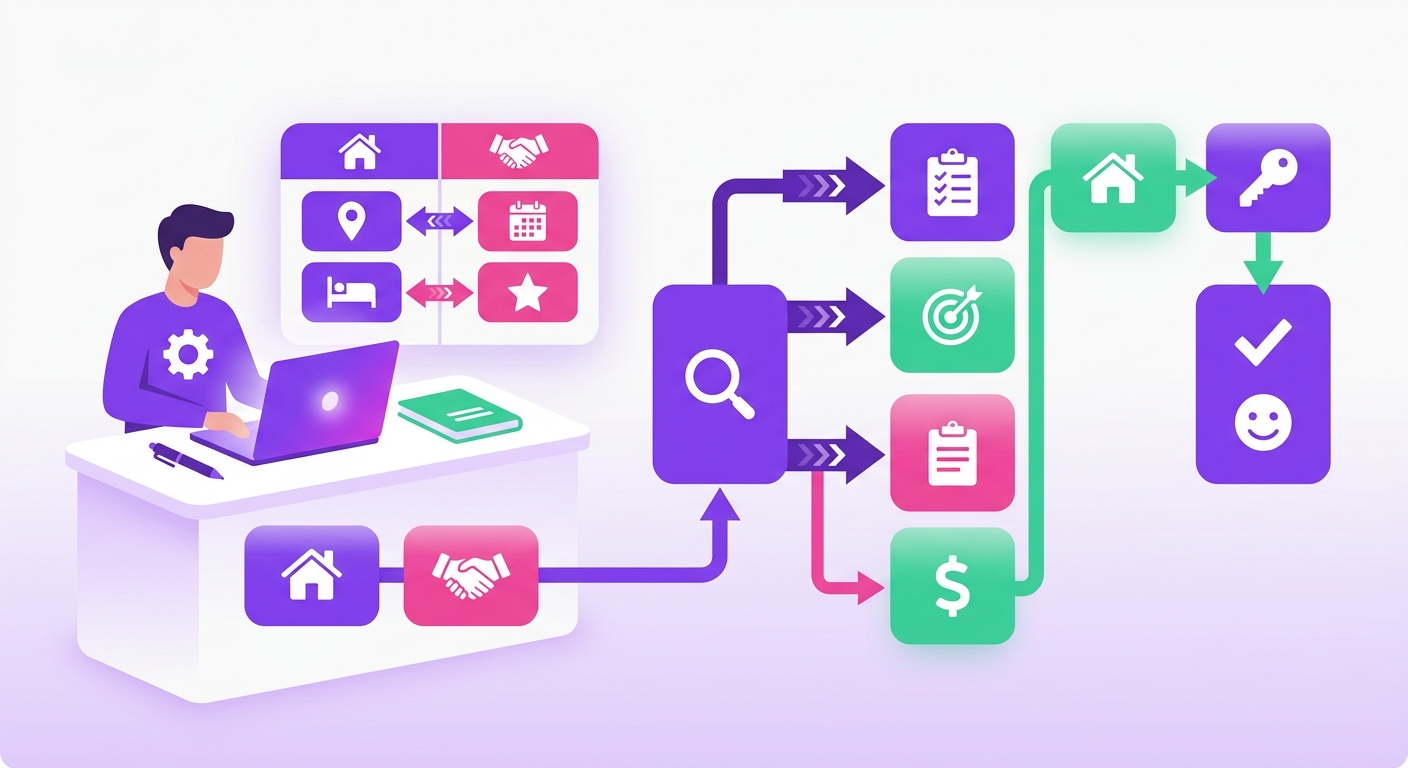
Steps to Start Investing in Property Without Buying Blind

Most acquisition checklists stop at financing and inspection, skipping the operational layer where STR purchases fall apart after closing.
Define your buy box. Set hard limits on property type, bedroom count, drive time to your cleaner, and minimum projected ADR. A 3-bed house at $150/night with 70% occupancy produces roughly $38,000 gross annually. Know your floor before you look at a single listing.
Screen the market for permit viability. Before running any numbers, confirm the city allows short-term rentals and whether a permit is capped, lottery-based, or open. City-specific rules vary sharply; local STR regulation guides cover Miami and Lisbon in detail.
Run underwriting with STR inputs. Use actual channel data from Airbnb, Vrbo, and Booking.com for comparable ADR and occupancy. Factor in a $45 cleaning fee pass-through and a 3% channel commission on top of the platform fee.
Inspect for turnover wear. STR guests cycle every 2–4 days, degrading carpet, HVAC filters, and door hardware faster than long-term rentals. Budget 1.5x the standard maintenance reserve.
Verify smart lock and internet feasibility. Cellular deadbolts need a reliable signal; thick concrete walls or rural dead zones may require a Wi-Fi bridge. Confirm this before making an offer.
Make the offer with STR contingencies. Include a permit-transfer or new-permit-approval contingency where local rules require it; some municipalities don't allow transfers at all.
Plan your launch cadence. Run a 30-day soft launch on one platform before going live on all three to build reviews without exposing a half-finished listing to your full audience.
Deal Math That Actually Matters
Most rental property analysis stops at gross revenue. That's where bad deals get made.
Gross revenue is just ADR × booked nights. Everything after that, platform fees, mortgage, insurance, utilities, cleaning, reserves, is where the actual return lives or dies. You need to run fixed costs and variable costs separately, because they behave differently when occupancy rates drop.
Fixed costs: mortgage, insurance, property tax, HOA, internet
Variable costs: platform fees (typically 3% host fee on Airbnb), cleaning supplies, restocking, and minor repairs
Reserves: budget 1–1.5% of purchase price annually for capital expenditure
Everything You Need for Your Rental Property Books
Set up a dedicated bank account the day you close, not after your first booking. Mixing rental income with personal funds creates a reconciliation nightmare at tax time and muddies your actual cash-on-cash return.
Your chart of accounts needs four core categories from the start: income (rental, cleaning fees), operating expenses (supplies, platform fees, utilities), repairs and maintenance, and owner draws.
The split between capital expenditures and repairs matters more than most new owners expect. A new HVAC unit is a depreciable asset; replacing a broken faucet is a deductible repair.
Cleaning fees deserve specific treatment. If you collect them from guests and pay a cleaner directly, both the income and the expense hit your books; don't net them out.
Capture every receipt digitally at the point of purchase
Log owner draws as equity withdrawals
Track mileage for property visits from day one
Understanding Property Investment for STR Operators
Buy-and-hold works differently when your tenant turns over every 3.2 nights (the U.S. STR average in 2025).
Anyone researching how to buy their first rental property as a short-term rental needs to understand this distinction early. The income potential is real, but so is the operational complexity.
Long-term rentals give you predictable income and low operational load. Mid-term rentals (30-90 days) cut turnover costs but reduce upside on rates.
STR platforms offer the highest revenue ceiling and the highest variance; a single regulation change or a slow January can swing annual income by 25%.
Regulation risk is the variable most buyers ignore. Cities including Phoenix, Nashville, and Denver have tightened STR permits since 2023. Buying in a market without a clear permit pathway is a speculative bet, not a rental investment.
Market Selection and Demand Checks
For STR operators, location analysis has to go deeper than average rents and vacancy rates.
What Competitors Cover and What They Miss
Standard real estate resources focus on city-level metrics that don't tell you whether your specific unit will turn over profitably. The filters that actually matter for short-term rental acquisition are:
Cleaning radius: If your nearest reliable cleaner is 45+ minutes away, both turnover cost and cancellation risk rise.
Parking friction: One dedicated space can justify a significant ADR premium in dense markets.
HOA enforcement history: Pull meeting minutes, not just the bylaws.
Guest mix: Occupancy patterns, damage rates, and minimum-stay viability all shift with your property's surrounding demand drivers.
Confirm the local ordinance directly; Airbnb market pages lag by months.
Numbers to Validate Before You Buy
Use trailing 12-month data and forward-looking demand signals to avoid comps skewed by single strong weekends.
A realistic underwriting baseline looks like this: $150 ADR, 75% peak-season occupancy, 52% annual occupancy, $45 cleaning pass-through, 2.3 average guests per booking.
Model a 15% reserve against slow months; new listings in a submarket can drop occupancy 8–12 percentage points within 18 months of a demand spike.
Property Types That Work Best for Airbnb and Vrbo
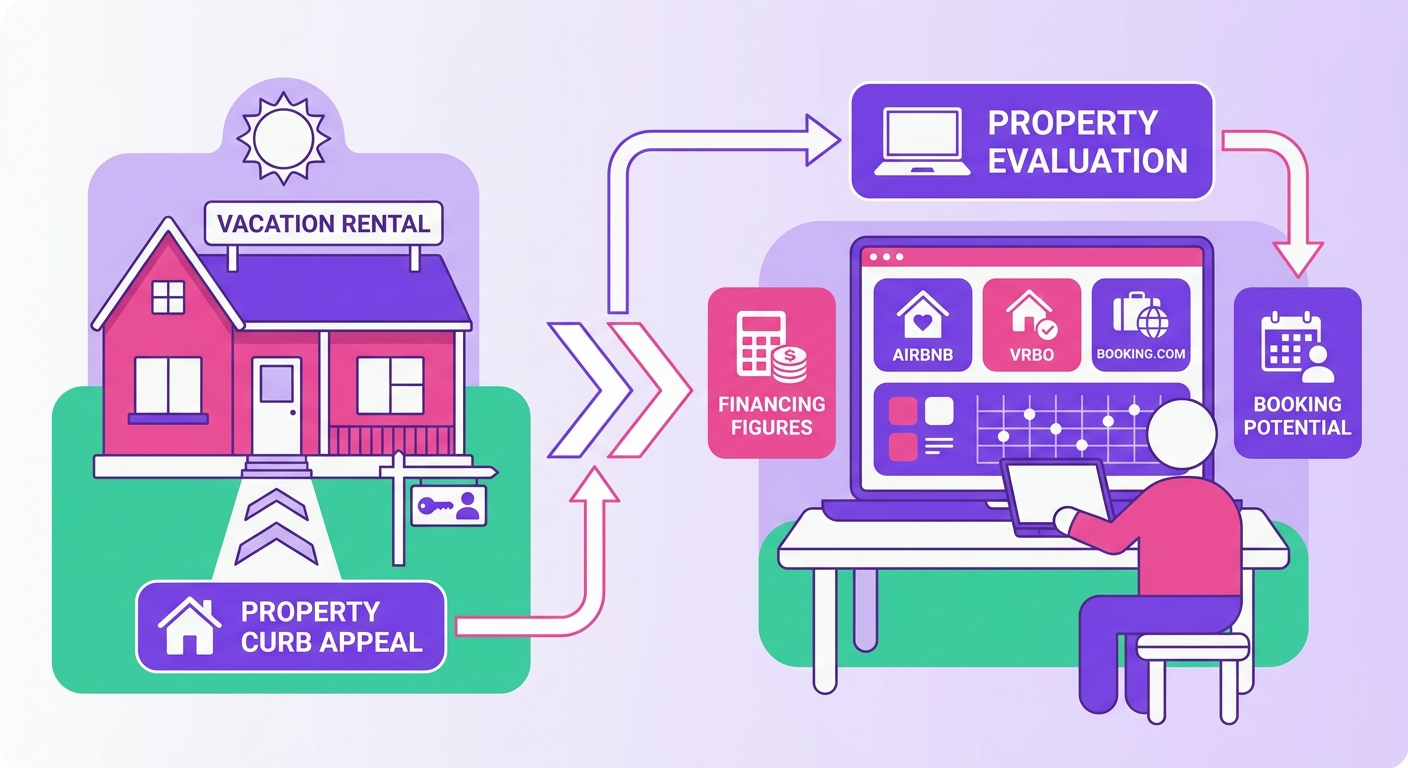
Property type isn't just a preference; it directly controls your cleaning schedule, noise exposure, maintenance budget, and the amount of friction you'll face from neighbors or HOAs.
Advantages and Disadvantages of Each STR-friendly Property Type
Condos: Exterior maintenance disappears, but HOA rules can ban STRs outright or cap rental nights to 90 per year. Verify the CC&Rs before closing, not after.
Single-family homes: Maximum guest flexibility and no shared-wall noise complaints, but every HVAC failure, roof repair, and landscaping bill lands on you alone. Capex reserves of 1–2% of property value annually are non-negotiable.
Small multifamily (2–4 units): Noise conflicts between guests and tenants are real and harder to manage than most operators expect.
Mixed-use properties: Commercial ground floors can create zoning complications that trigger STR permit denials in cities where residential-only licensing applies.
The detached single-family home wins on operational simplicity for most first-time STR buyers, no shared amenities, no HOA votes, no neighbor units to disturb at 2 a.m.
The trade-off is full capex exposure with no landlord to split costs with. At a $150/night ADR and 75% occupancy, a single-family property grosses roughly $41,000 annually before expenses, which gives you enough margin to absorb a $4,000–$6,000 capex year without going negative.
Condos can match that revenue, but one hostile HOA board can end
See What You Qualify for Before You Shop
Most buyers shop first and finance second. Your financing path determines which markets are viable, how much cash you need at close, and whether the property cash-flows, before you ever make an offer.
Debt-to-income (DTI) is the first gate. Conventional lenders cap total DTI at 45%, counting your existing housing payment, the new mortgage, and all other monthly obligations. If you're already carrying a primary mortgage and a car loan, that ceiling closes faster than most hosts expect.
Down payment ranges vary by loan type:
Conventional investment loans: 15–25% down, depending on unit count and credit score
DSCR loans: 20–25% down, no personal income verification required
Cash purchases: no financing friction, but ties up capital that could fund reserves or a second property
Lenders also want reserves, usually 6 months of PITI sitting in an account after close. Budget for this separately from your down payment.
Cash, Conventional, and DSCR Financing
Owner-operators with 1–10 units usually fit conventional loans best, rates are lower, and qualification is straightforward if your personal DTI is clean.
Once you're buying in an LLC or scaling past 10 doors, DSCR loans become the practical path because they don't count against your personal income.
Rate sensitivity is real. On a $300,000 loan at 7%, the monthly principal and interest run roughly $1,996; at 8%, that's $2,201, a $205 difference that requires approximately 1.5 additional booked nights per month at a $150/night ADR just to hold break-even occupancy. A single point matters.
Common Mistakes and the Bottom Line
Most STR acquisition failures trace back to five specific errors, not bad luck, not bad markets.
Buying for appreciation only. Cash flow pays your mortgage now. Appreciation is a bonus, not a business plan. A property that loses $400/month while you wait for equity gains is a liability, not an investment.
Trusting seller projections. Pull your own AirDNA or Rabbu comps. Seller-supplied revenue estimates are almost always based on peak-season numbers applied to a full year.
Skipping compliance checks. A permit denial after closing can make a property completely unrentable as an STR. Check city rules before you make an offer, not after.
Ignoring cleaning logistics. A $150/night ADR property with no reliable cleaner within 30 minutes is operationally broken. Cleaning access determines your minimum stay, your turnaround speed, and your review scores.
The Deal That Works Is the One You Underwrote Correctly
Most STR acquisitions that underperform don't fail because the market turned or the property was wrong. They fail because one variable wasn't clear before closing.
Every filter in this guide exists for that reason. Permit research before the offer. Underwriting at 55% occupancy, not the 80% the listing agent shows you. Insurance quotes before closing week.
Run those in order, and the deal either pencils before you close or it doesn't. Finding out on paper costs you nothing. Finding out at month three costs you years.
Get started with Mr. Props today and run your acquisition numbers before you commit.
FAQs
How much money do I need to buy an STR property?
Beyond the down payment, 15–25% for a conventional investment loan; budget separately for furnishing ($8,000–$15,000 for a two-bedroom), STR insurance ($3,000–$6,000 annually), and six months of PITI in reserves after close.
Should I buy in an LLC or under my personal name?
For 1–10 units, conventional loans under your personal name typically offer lower rates and simpler qualification. Once you're scaling past 10 doors or want liability separation, an LLC combined with a DSCR loan becomes the practical path.
How do I confirm a property is legal to use as an STR?
Contact the municipality directly. Check whether permits are capped, lottery-based, or open, and whether they transfer with the property or require a new application after closing.
What occupancy rate should I use when underwriting a potential STR?
Model at 55–60% annual occupancy as your baseline, not the 75–80% peak-season figure most seller projections use. Build a 15% reserve against slow months and stress-test the deal at 50% before committing. If it doesn't cash-flow at 55%, the upside scenario doesn't save it.
What property type works best for a first STR?
A detached single-family home offers the most operational simplicity. The tradeoff is full capex exposure, so a 1–2% of purchase price annual reserve is non-negotiable. Condos can match the revenue but carry HOA risk that can end the STR use entirely.