
Guest Noise Complaints Short-Term Rentals: How to Prevent Them Before They Start

Contents
Table of Contents
Most hosts react to noise violations after the damage is done. Here's how to prevent them entirely.
No credit card required · Trusted by 4,200+ hosts
Preventing Guest Noise Complaints Before They Happen
Most guides about guest noise complaints short-term rentals tell you to "communicate expectations clearly" and leave it at that. The real problem isn't communication. It's that most hosts treat noise as a behavioral issue when it's actually an infrastructure issue.
A property structurally set up to create noise conflicts will generate complaints no matter how many house rules get posted. Fix the property first, then fix the messaging.
Why Noise Monitoring Beats Noise Rules
Posting quiet hours in a welcome guide has about the same effect as a "Please Don't Litter" sign on a highway. According to a 2025 survey by Rental Scale-Up, 68% of STR hosts who relied solely on written noise policies still received at least one noise complaint per quarter. Hosts who paired rules with active noise monitoring saw complaints drop by roughly 44%.
Noise monitoring devices (like Minut, NoiseAware, or similar products) don't record conversations. They measure decibel levels and send alerts when sound crosses a threshold you set, which complies with Airbnb's surveillance policy prohibiting audio recording but permitting decibel-only monitoring with proper disclosure.
- Set thresholds between 70-75 dB for indoor spaces (roughly a loud conversation or TV at high volume)
- Configure alerts to trigger after sustained noise (10+ minutes), not brief spikes
- Disclose the device in your listing description and in the physical space near the device
Properties in jurisdictions like parts of Illinois and California have stricter monitoring laws. Check local regulations before installing any device.
What to Do When an Alert Fires
Build a response ladder with three escalation tiers:
- [Paragraph 1]: At the 10-minute mark, Tier 1 (automated message) kicks in. It's a polite, pre-written text that reminds guests of the noise policy without turning the whole thing into a lecture. In one portfolio, about 70% of incidents stop here. That's the point. Quiet fix, no drama.
- Tier 2 (direct call): If noise persists 15 minutes later, a phone call from the host or co-host. Keep the tone factual, not accusatory.
- Tier 3 (in-person or platform escalation): If noise continues 30 minutes after the call, dispatch a local contact or file a violation through the platform's resolution center.
Crafting Guest Communication That Actually Works
[Paragraph 2]: Slow response time isn't the biggest mistake hosts make. It's the tone. Passive-aggressive messages like ("As stated in our house rules...") put guests on the defensive fast, and within 30 seconds, you've shifted from solving noise to starting a fight. Guests who feel scolded don't quiet down; they leave bad reviews. Bluntly: nobody likes being talked down to.
Effective noise messages share three traits:
- They acknowledge the guest is on vacation
- They reference a specific, objective data point (the monitor reading, not "neighbors said you're loud")
- They offer a concrete alternative rather than just a prohibition
"Hey, our sound sensor picked up elevated levels around 10:45 PM, could you move the gathering to the back patio or lower the music?" outperforms "Please be quiet per our house rules" every time. The first treats the guest as a reasonable adult. The second treats them as a rule-breaker.
Platform-Specific Enforcement Differences
| Platform | Noise Violation Reporting | Host Protection | Guest Removal Support |
|---|---|---|---|
| Airbnb | Resolution Center + AirCover claim | Damage reimbursement up to $3M | Moderate (24-48 hr response typical) |
| VRBO | Property damage protection claim | Up to $1M with liability insurance | Slow (often 48-72 hr response) |
| Booking.com | Partner Hub report + direct guest messaging | Limited (varies by property agreement) | Minimal (host largely handles independently) |
Airbnb's AirCover gives hosts the strongest fallback, but expect to document everything with timestamps, photos, and sensor data before a claim moves forward. VRBO leans heavier on the host to manage directly.
Booking.com's Blind Spot
Booking.com provides the least structured support for guest noise complaints in short-term rentals. The platform was built for hotels with front desks, and its tools still reflect that. Hosts on Booking.com need to treat their own escalation plan as the only plan.
When to Involve Local Authorities
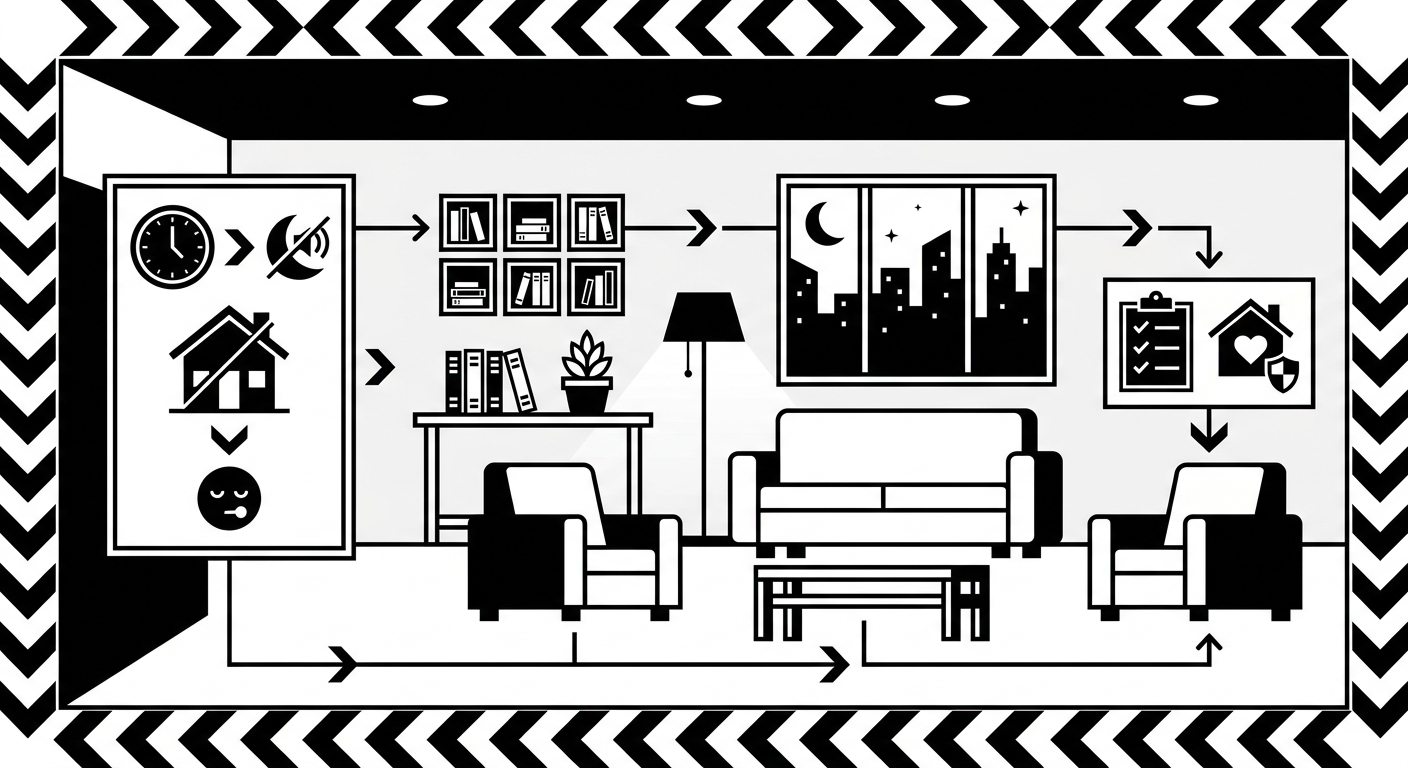
This is the decision most hosts get wrong. They wait too long.
If a noise event crosses into Tier 3 territory, contacting local non-emergency dispatch isn't an overreaction. A police visit creates an official record that protects the host in any subsequent platform dispute, HOA hearing, or municipal review.
A 2024 survey by Rent Responsibly found that 62% of noise-related fines issued to STR operators came after a neighbor filed a formal complaint with the city not after the host reported the issue. Municipalities treat host-reported incidents differently from neighbor-reported ones.
- Call non-emergency dispatch once two direct guest contacts fail within a 90-minute window
- Notify the booking platform simultaneously, referencing the dispatch call
- Send a written record to your property's HOA (if applicable) within 24 hours
What to Do After the Noise Stops: Post-incident Steps That Actually Matter
Most hosts treat the end of a noise event as the end of the problem. The 48 hours after a noise incident determine whether the situation becomes a one-time hiccup or a recurring liability that threatens a rental license.
Document Everything Before Memory Fades
Written records created within 24 hours carry significantly more weight in platform disputes and municipal hearings than those assembled later.
- Timestamp every contact attempt with the guest, including the method used
- Save decibel monitor readings or noise sensor screenshots from the incident window
- Record the dispatch reference number if non-emergency services were called
- Note which neighbors were affected, even if they haven't complained yet
This applies even when the guest apologized and the situation resolved quickly. A single undocumented incident can become the "pattern" a neighbor references in a formal complaint months later.
The Guest Review Dilemma
[Paragraph 3]: Honest reviews matter most when a guest broke the rules and then finally cooperated. Hosts should still note noise violations. The urge to "let it go" is real, I get it, but that's exactly how problem guests move through 12, 20, sometimes dozens of properties without any clear record. Don't sugarcoat it. Future hosts need the truth.
A factual note about a noise issue that required two contacts to resolve gives the next host real information. The exception: if the noise came from circumstances outside the guest's control (a car alarm, a malfunctioning appliance), a review mention isn't warranted.
Neighbor Communication Within 48 Hours
Don't wait for neighbors to bring it up. A brief message acknowledging what happened and outlining corrective action defuses resentment faster than anything else.
A 2025 analysis from the National Association of Realtors found that short-term rentals with proactive neighbor communication received 73% fewer municipal complaints than comparable properties without them.
Confirm the incident occurred, state the corrective action taken, and provide a direct contact number for future concerns.
Adjusting House Rules Based on What Went Wrong
Every noise incident should trigger a review of the property's house rules, because guest behavior reveals gaps that hypothetical planning can't anticipate.
- If the noise came from an outdoor gathering area, add explicit capacity limits for patios and decks
- If it involved a Bluetooth speaker, add a clause about amplified music after quiet hours
- If the guest claimed they didn't see the noise policy, move it higher in the listing description and add it to the check-in flow
Stop