
How to Increase Airbnb Revenue: Proven Ways to Make Your Airbnb More Profitable
Contents
Table of Contents
If you're wondering how to make the most money from Airbnb, you're not alone. Thousands of hosts are actively looking for strategies on how to increase Airbnb revenue and turn their listings into consistent income streams.
Whether you're just starting or looking to improve an existing property, understanding how to make your Airbnb more profitable comes down to a combination of smart pricing, standout presentation, and exceptional guest experiences.
Methods That Increase Your Airbnb Revenue
Most listing advice focuses on vague "optimization", better photos, more amenities, and five-star reviews. The real lever is conversion rate: what percentage of guests who view your listing actually book it.
Fix the First-screen Listing Assets
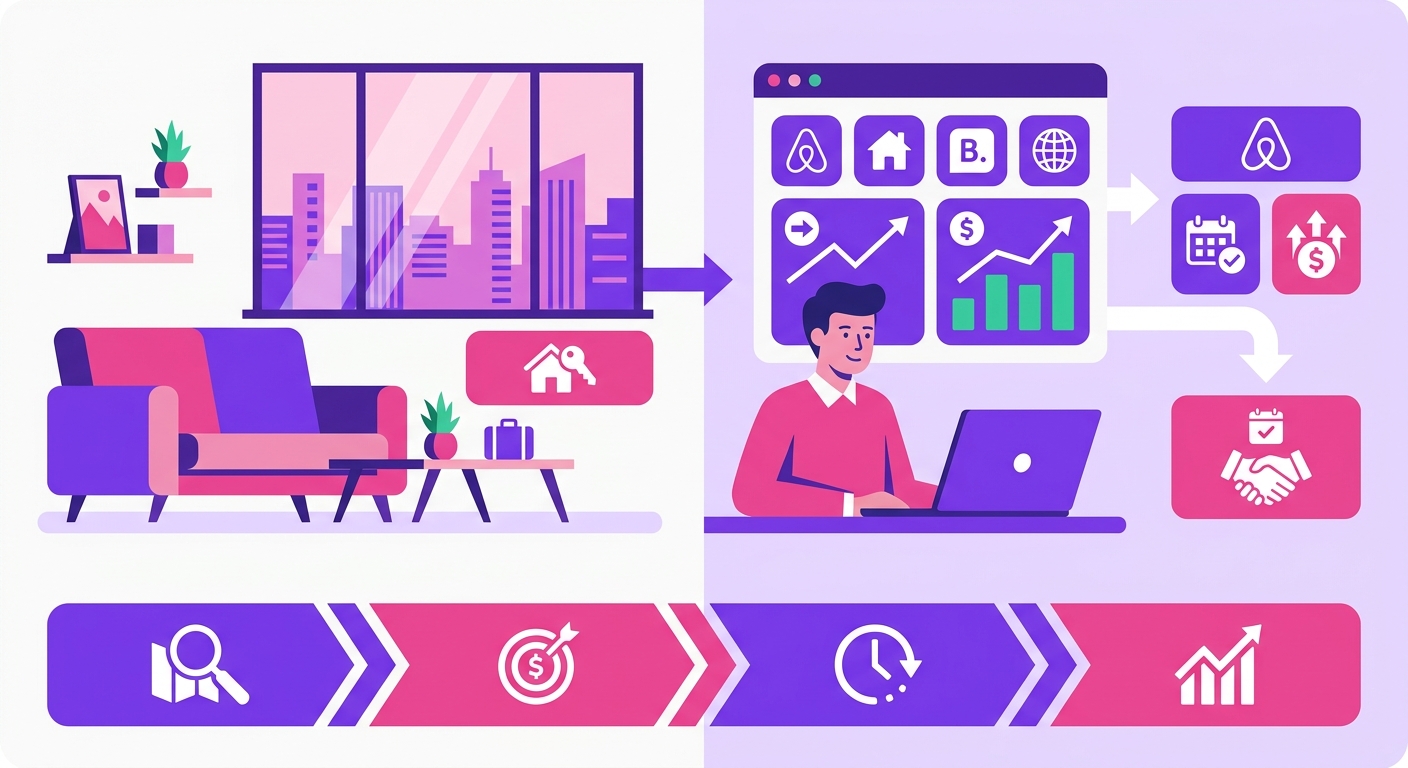
Your title and first five photos are the only assets most guests see before clicking away. "Hot Tub · Free Parking · 10 min to Downtown · Sleeps 6" answers the four questions that drive bookings, "Cozy retreat" answers none of them.
Photo one should show the exterior or highest-value amenity. Photos two through five need to confirm sleeping capacity: every bedroom and bed configuration, visible and labeled.
Reduce Booking Friction in Your Description and House Rules
Fee transparency matters more than most hosts expect. Guests who discover cleaning fees or extra-person charges at checkout abandon at significantly higher rates than guests who saw those numbers upfront.
State your cleaning fee and any add-ons in the first paragraph of your description.
House rules longer than 10 items correlate with lower instant-book rates. Cut anything you don't enforce.
Amenity Upgrades With Clear Payback Periods
Most hosts spend on amenities emotionally, not mathematically. Before any purchase, run one calculation: how many booked nights does this take to pay back at your current ADR?
Low-Cost Upgrades That Support Higher Review Scores
These items don't justify a rate increase alone, but they protect your review score, and a 4.85 versus a 4.70 can mean the difference between Superhost status and losing 20–30% of search visibility.
Blackout curtains ($80–$150 per room): Sleep complaints are a top review-killer. Fix this once.
Coffee setup ($120–$200): A proper grinder and quality beans cost less than one lost booking from a poor review.
Mattress upgrade ($400–$800): Payback at $150/night. ADR is 3–6 booked nights. Nothing else at that price point comes close.
The exception: desk ergonomics matter only if your listing targets remote workers. A $300 monitor arm won't move the needle for a beach property with 2.3-night average stays.
Big-Ticket Amenities That Justify a Rate Premium
A $9,000 hot tub needs roughly $30 more per night in ADR to pay back within three years, math that only works in markets with strong winter or shoulder-season demand.
A $1,200 patio refresh supporting $12 more ADR pays back in 100 booked nights, under six months at 65% occupancy.
A $4,000–$6,000 barrel sauna commands $25–$40 more per night in cold-weather mountain markets but sits idle in coastal summer markets and adds real maintenance overhead.
Turnover and Maintenance Systems That Stop Profit Leaks
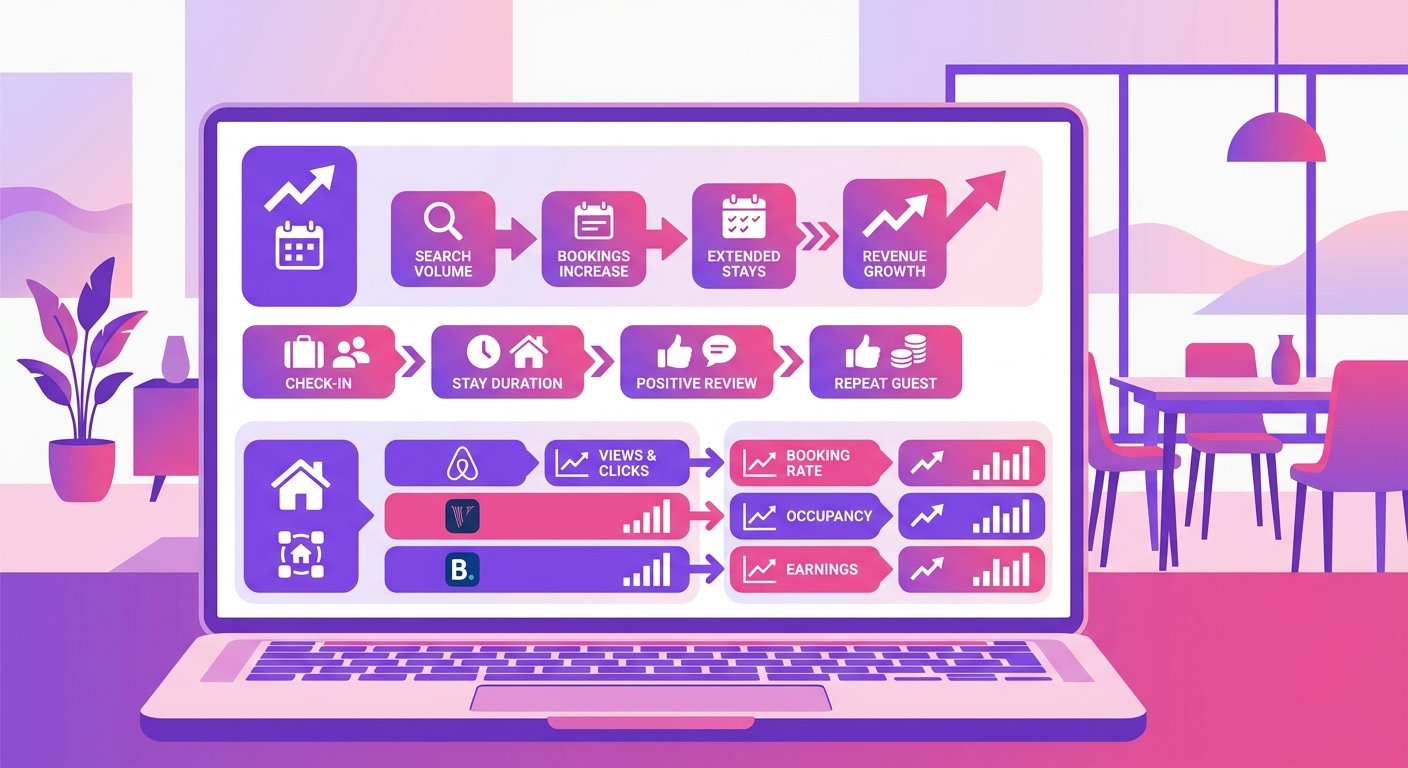
Most hosts focus on ADR and occupancy while operations quietly drain the margin. A single missed same-day turn costs you the full night's revenue, at a $150 ADR; that's more than a month's worth of gains from a $5 rate increase.
One emergency plumber call runs $250–$450 after hours. One refunded cleaning fee wipes out the profit on that booking entirely.
The fix isn't complicated. It's consistent execution across four systems:
Cleaner scorecards: Rate each turn on 5–8 checklist items. Hosts who track this catch repeat misses before a guest does.
Linen par levels: Three sets per bed minimum. Anything less and a same-day turn becomes a gamble.
Consumables controls: Set a per-stay budget (typically $8–$14 for a 2-bedroom) and restock in bulk monthly, not per booking.
Preventive maintenance schedule: HVAC filters every 90 days, water heater flush annually, and smoke detectors checked every 6 months. Reactive repairs cost 3–5x more than scheduled ones.
Channel Mix and Stay Restrictions That Improve Yield
Each channel attracts a different booking profile, and your availability rules should reflect that.
Vrbo skews toward families booking 60–90 days out with longer stays. Booking.com pulls last-minute leisure and international travelers. Airbnb sits in the middle, with flexible lead times, shorter stays, and higher price sensitivity. Open all three channels only if your calendar management can handle the load without double-booking risk.
If you're running iCal sync rather than a proper channel manager, hold Booking.com until you can update availability within 30 minutes of a booking.
Match Cancellation Rules to Booking Window
On Booking.com, where 40% of reservations land inside 14 days, a strict policy suppresses conversion, runs moderate or flexible there, and is strict on Vrbo.
Use LOS Rules to Fill Gaps Without Discounting Prime Nights
Drop your weekday minimum to 1 night, Tuesday through Thursday only, and keep a 3-night floor on Friday and Saturday arrivals. Minimum-stay rules have more impact on gap-night fill than a 10% price cut.
Guest Experience Moves That Create Repeatable Pricing Power
A listing moving from a 4.72 to a 4.87 average rating isn't a vanity improvement. At a $150/night ADR, that shift supports a 6–9% reduction in discount requests from guests negotiating on perceived risk. Better ratings convert browsers into bookers without dropping price.
The operational levers are specific. Response time under one hour is the floor, not because Airbnb rewards it symbolically, but because slow responses trigger pre-arrival anxiety that spirals into bad reviews.
Pre-arrival messaging must be accurate, not just friendly: wrong door codes, outdated parking instructions, and missing WiFi details account for roughly 40% of avoidable 1-star mentions.
Ancillary Revenue That Does Not Hurt Reviews
Most add-on fee strategies fail because they're designed around what the host wants to charge, not what the guest expects to pay. The ones that work share a single trait: the guest sees the value before they decide.
Early check-in and late checkout are the cleanest upsells available. At $35 per request with a 20% take rate across 40 monthly bookings, that's $280 in monthly margin from guests who were already happy to pay.
No extra labor if your cleaner's schedule accommodates it. (The 20% take rate is conservative; hosts in high-demand urban markets report 30–40% uptake when the option appears clearly at booking.)
Other add-ons that convert without friction:
Pet fees: $50–$75 flat per stay covers cleaning and reduces damage risk
Mid-stay cleans for stays over five nights, priced at 60–80% of your standard cleaning fee
Parking passes where street parking is genuinely scarce
Avoid bundled "welcome packages" guests didn't request. Surprise charges on checkout summaries are the fastest path to a 4-star review from an otherwise satisfied guest. Every fee should appear on the listing before the guest books, no exceptions.
Pricing Cadence That Lifts ADR Without Killing Occupancy
Hearing "just use active pricing" is the most common and laziest advice you'll get. That's not a strategy. It's just a software subscription to a tool like PriceLabs, which won't do you any good if your core numbers are wrong from the start.
The real work happens in how you structure your rate tiers before any algorithm ever touches them.
Run a weekly pricing review covering the next 90 days: gaps, competing listings' rate moves, and newly announced local events. A single overlooked festival weekend leaves $300–$500 on the table per unit.
Set Floor, Base, and Ceiling Rates by Season
Your rate tiers are about setting non-negotiable boundaries for your business. Your floor rate is the absolute minimum you'll accept; don't ever dip below it, not even for a desperate Tuesday night booking.
Your base rate is your standard price for a normal mid-season week, while your ceiling is the premium you can command during a huge event like the Super Bowl. Stick to them.
Set day-of-week floors: weekends support 20–35% above weekday base
Build event ceilings at 1.5–2x base, confirmed by comparable listings in your market
Apply orphan-gap discounts on 1–2 night gaps at 10–15% below base to fill dead inventory
Use Minimum Stays to Protect Weekends and Holidays
A 2-night minimum on Friday and Saturday check-ins stops single-night bookings from blocking a full weekend at discounted rates.
Extend to 3 nights over holiday weekends, except in high business-travel markets where single-night bookings are core revenue and rigid minimums will hurt you.
A 30-day Revenue Improvement Plan
This plan sequences changes by impact-to-effort ratio so each week builds on the last.
Week 1, Pricing reset: Above 85% occupancy, raise base rates 15–20%; below 60%, cut minimum stay to 2 nights and test a 10% midweek discount.
Week 2, Listing and photo reorder: Move your strongest shot to position one and rewrite your first 150 characters around your top amenity.
Week 3, Turnover controls: Set checkout at least 4 hours before check-in to avoid costly, rushed turnovers.
Week 4, Add-on tests: Add one paid add-on and track uptake over 30 bookings before keeping it.
1-listing host: run all four weeks yourself before touching any software. 10-50 property managers: Delegate weeks 3 and 4 to your ops lead while you handle pricing and listing copy.
If you want pricing cadence, channel sync, and revenue reporting in a single workflow rather than three separate tools, that's the operational setup worth building toward before you scale.
Mr. Props' free calculators cover ADR benchmarking, cleaning cost per turn, and net margin by channel; the three figures most hosts don't have in one place. Get started in under five minutes.
FAQs
What's the fastest way to increase Airbnb revenue without adding a new property?
Fix your conversion rate before touching your price. Reorder your first five photos, rewrite your title around your top amenity, and add fee transparency to your description. Hosts who make these three changes typically see booking improvements within 14 days.
How much should I spend on amenity upgrades to increase revenue?
Run the payback calculation first: divide the cost by the ADR increase it supports, then divide by your occupancy rate to get the nights needed to break even. A $400 mattress upgrade paying back in 3–6 booked nights is a straightforward decision. A $9,000 hot tub requiring $30 more ADR to pay back in three years only makes sense in markets with strong shoulder-season demand.
Does a higher review score actually affect how much I earn?
Yes, directly. Moving from a 4.72 to a 4.87 average rating at a $150 ADR supports a 6–9% reduction in discount requests from guests negotiating on perceived risk. Below 4.7, Airbnb reduces your search exposure on competitive dates.
What add-on fees actually convert without hurting reviews?
Early check-in and late checkout are the cleanest upsells. Pet fees at $50–$75 flat and mid-stay cleans for stays over five nights work similarly. Avoid bundled welcome packages guests didn't request.
How often should I review my pricing?
Weekly, covering the next 90 days. A single overlooked festival weekend leaves $300–$500 per unit on the table. Check for gaps, competing listings' rate moves, and newly announced local events.