
How to Calculate Depreciation on Rental Property

Contents
Table of Contents
The IRS lets you deduct a portion of your rental property's value every single year, even while it appreciates. Most Airbnb, Vrbo, and Booking.com hosts leave this write-off on the table because the math looks intimidating.
Knowing how to calculate depreciation on rental property comes down to three inputs: your cost basis, the land value, and a 27.
Get those right, and you're looking at thousands of dollars in annual deductions that reduce your taxable rental income without spending a cent.
What Rental Property Depreciation Actually Does for STR Hosts
Depreciation is a tax deduction that lets you recover the cost of a rental building over time, not the land it sits on, which the IRS considers non-depreciable. Under MACRS, residential rental property depreciates over 27.5 years, starting the month it's placed in service as a rental.
Most STR operators track ADR and occupancy closely, but miss how this annual deduction reshapes their taxable income. A property earning $40,000 in gross rents might show a $7,000–$10,000 paper loss after depreciation, even when cash flow is positive. That gap is real money at tax time.
Tax Depreciation vs Market Value
These are separate systems, and conflating them is an expensive mistake. A mountain cabin purchased for $420,000 can appreciate to $500,000 in market value while still generating a depreciation deduction every single year.
The IRS doesn't care what Zillow says; it cares what the building cost when placed in service.
Why STR Operators Get Tripped Up
Four situations catch hosts off guard when figuring out how rental property depreciation works in practice:
Mixed personal use: Days you occupy the property reduce your deductible rental percentage proportionally.
Partial-year rental use: Only months the property was actively available as a rental count toward the depreciation schedule for that year.
Furniture vs building: Furnishings depreciate over 5 years, not 27.5, a meaningful difference for STR setups with heavy FF&E.
Improvements vs repairs: A new HVAC unit gets capitalized and depreciated; a refrigerant recharge gets expensed immediately.
The Real Estate Depreciation Formula You Actually Use
The formula has two steps. First, establish your depreciable basis. Second, divide it by 27.5. That's the annual deduction estimate for any residential rental property held under the standard straight-line method.
The full expression: Depreciable basis = (purchase price + eligible closing costs + capital improvements) - land value. Then: annual depreciation = depreciable basis ÷ 27.5.
A $400,000 acquisition with $8,000 in eligible closing costs, $12,000 in capital improvements, and $60,000 allocated to land gives you a depreciable basis of $360,000. Divide by 27.5 and you get roughly $13,090 per year. That's your planning number.
Step 1: Find Your Cost Basis
Your cost basis starts with the purchase price, then adds closing costs the IRS considers part of acquiring the asset. Eligible items include:
Title fees and title insurance
Recording fees and surveys
Transfer taxes (deductible in some states, added to basis in others)
Capital improvements made before or after the placed-in-service date
Loan origination fees, mortgage insurance, and prepaid hazard insurance don't belong here. They're financing costs, not acquisition costs, and mixing them in inflates your basis incorrectly.
Step 2: Remove Land Value
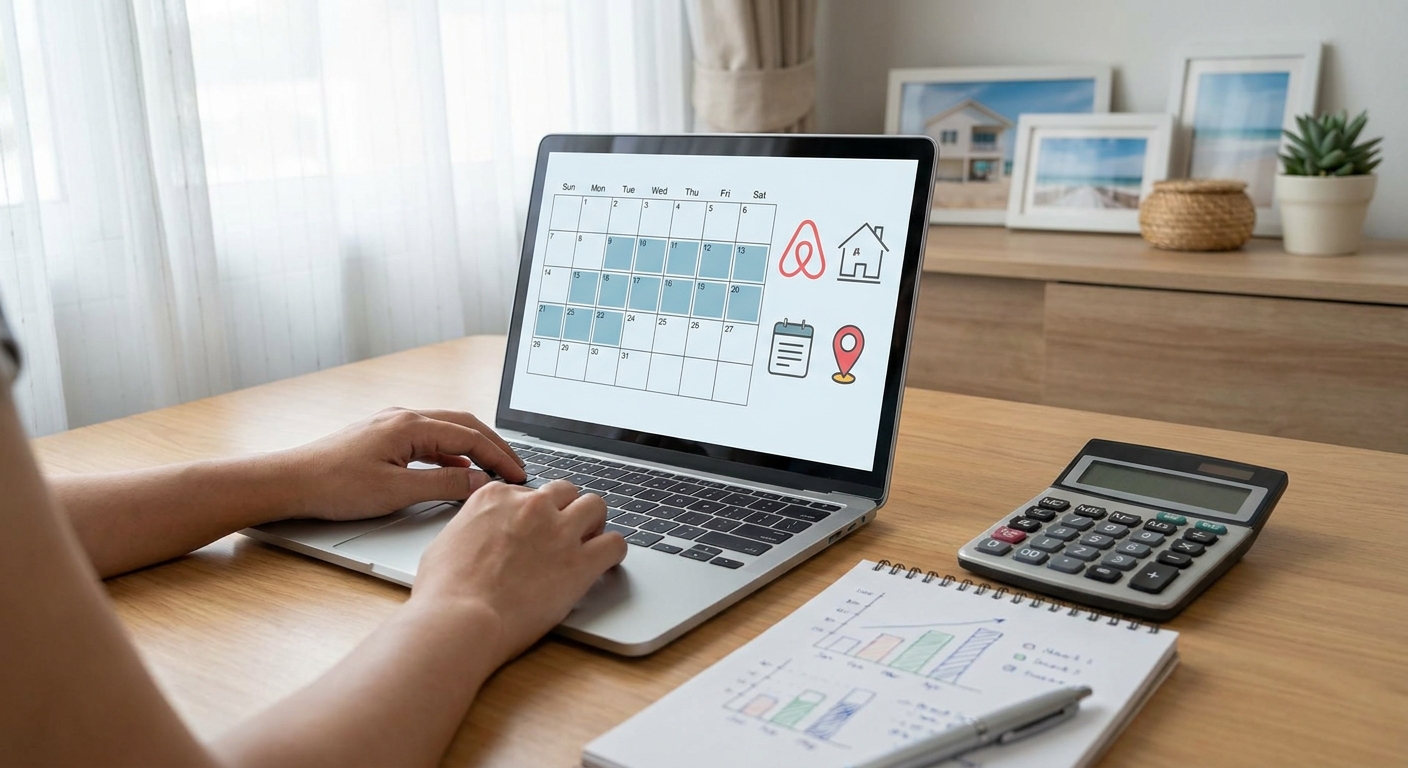
Land doesn't depreciate. Deducting 100% of your acquisition cost is one of the most common errors on STR tax returns. You need a defensible method to split the building from the land.
Let's crunch the numbers on a real deal. A host buys an Airbnb property for $500,000. Because the county assessor allocates 20% of the value to the land itself, the building's basis starts at $400,000, not the full purchase price.
Then you've got to add in $6,500 for closing costs and another $33,500 you spent on capital improvements, like that new high-efficiency HVAC system. The final total depreciable basis is $440,000. It's simple math, really.
Divide that by 27. Annual depreciation: $16,000.
Now set that against operating performance. At an ADR of $185 and 72% occupancy, gross booking revenue runs roughly $48,600 per year before cleaning passthroughs. That $16,000 deduction doesn't change a dollar of cash collected; it only reduces the taxable income figure your accountant reports.
Example: One-city Airbnb With Mixed Costs
Purchase price: $500,000, land portion ($100,000) excluded from depreciation
Building basis + closing costs + improvements: $400,000 + $6,500 + $33,500 = $440,000
Annual deduction: $440,000 ÷ 27.5 = $16,000
Furniture and appliances depreciate on a 5-year schedule; flooring typically runs 15 years
What Changes If You Placed It in Service Mid-year
The first-year deduction is almost always lower than $16,000. IRS tables use a mid-month convention for residential rentals, so a property placed in service in September yields roughly 4.5 months of depreciation, not 12.
Accounting software applies these tables automatically; you don't calculate each month manually, but you do need the exact service date on file.
Depreciation Schedule for Rental Property by Asset Type
Most guides treat depreciation as a single number. For a furnished STR, it's actually a stack of separate schedules running simultaneously, each with its own recovery period and annual deduction.
Building, Furniture, and Improvements Are Not One Bucket
The building structure itself depreciates over 27.5 years under residential real estate rules.
Movable furnishings, beds, sofas, smart TVs, and kitchen equipment are personal property and may qualify for shorter recovery periods under cost segregation or bonus depreciation rules.
The land underneath the property never depreciates, regardless of what it's worth.
Sample Schedule for a Furnished STR
Here's a directional example for a property with a $440,000 allocated building value:
Building: $440,000 ÷ 27.5 years = $16,000/year
Furniture package: $18,000 over a shorter recovery period (confirm class life with your tax pro)
Appliances: $6,000, also eligible for shorter-life treatment
New roof (improvement): $12,000 depreciated as a structural component
These figures are directional. Recovery periods for personal property items shift depending on whether bonus depreciation applies in your tax year. Confirm every class life with a qualified tax professional before filing.
When Depreciation Starts, Stops, and Gets Adjusted
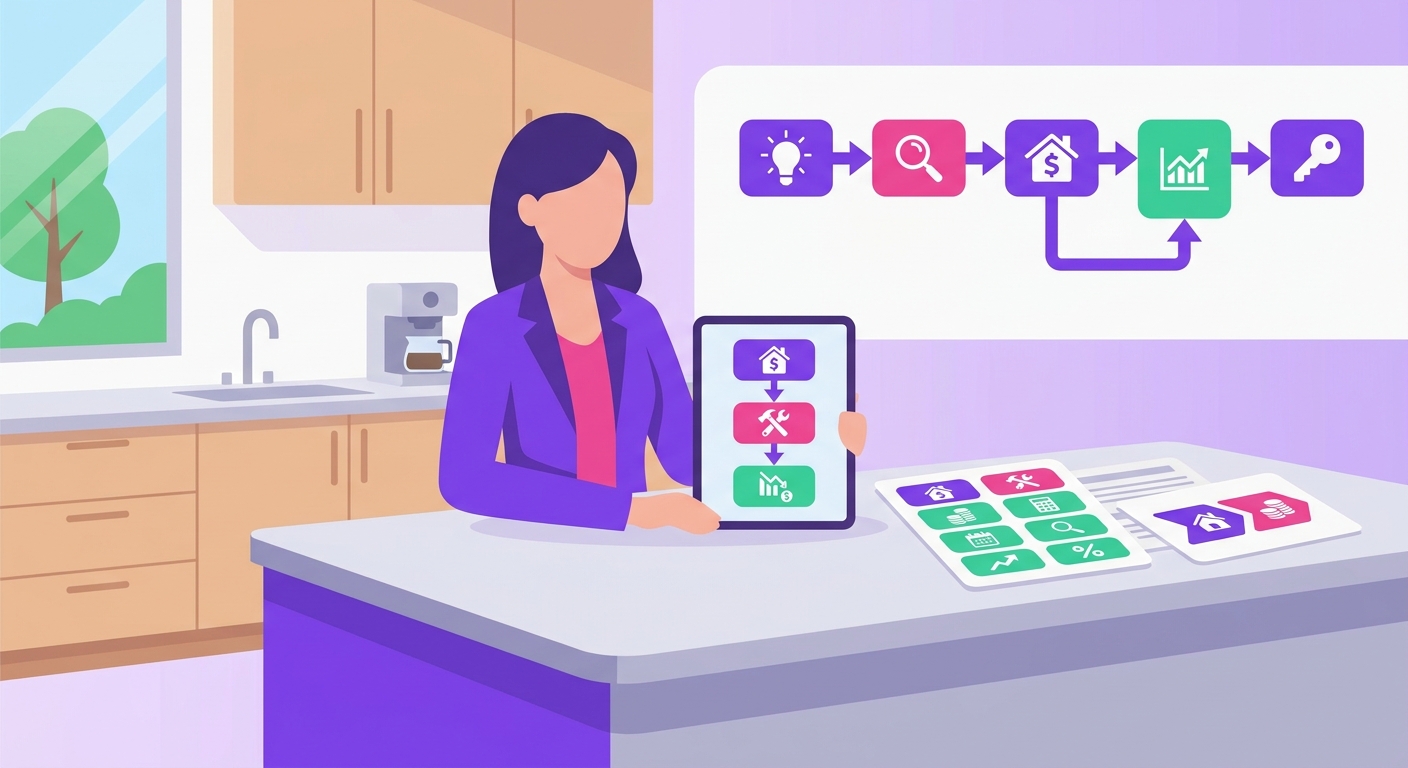
Closing day is not the start date. The IRS cares about one thing: when your property was placed in service, meaning ready and available to rent. That date can be weeks or months after you close.
For an STR, "ready and available" is concrete. Your listing is live on Airbnb or Vrbo, your permits are active, the locks are installed, cleaners are scheduled, and your calendar is open to bookings.
No guest has checked in yet. If all those conditions are met on September 15, depreciation starts September 15, regardless of whether your first booking arrives in October.
Placed in Service for Airbnb, Vrbo, and Booking.com Listings
Document the placed-in-service date carefully. A screenshot of your live listing with a timestamp, your first permit approval, or a signed cleaning contract can all support the date if the IRS ever questions it.
Depreciation stops when one of four things happens:
The property is fully depreciated (27.5 years for residential, 39 for commercial)
You sell or transfer ownership
You convert it entirely to personal use
You retire it from service (demolition, condemnation, or long-term vacancy with no rental intent)
The Mistakes That Cost Hosts Money
Four errors account for most depreciation mistakes STR hosts make, and each one either inflates your tax bill now or creates a painful surprise at sale.
Skipping depreciation because profit is low: The deduction reduces taxable income whether you're cash-flow positive or not. Leaving it unclaimed doesn't save it for later.
Repairs vs. improvements: A new roof is a capital improvement depreciated over 27.5 years; replacing three broken shingles is a repair deducted in full the same year. Conflating the two distorts both current deductions and your depreciation schedule.
Forgetting mixed-use periods: If the property was your primary residence before conversion to an STR, only the rental-period basis is depreciable. Your PMS or bookkeeping software won't calculate this split.
Why Not Claiming Depreciation Still Hurts
The IRS applies the "allowed or allowable" rule: at sale, recapture is calculated on depreciation you should have taken, even if you never claimed it. Skipping the deduction for five years doesn't reduce your recapture liability; it means you paid higher taxes during ownership and still owe recapture later.
Records, Forms, and Handoff to Your Tax Preparer
Your tax preparer can only work with what you hand them. Missing documents, especially for land allocation or capital improvements, are the single most common reason depreciation schedules get filed incorrectly in the first year.
Pull these before your appointment: the settlement statement (HUD-1 or Closing Disclosure) showing your purchase price, the county assessor's land-to-building ratio or a formal appraisal if you used one, all invoices for improvements added after purchase, and the exact placed-in-service date for each asset. If you've owned the property before, bring prior depreciation schedules too.
Your preparer will use this to complete Form 4562, which feeds directly into Schedule E. Those two forms are where your annual depreciation deduction becomes official.
Keep a running asset list for furnishings. Every new appliance, HVAC unit, or capital item you add mid-year belongs on it. Update your rental property asset depreciation timeline every time you add an asset, not once a year at tax time.
A Simple Decision Framework for Busy Hosts
Where you are right now determines what you do next.
Bought a property this year: Calculate your adjusted basis and get a land value estimate from your county assessor before year-end. Don't wait until tax season.
Renovated recently: Separate every repair from every capital improvement in your records now. Mixing them costs you deductions.
Filed without depreciation: Ask your CPA about filing IRS Form 3115 to catch up missed deductions in a single year.
Managing 10 or more units: Maintain one master asset register per property, updated every time you add an improvement or dispose of an asset.
Your rental property depreciation timeline isn't a year-end task. It's an ongoing record. The hosts who recover the most tax value are the ones who track basis and improvements in real time, not the ones who reconstruct everything from bank statements in April.
FAQs
Can you depreciate a property you purchased mid-year?
Yes. The IRS requires the mid-month convention in the year you place a residential rental in service, regardless of purchase date. Close in October and you get 2.5 months of depreciation, not a full year.
What happens to accumulated depreciation when you sell an STR?
The IRS recaptures it at a flat 25% rate under IRS Section 1250 rules, even if your ordinary income bracket is lower. Hosts who ignore recapture often face a tax bill at closing that wipes out a portion of their sale profit.
Does a cost segregation study affect how you calculate depreciation on a rental property for an STR specifically?
A cost segregation study reclassifies components like appliances, flooring, and fixtures into 5- or 7-year property classes instead of 27.5 years, front-loading deductions significantly. For STRs with heavy furnishings, the early-year savings can be substantial.
Can you depreciate a property used personally for part of the year?
Only the rental-use portion qualifies. If personal use exceeds 14 days or 10% of total rental days, the IRS treats it as a personal residence, and your depreciation deduction is prorated accordingly.
What if you never claimed depreciation on a rental you've owned for years?
You're still subject to recapture on the amount you should have claimed. File Form 3115 to catch up through a depreciation schedule correction rather than amending multiple prior returns.