
What is Shoulder Season?
Shoulder Season A shoulder season is the period between a property's peak demand window…
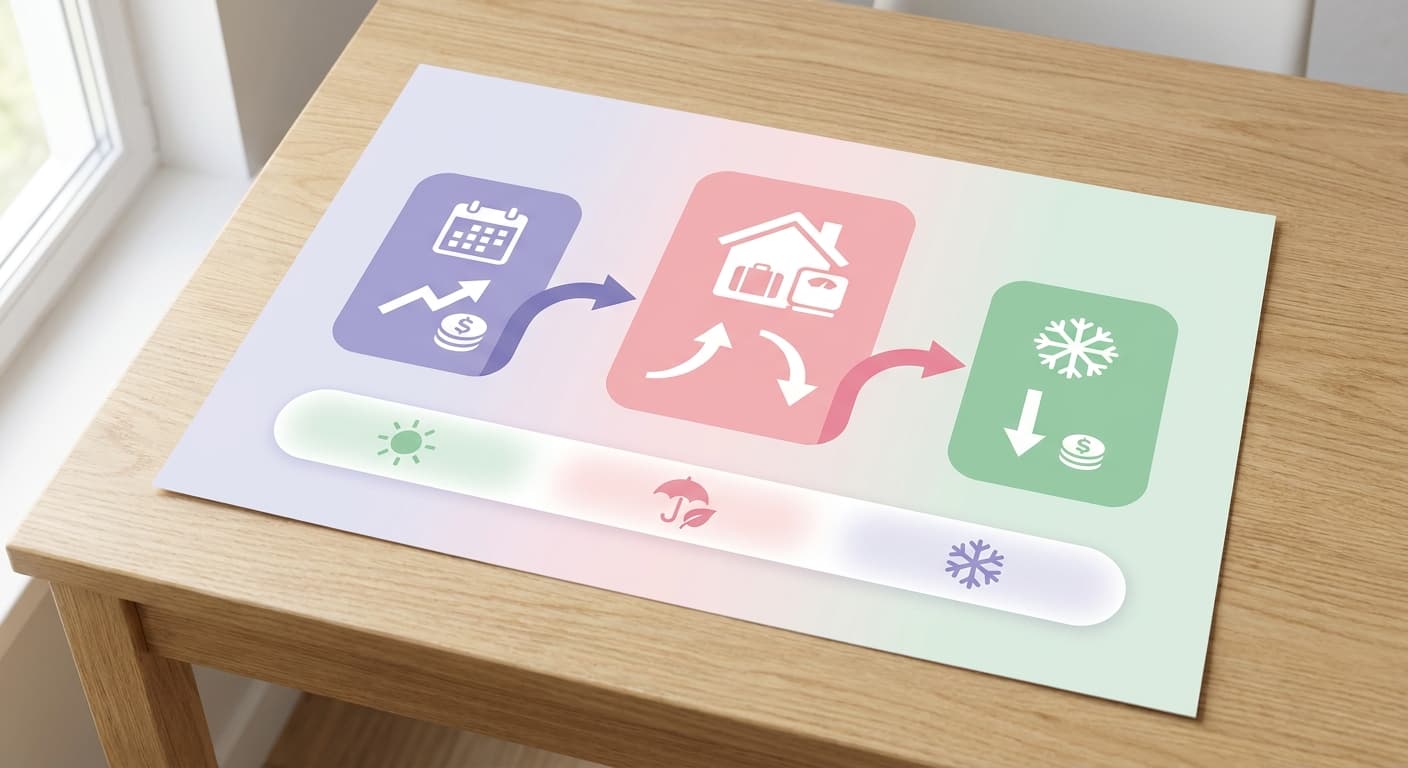
A shoulder season is the period between a property's peak demand window and its low-demand off-season when booking volume drops but doesn't collapse entirely.
To define shoulder season more precisely: it's the transitional window where traveler interest remains steady enough to sustain meaningful occupancy, just without the intensity of peak demand.
Hosts who understand it is, and how it differs from a true off-season, are better positioned to adjust pricing, target the right guests, and protect annual revenue.
Why Shoulder Season Matters for Your STR
That beach property booking for $220/night in July? It’s probably sitting at just $140/night in May. That’s an $80 nightly gap.
It's where most hosts either recover their entire season's margin or just hemorrhage cash, potentially losing over $2,400 in a single month.
Run the numbers: a 3-bedroom listing at $150/night with 65% occupancy across two shoulder months earns roughly $5,850.
Push occupancy to 80% through targeted minimum-stay adjustments and a $10 rate drop, and that same period generates $7,200. That's $1,350 recovered without touching peak season at all.
Shoulder Season at a Glance

The diagram maps the three-season cycle most STR listings run on, with real numbers attached to each phase.
A few things to read from this layout:
The shoulder period sits at roughly 70% of peak nightly rate but only 30% below peak occupancy, the gap is smaller than most hosts assume.
Off-season occupancy (around 40%) drops nearly 22 percentage points below the shoulder months figure of 62%.
The jump from shoulder to peak adds $55/night on average, which across a 30-day month at 88% occupancy equals roughly $1,450 in additional gross revenue.
When to Use This Season: Seasonal Guidance
Your pricing decisions during the shoulder months matter more than during peak or off-season. Peak sells itself. Off-season requires deep discounts. The shoulder period is where your margin strategy actually gets tested.
Two situations should trigger an active pricing review for your listing:
Demand is softening but hasn't collapsed. If your 60-day forward occupancy drops from 85% to 55%, you're entering shoulder territory, not off-season. A 10–15% rate reduction (say, from $210/night to $180/night) often recovers bookings without gutting revenue.
Local events are distorting the baseline. A festival or conference can create a false peak inside an otherwise soft shoulder period. Price those dates separately.
How Shoulder Season Affects Other Metrics

Shoulder periods create pressure across three numbers: ADR drops first, occupancy follows, and RevPAN compresses harder than either metric suggests alone.
A beach property earning $220/night at 85% peak occupancy might see ADR fall to $155 and occupancy drop to 58% in shoulder months. That's not a 30% ADR cut, it's a 51% RevPAN collapse, from $187 to $90 per available night.
Find Your Shoulder Season in Minutes
Mr. Props shows you exactly which weeks your listing drops below peak demand, so you can adjust your nightly rate before bookings stall.
No credit card required. Set up in under 10 minutes.