
What is Short Term Rental Listing Optimization?
Short Term Rental Listing Optimization Short-term rental listing optimization is the process of improving every element of…
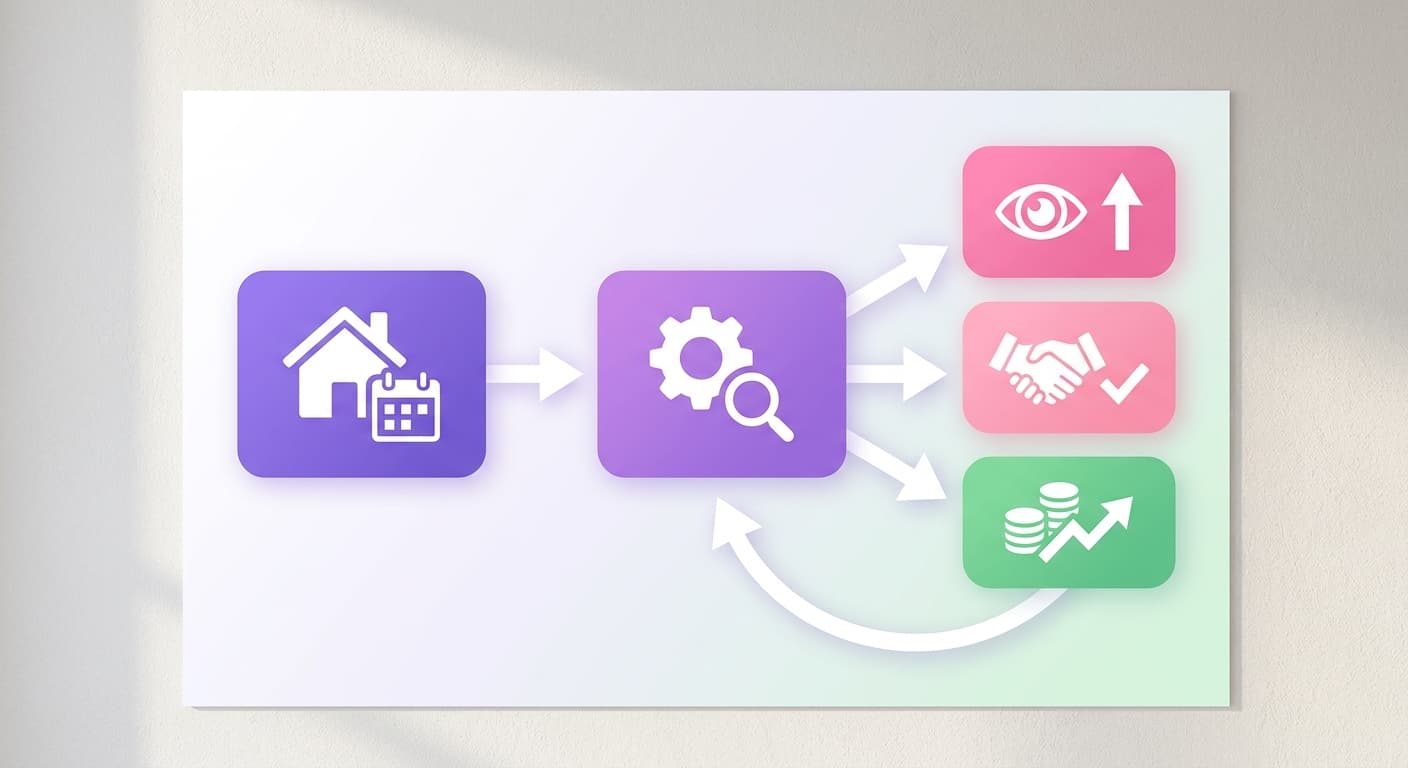
Short-term rental listing optimization is the process of improving every element of your Airbnb or Vrbo listing, title, photos, pricing, amenities, and guest reviews, so the platform ranks it higher in search results and converts more browsers into bookings.
A listing earning $150/night at 62% occupancy and a listing earning the same nightly rate at 81% occupancy can look identical on paper.
The difference is almost always execution: which photos lead, how the title is written, whether the amenity list matches what guests in that market actually filter for.
Why Short Term Rental Listing Optimization Matters for Your Bottom Line
A listing at 65% occupancy and $150/night generates $35,588 annually.
Push that to 78% occupancy through sharper photos, stronger copy, and accurate amenity details, and the same property earns $42,705, a $7,117 swing without touching your nightly rate.
Most hosts underestimate how much the listing itself drives that gap. Airbnb's algorithm weights conversion rate heavily, if guests click but don't book, your ranking drops, reducing impressions and compounding revenue loss.
The levers that matter most:
Nightly rate accuracy relative to local demand (a $10 underpricing error costs $3,650/year)
Photo quality and order, which determine whether guests stay past the first image
Amenity completeness, since missing a filter like "dedicated workspace" removes your listing from entire search segments
What Short-term Rental Listing Optimization Actually Looks Like
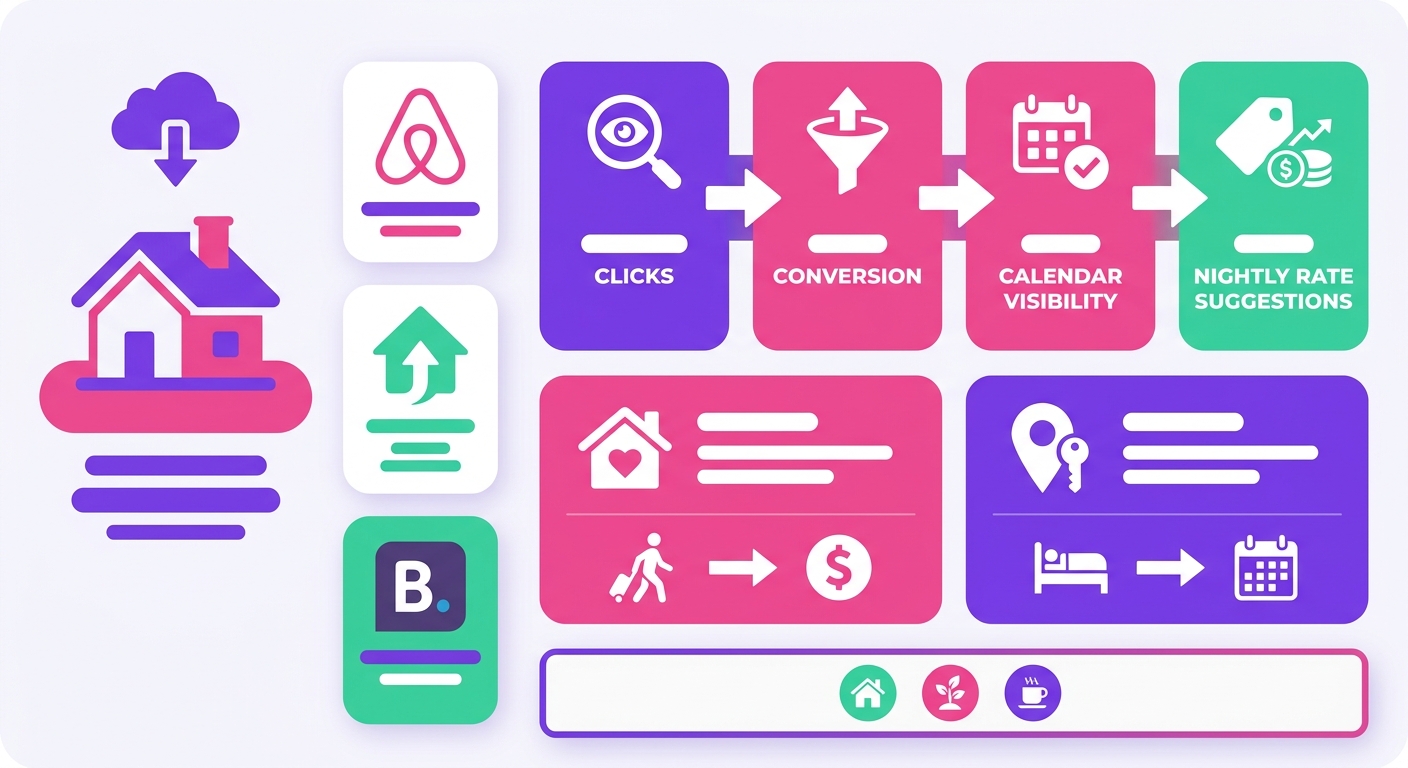
Most guides treat listing optimization as a checklist: add more photos, write a longer description, lower your price. That framing misses the point entirely.
It's the process of adjusting every guest-facing variable on your listing, title, photos, pricing, availability settings, and review signals, to increase both click-through rate and booking conversion.
A listing with a $150/night base rate and 68% occupancy probably isn't underperforming because the price is wrong.
It's far more likely that it's losing over 50% of its potential clicks on the search results page before a guest ever reads the description.
Or maybe it's getting clicks but not converting because the photo order leads with a dimly lit bathroom instead of the primary bedroom.
When to Use Short Term Rental Listing Optimization: Seasonal Guidance
Your listing needs different attention at different times of year. A beach property sitting at 60% occupancy in July isn't a pricing problem, it's a visibility problem, and the fix is timing your updates correctly.
60–90 days before peak season: Refresh your title, lead photo, and nightly rate. Airbnb's algorithm rewards recently edited listings with a temporary ranking boost, use it before demand spikes, not after.
During shoulder season: If your average nightly rate drops below $120 to chase bookings, your listing copy isn't doing enough work. Tighten your amenity descriptions and add specific local event callouts to justify holding rate.
After a slow month: Pull your last 30 days of conversion data. A click-through rate below 2.5% points to photos or pricing; a low booking rate despite clicks points to your description or reviews.
How Short Term Rental Listing Optimization Affects Other Metrics

Listing quality doesn't sit in isolation. It pulls on three numbers that determine whether your property actually makes money: occupancy rate, average daily rate (ADR), and RevPAN (revenue per available night).
A listing with weak photos and a vague title typically converts at 1–2% from search impressions. Fix both, and conversion rates closer to 3.5–5% are achievable on Airbnb without touching your price.
That occupancy lift, say, from 62% to 78%, directly raises RevPAN even if ADR stays flat at $150/night.
Find Your Listing Optimization Wins in Minutes
Run your listing through Mr. Props and get specific, numbers-backed fixes, from pricing gaps to photo order, without digging through competitor listings yourself.
Start Free Trial See a Sample Report
No credit card required. Results in under 3 minutes.