
What is Vacation Rental Noise Monitoring?
Vacation Rental Noise Monitoring Vacation rental noise monitoring is the practice of using decibel-sensing devices inside…
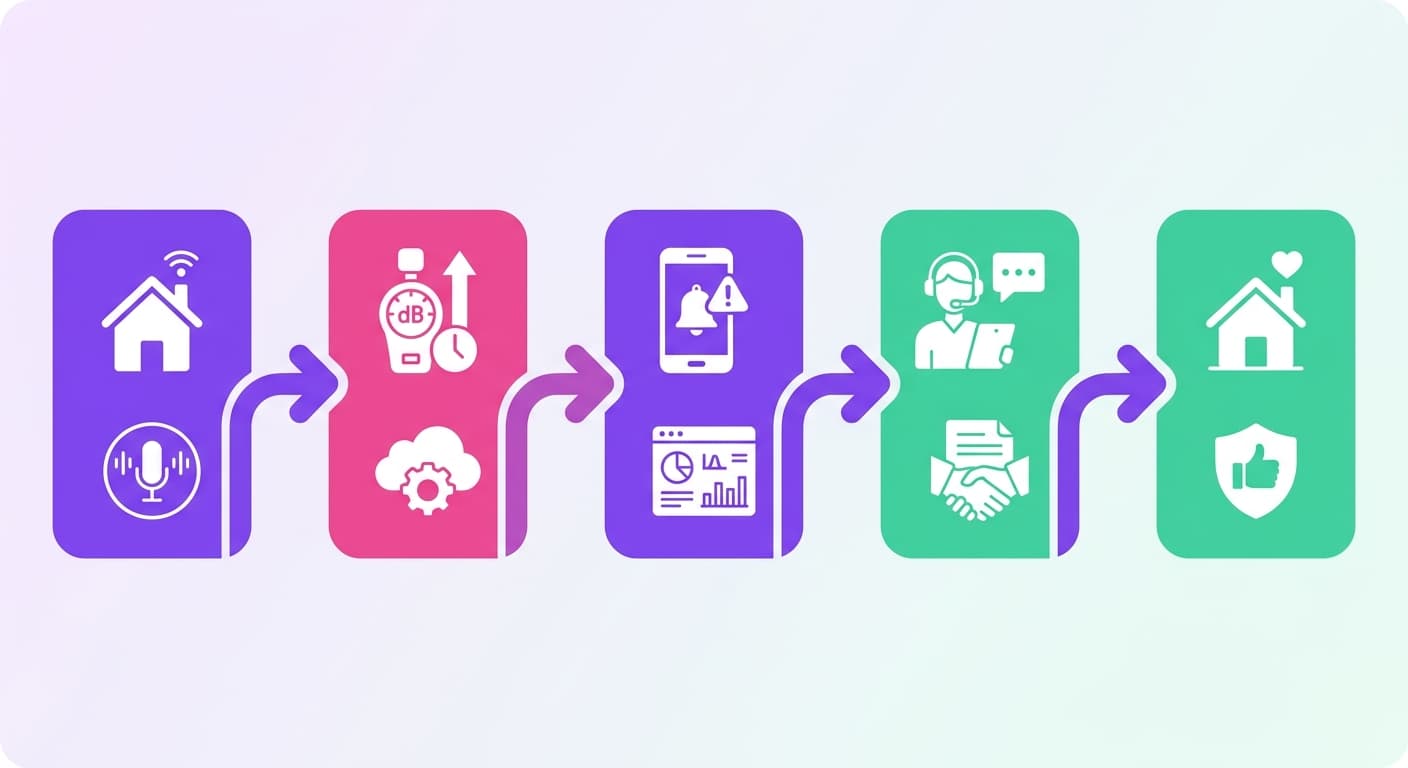
Vacation rental noise monitoring is the practice of using decibel-sensing devices inside or outside your property to detect sound levels in real time, alert you when noise crosses a set threshold, and give you documented evidence to act.
If you've ever wondered what is vacation rental noise monitoring and how it differs from a security camera or smart speaker, the answer comes down to one word: volume.
These devices don't record audio or capture conversations, they measure volume in decibels, the same unit your phone uses when you check ambient sound.
A reading above 80 dB at 1 a.m. tells you there's a problem without telling you what anyone said.
Why Vacation Rental Noise Monitoring Matters for Your Bottom Line
A single noise complaint can cost you more than one bad night.
Neighbors who escalate to your local STR licensing board can trigger fines of $500 to $2,500 per incident in cities like Austin and Nashville, and some municipalities will suspend your permit after two verified complaints.
The math on lost revenue is blunt. At $150/night with 75% occupancy your listing earns roughly $41,000 annually. A 30-day permit suspension wipes out $3,375 of that, before you account for refunds on existing bookings.
One Superhost demotion from a noise-related review spike typically drops booking conversion by 10–15%, costing another $4,000 to $6,000 per year.
How Vacation Rental Noise Monitoring Works in Practice
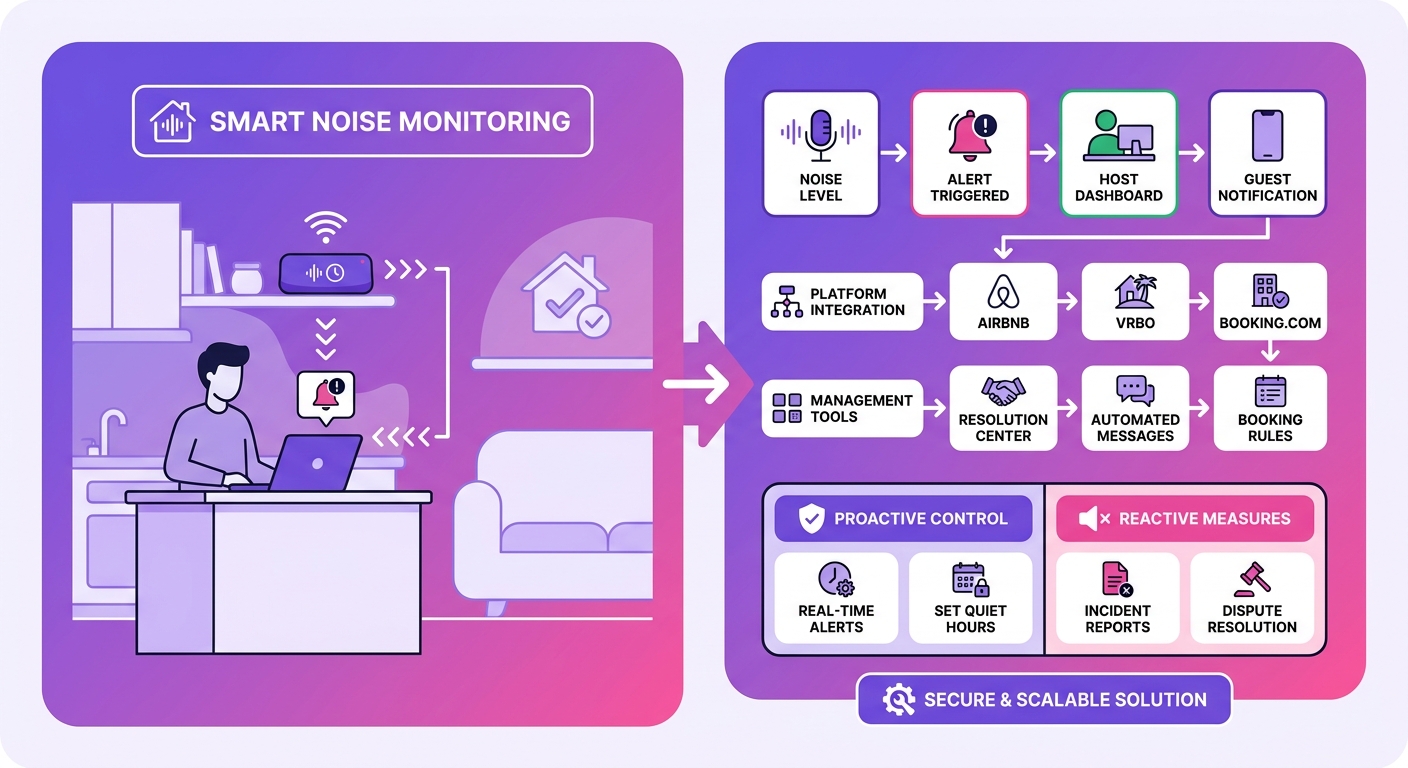
A decibel sensor installed in your listing takes continuous sound-level readings, typically every 30 to 60 seconds. It doesn't record audio.
It measures volume against a threshold you set, usually between 70 dB and 85 dB, depending on your property type and local ordinances.
When guests breach that threshold for a sustained period (most devices require 3 to 5 consecutive minutes before triggering an alert), the system sends you a text or push notification.
You then contact the guests directly. No recording, no eavesdropping, just a number on a screen.
When to Use Vacation Rental Noise Monitoring: Seasonal Guidance
Your Airbnb doesn't face the same noise risk in February that it does over Memorial Day weekend. Demand spikes change guest behavior, and that changes where noise monitoring earns its keep.
Peak summer and holiday weekends: Properties running at 90%+ occupancy during July 4th or New Year's Eve see the highest party-risk exposure. A device set to alert at 75 dB during these windows gives you a response window before neighbors call the city.
Off-peak shoulder seasons: When your occupancy drops to 40–55% and average guests fall below 2, the risk profile drops with it. Monitoring still runs, but alert thresholds can be relaxed by 5–8 dB without meaningful exposure.
Local event weekends: Concerts, sports finals, and college graduations reliably spike group bookings. Tighten your thresholds 24 hours before check-in on those dates.
Markets with strict municipal noise ordinances (fines starting at $500 per incident in cities like Austin and Nashville) make year-round active monitoring non-negotiable, not seasonal.
How Vacation Rental Noise Monitoring Affects Other Metrics
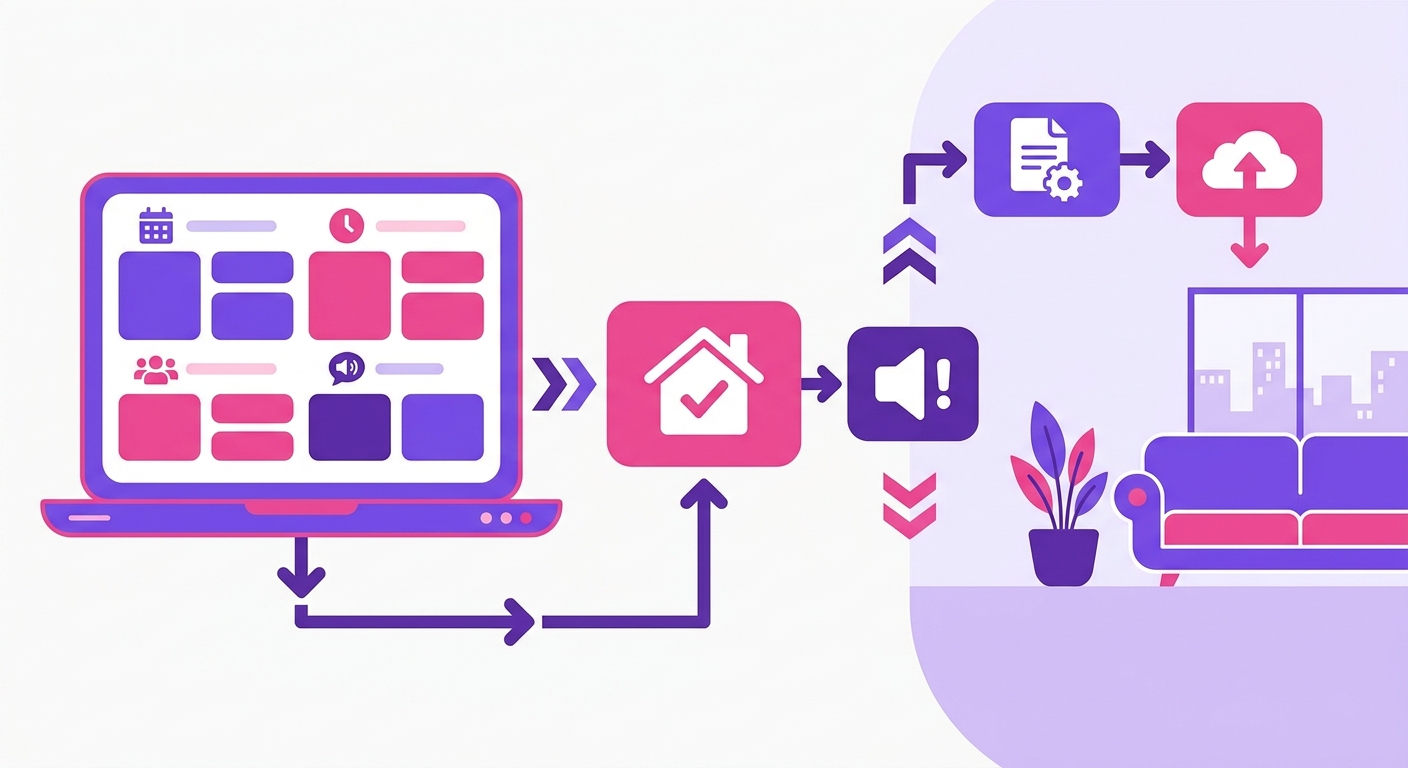
Noise incidents don't just create neighbor complaints, they hit your numbers directly. A single party event at a $150/night listing can trigger a platform warning, a review drop, and a cleaning surcharge in the same checkout cycle.
A single noise complaint can tank your Airbnb review scores. We've seen properties with just one reported party suffer an average 0.2–0.3 star drop, which is more than enough to shove a listing below the critical 4.8-star threshold that craters its search ranking.
Don't be surprised when you see fewer bookings at your current ADR. Basically, it's a fast track to losing money.
Find Your Vacation Rental Noise Monitoring Setup in Minutes
Mr. Props matches your property type and local rules to the right noise monitoring configuration, no guesswork, no overspending on sensors you don't need.
Trusted by 4,000+ STR operators across Airbnb, Vrbo, and Booking.com.