
What is Occupancy Rate?
In short-term rental management, Occupancy rate measures the percentage of available nights at a short-term rental…

What is Occupancy Rate?
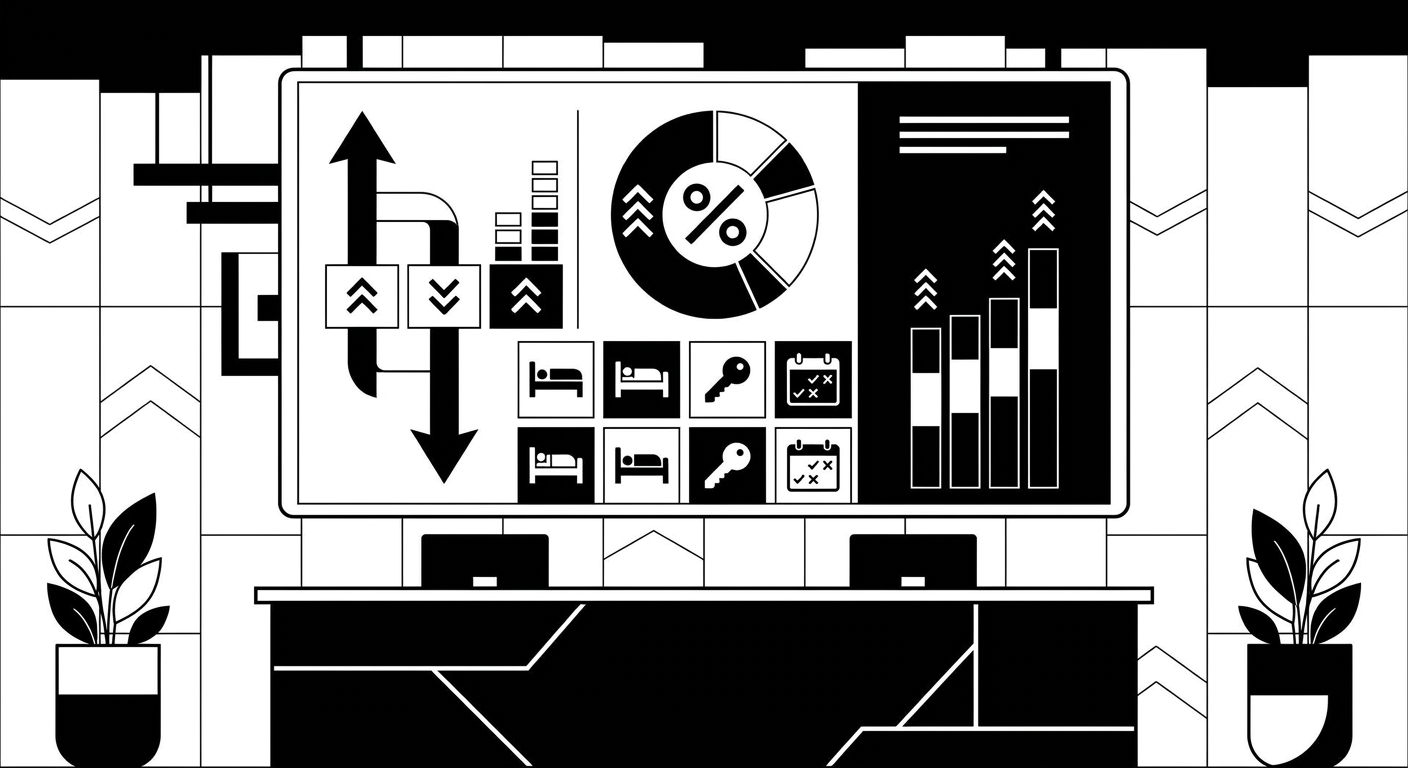
The occupancy rate measures how much of a property or space is currently in use compared to its full capacity. It's an essential concept across various industries, including hospitality and real estate. Imagine a hotel with 200 rooms; if 150 are occupied, the occupancy rate is 75%. This figure helps businesses understand their space utilization and optimize their operations.
- Relevance: Critical for financial planning and maximizing revenue.
- Example: A real estate complex with 80 of 100 units rented shows an 80% rate.
Importance of Occupancy Rate
The occupancy rate is a vital metric for understanding a business's operational success. It's calculated by dividing the number of occupied units by the total available units, providing insight into how effectively space is utilized. An accurate occupancy rate calculation can reveal patterns and help in strategizing for improved business outcomes.
Impact on Revenue
Occupancy rate directly impacts revenue streams by indicating the level of demand for a business's offerings. For example, a hotel with a high occupancy rate likely sees increased revenue due to more rooms being filled. Imagine a hotel with 100 rooms and an occupancy rate of 90%. That's 90 rooms generating income, maximizing profitability. Conversely, a low rate suggests underutilization and potential revenue loss.
Explore occupancy strategies to optimize your business's operational efficiency and financial health. Learn more about financial analysis to ensure robust decision-making processes.Occupancy Rate Calculation
The occupancy rate is a crucial metric in hospitality management, reflecting how effectively space is utilized. But how do you calculate it? The formula is simple yet essential for understanding success: divide the number of occupied units by the total available units, then multiply by 100 to get a percentage.
Formula Breakdown

Breaking it down: Occupancy Rate = (Occupied Units / Total Available Units) × 100. This calculation gives a clear picture of space utilization.
- Total Available Units: The total number of units that could be occupied.
For example, if a hotel has 150 rooms and 120 are occupied, the occupancy rate is (120/150) × 100 = 80%. An efficient occupancy rate indicates good management.
Real-World Examples of Occupancy Rate
The occupancy rate is a critical metric across various industries, showing the percentage of available space that is occupied. In the hotel industry, for example, a hotel with 200 rooms and 180 occupied would have a rate of 90%. Real estate uses similar calculations to assess property performance. A higher rate often indicates demand and profitability. In healthcare, hospitals track bed occupancy rates to ensure efficient resource management. The occupancy rate calculation remains vital for strategic planning, guiding decisions on pricing and capacity management.
Related Terms and Concepts
- Vacancy Rate: The percentage of unoccupied rental units at a given time. For example, if a building has 100 units and 10 are empty, the vacancy rate is 10%.
- Average Daily Rate (ADR): The average income earned per paid occupied room per day. If a hotel earns $1,000 from 10 rooms, the ADR is $100.
Frequently Asked Questions
Track Your Occupancy Rate with Mr. Props
Mr. Props gives STR hosts a real-time dashboard to monitor occupancy, spot gaps in the calendar, and act on pricing opportunities before revenue is lost.
No credit card required. Cancel anytime.