
What is Economic Occupancy?
Economic Occupancy Economic occupancy measures the percentage of potential rental income your listing actually…
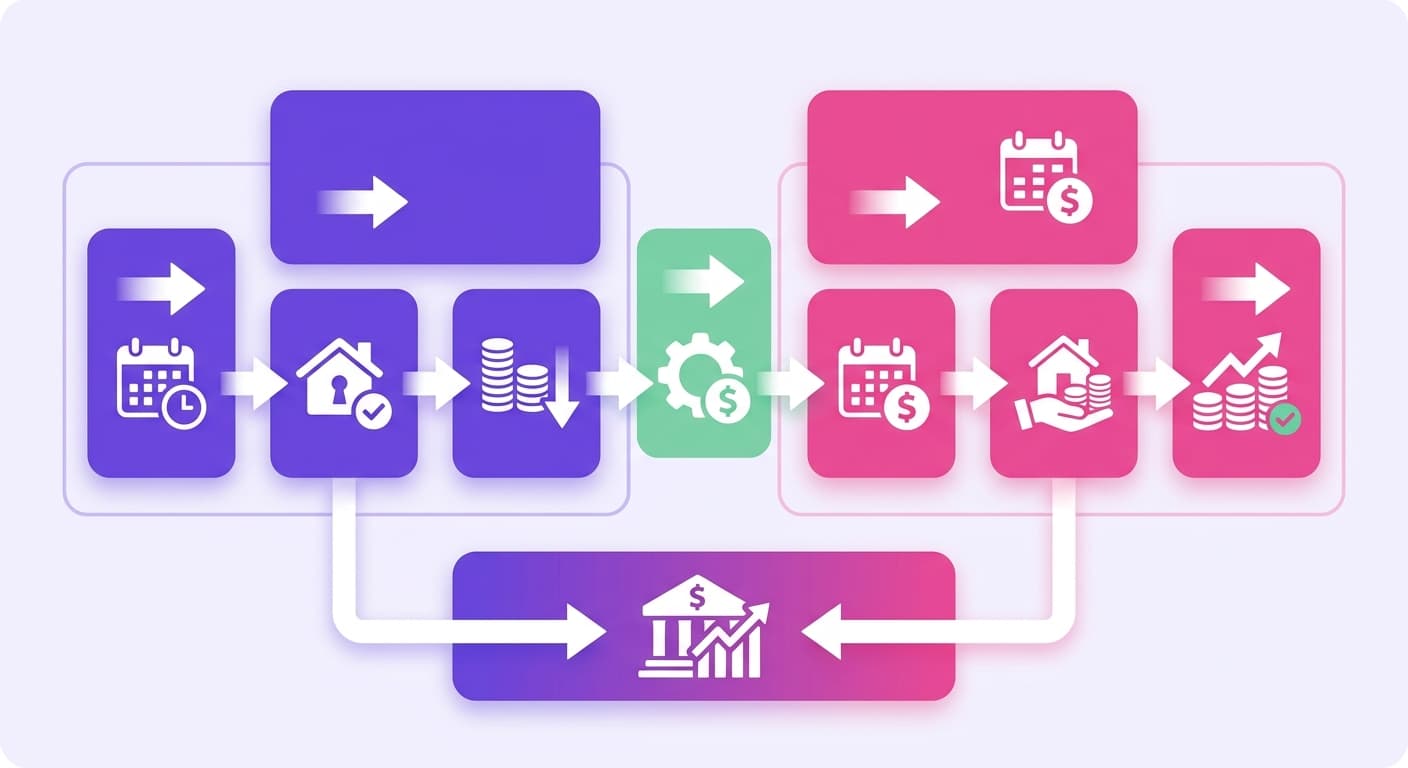
Economic occupancy measures the percentage of potential rental income your listing actually collects, not simply how many nights it's booked.
By strict definition, it compares actual revenue collected against the maximum revenue possible if every night booked at full asking price.
The formula captures this gap: divide actual rental income by potential rental income, then multiply by 100 to get a percentage.
The distinction matters because physical occupancy flatters your numbers. You can run a calendar with almost no open dates and still underperform on revenue if your nightly rates don't hold.
Applying the economic occupancy formula regularly makes this shortfall visible before it compounds across a full season.
What Economic Occupancy Tells You About Real Income
Physical occupancy tells you how many nights your calendar was booked.
It doesn't tell you how much money you actually kept after discounts, refunds, and vacant high-value nights, one three-night holiday gap can do more damage than five cheap weekday bookings fix.
That's the hole. And, honestly, it's where most hosts lose track of real performance.
Run the numbers on a typical listing: $150/night rate, 75% physical occupancy over 30 days gives you 22.5 booked nights and $3,375 in gross revenue.
But subtract a $45 cleaning fee you're absorbing, a platform fee of roughly 3%, and two nights lost to a last-minute cancellation with no rebooking, your actual collected revenue drops closer to $2,900.
The Ratio That Changes How You Price, Discount, and Audit

Three situations where tracking collected revenue against your property's ceiling changes real decisions:
Peak season pricing checks: If your Airbnb runs at 90% physical occupancy in July but your collected revenue sits at 78% of potential, your nightly rate is too low for demand.
Shoulder season discounting: A 60% physically occupied March with a strong revenue ratio (say, 82%) beats a 75% occupied March where heavy discounts dragged collections down to 61%.
Post-cancellation audits: A single last-minute cancellation on a $250 Saturday night hits your revenue ratio harder than three $90 midweek gaps.
How Economic Occupancy Affects Other Metrics

Economic occupancy sits upstream of every revenue metric you track. Change it, and your RevPAN and effective ADR shift automatically.
Here's the direct chain: if your listing has 20 booked nights but 3 cancel without full payment, physical occupancy reads 67% on a 30-day month.
The same distortion hits ADR. A $150/night listing absorbing two unpaid cancellations appears to earn $2,100 across 14 nights.
Strip out those nights and your real yield per available night is lower, leading to underpricing during high-demand periods.
Find Your Economic Occupancy in Minutes
Connect your Airbnb or Vrbo listings and Mr. Props calculates your actual revenue rate against your potential, no spreadsheets, no manual math.
No credit card required. Setup takes under 5 minutes.