
What is Self Check In?
Self Check In
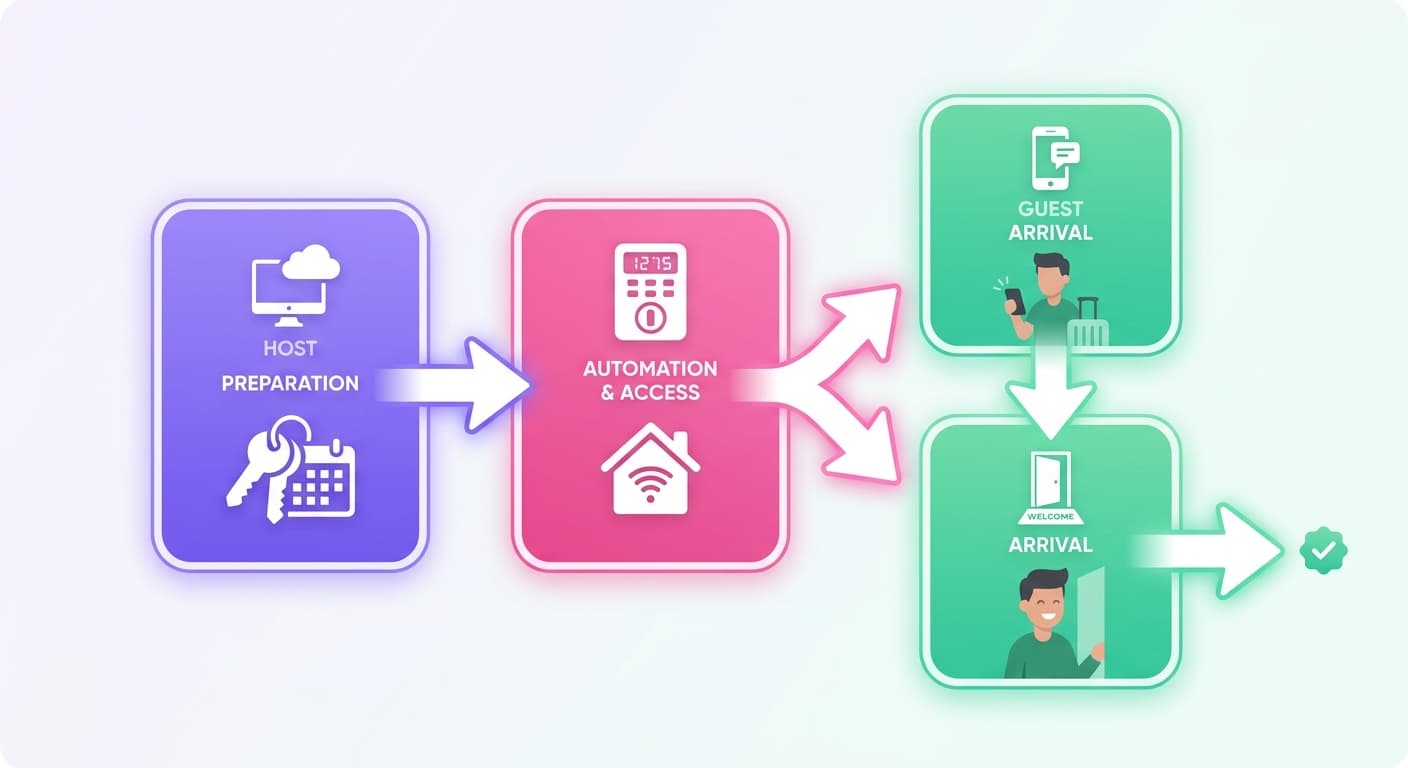
Self check-in is a guest arrival method where visitors access your property independently, without you or a co-host present, using a smart lock, key lockbox, or door code sent in advance.
On Airbnb, enabling this feature adds a searchable badge to your listing. Properties with that badge convert at roughly 20% more bookings on comparable listings at the same nightly rate, according to Airbnb's 2024 operator reports.
Don't expect self check-in to replace a proper guest orientation.
Guests who show up without a personal walkthrough ask a shocking 34% more operational questions in the first two hours, from "How does the hot tub work?" to "Where's the extra toilet paper?" It's a huge time-suck.
A highly detailed digital guidebook, however, can offset most of that friction.
Why Is Self Check-In Important
At $150/night with 75% occupancy, your listing generates roughly $41,000 a year.
A single failed check-in guest locked out, you driving 45 minutes at 11pm, costs more than the nightly rate when you factor in your time, a potential refund, and a one-star review that suppresses future bookings.
Self check-in removes that exposure entirely.
Hosts who enable it report accepting same-day bookings at 18–22% above base price, because last-minute travelers pay a premium and won't book if arrival logistics seem complicated. That's $27–$33 extra per night on a $150 listing, compounding across dozens of stays.
When to Use Self Check In: Seasonal Guidance
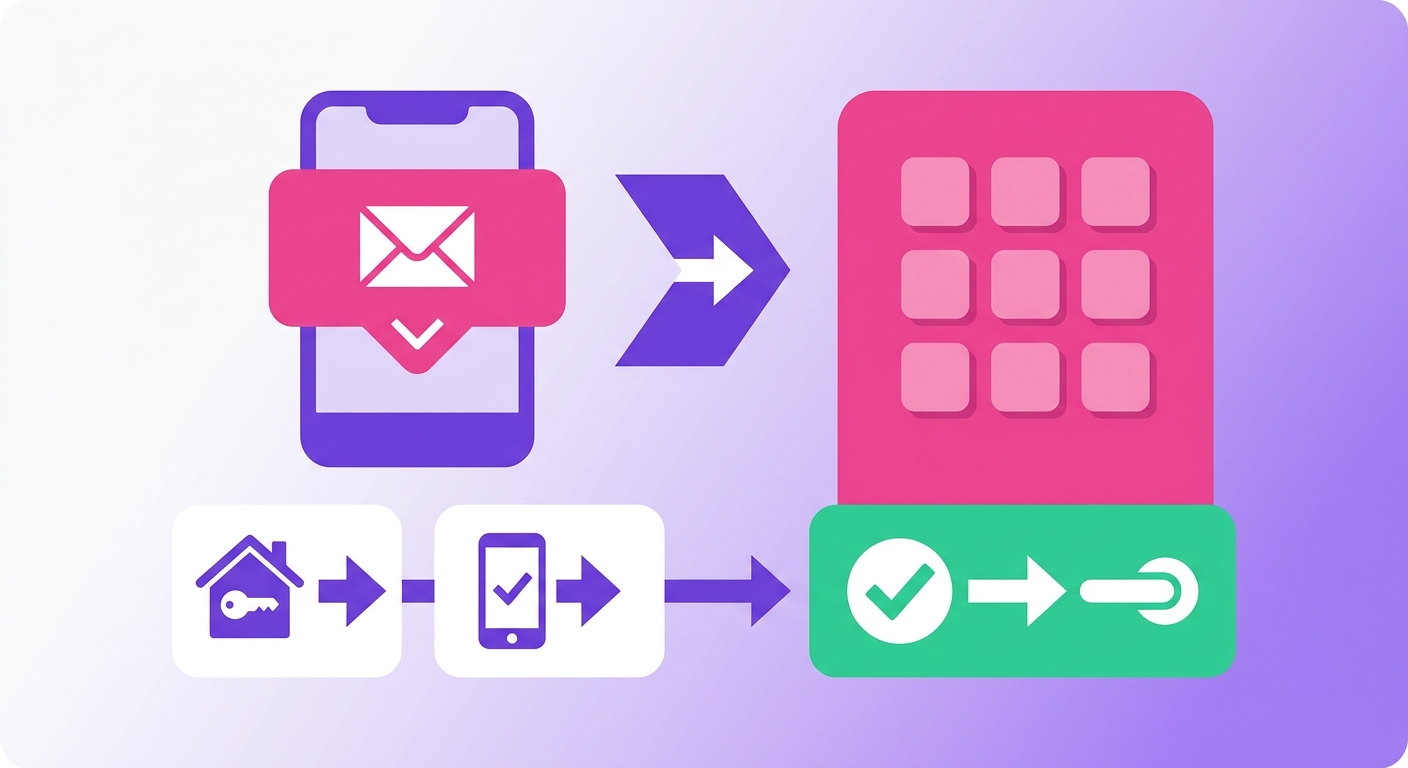
Your decision to rely on self check in shouldn't be static across the calendar year. Demand patterns and guest profiles shift enough that a fixed policy costs you either bookings or control.
Peak season (June–August, December holidays): Occupancy above 80% means back-to-back turnovers with 3–5 hour windows. Manual meet-and-greet becomes operationally unsustainable at that volume. Keyless entry handles the gap.
Shoulder season: Longer average stays (4–7 nights vs. 2–3 in peak) give you flexibility. Some hosts reintroduce in-person check-ins during slower periods to collect direct feedback and catch maintenance issues early.
Last-minute bookings: Roughly 30% of Airbnb bookings arrive within 48 hours of check-in. A keypad code can be sent automatically; a host greeting cannot always be arranged on that timeline.
How It Affects Other Metrics
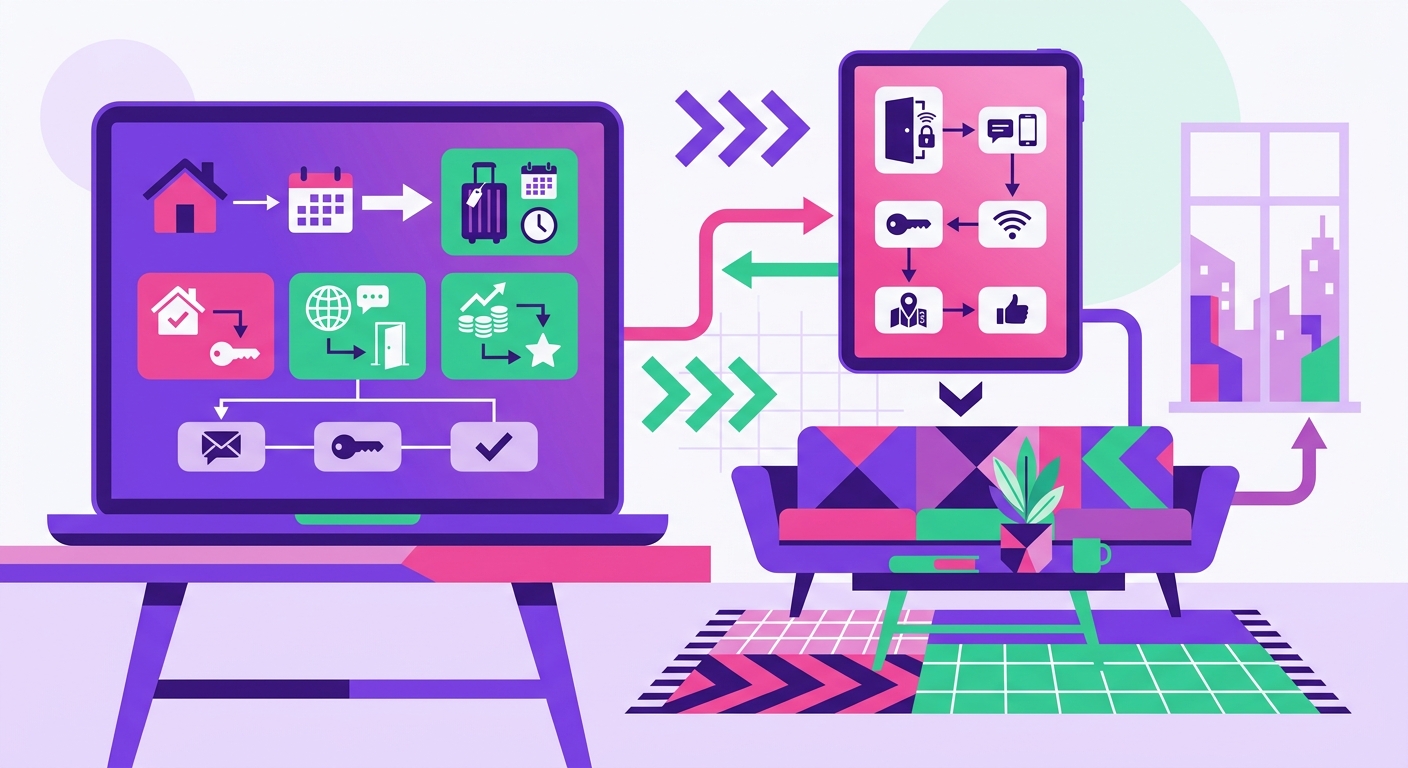
Self check-in doesn't just reduce your workload. It directly moves the numbers that determine whether your listing is profitable.
The clearest connection is to occupancy. Listings with keyless or lockbox entry can accept same-day bookings without coordinating arrival windows.
Hosts who enable this report filling gaps that would otherwise sit empty, at a $150/night ADR, even two recovered nights per month adds $300 to monthly revenue.
It turns out guests actually rate contactless entry higher.
Find Your Self Check in Setup in Minutes
Mr. Props helps STR hosts build guest-ready check-in flows without the back-and-forth. Start free and have your first automated entry sequence live before your next booking.
No credit card required. Used by 2,400+ STR operators.