
What is Low Season in Short Term Rentals?
Low Season in Short Term Rentals Most hosts treat low season as a revenue problem to endure.
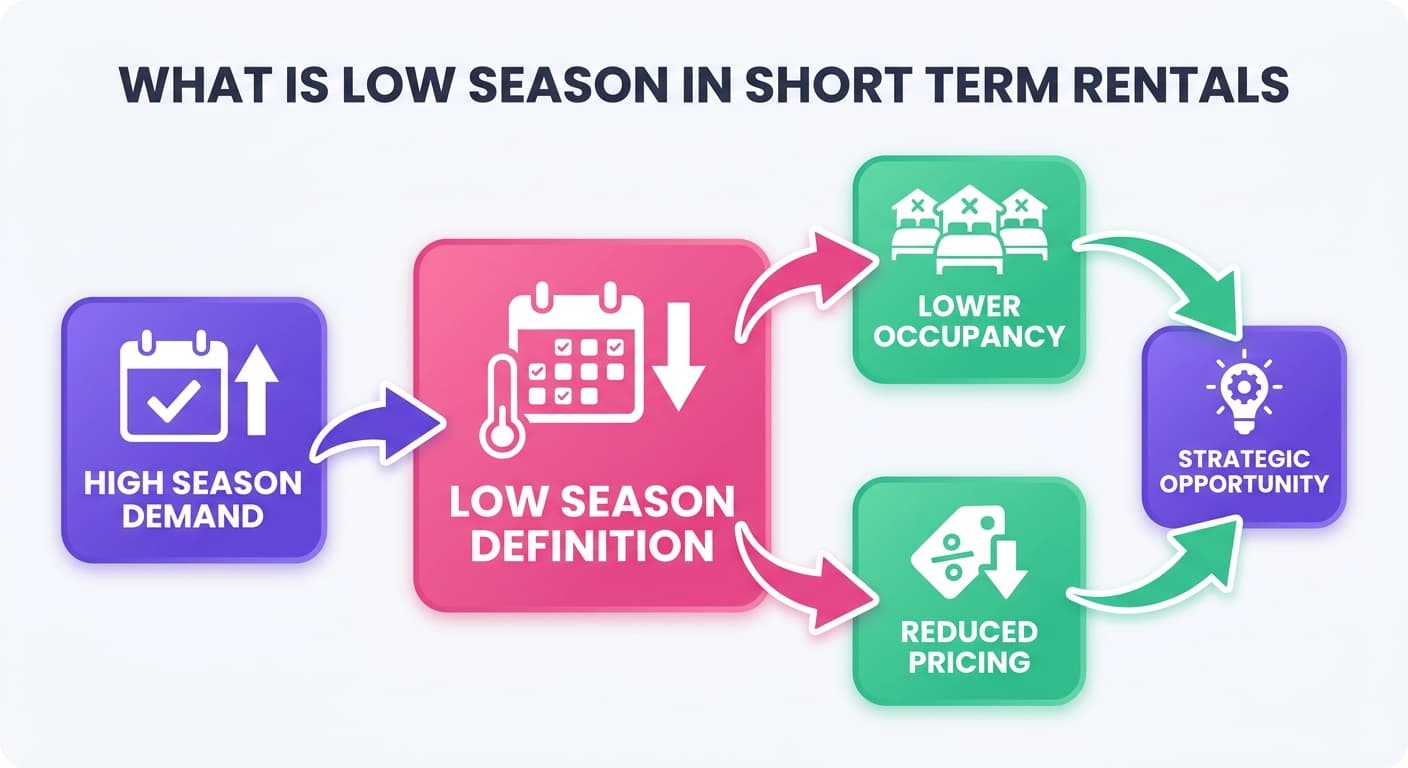
Low season in short-term rentals is the period when booking demand for your listing drops below its annual baseline, typically producing occupancy rates below 50% and nightly rates 20–40% lower than peak.
Most hosts treat low season as a revenue problem to endure. It's actually a pricing signal to act on.
A beach property averaging $210/night at 78% occupancy in July might sit at $130/night and 38% occupancy in January, that gap is your low season, and its exact timing depends entirely on your market, not a calendar someone else published.
Off season vacation rentals behave differently than peak-period listings in ways that go beyond lower nightly rates.
Traveler intent shifts, booking windows shrink, and the guests browsing off season vacation rentals are often more price-sensitive but also more flexible, which creates real opportunities for hosts who know how to position their property during slow periods.
Why Low Season in Short-term Rentals Matters for Your Bottom Line
A 30-point occupancy drop hits harder than most hosts expect. At $150/night with 75% occupancy a 30-night month generates $3,375. Drop to 45% occupancy during the Airbnb slow season and that same month produces $2,025, a $1,350 shortfall before you've accounted for fixed costs.
Your mortgage, insurance, and utility bills don't adjust for slow months. A property running $1,800/month in fixed costs clears $1,575 in peak season but loses $225 during the off season without any pricing response.
The compounding problem: cleaning fees ($45 per turnover) represent a larger share of revenue when nightly rates are discounted. At $120/night instead of $150, a 2-night stay nets you $195 after cleaning, a 13% margin compression hosts rarely model in advance.
Low season isn't just slower. It's structurally different, and it punishes passive pricing.
Low Season by the Numbers: A Visual Breakdown
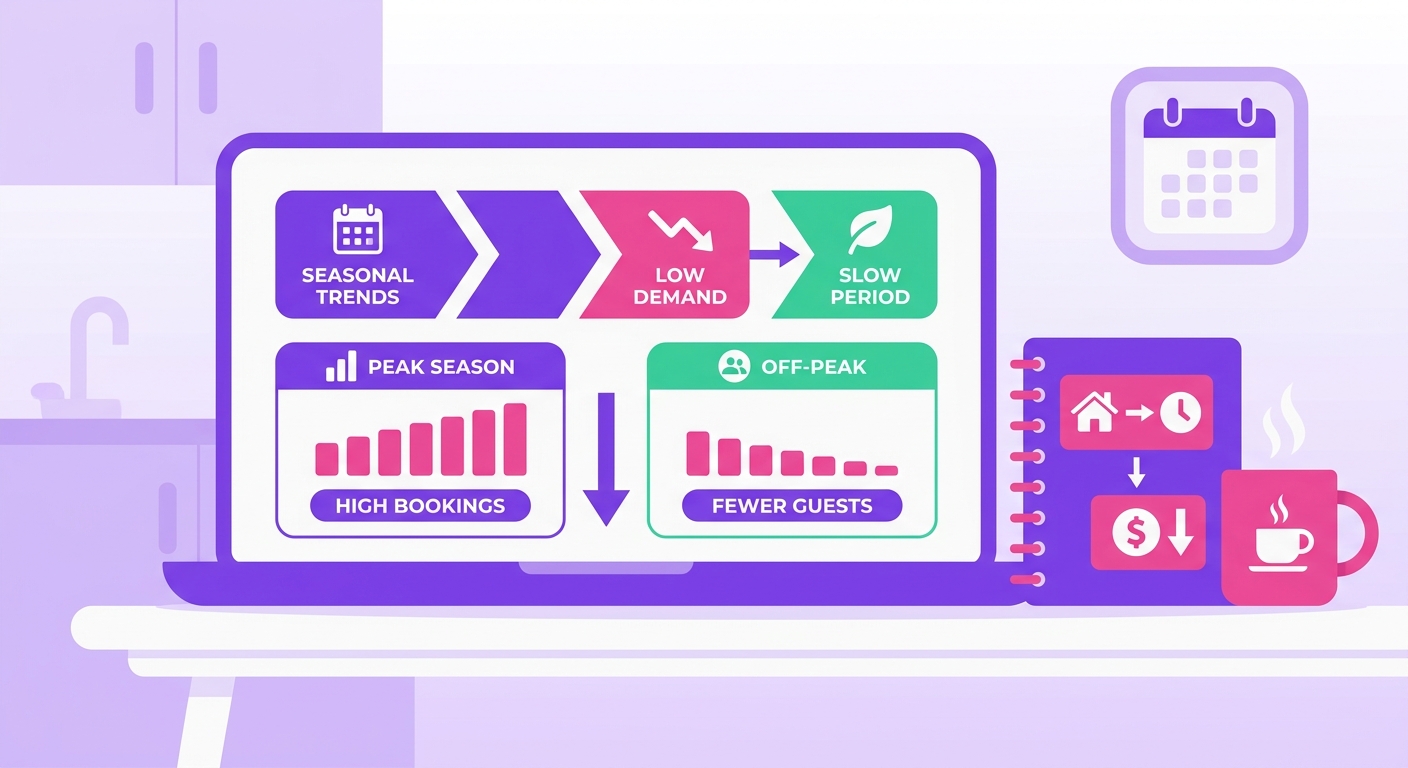
Your listing's revenue doesn't drop evenly during slow periods. It compresses from both ends: nightly rate falls and occupancy drops simultaneously, which is why the revenue hit feels disproportionate to the calendar gap.
The formula is straightforward:
Monthly Revenue = (Nightly Rate × Occupancy Rate) × Days Available
The revenue gap between your peak and off-season can be brutal. During summer, a $210 nightly rate with a strong 78% occupancy brings in $4,914 over 30 days. But then November rolls around. You're forced to slash the price to $150, and your occupancy still craters to 42%, leaving you with just $1,890 for the month. It's a massive hit to your bottom line.
Most hosts focus on protecting the nightly rate during slow periods. That's the wrong priority. A 10% rate cut that lifts occupancy from 42% to 60% generates $2,700, a $810 gain over holding firm at $150 with flat bookings. Occupancy recovery pays more than rate protection almost every time.
When to Use Low Season: Seasonal Guidance
Your listing's slow season isn't a fixed date on a calendar, it shifts based on your market, your property type, and what's happening locally.
Watch for these specific triggers in your Airbnb data:
Booking pace drops below one reservation per week with your current nightly rate
Your average daily rate falls 25%+ below your summer baseline without a manual price change
Inquiries arrive but don't convert, guests are price-shopping off-season vacation rentals
How Low Season Affects Other Metrics
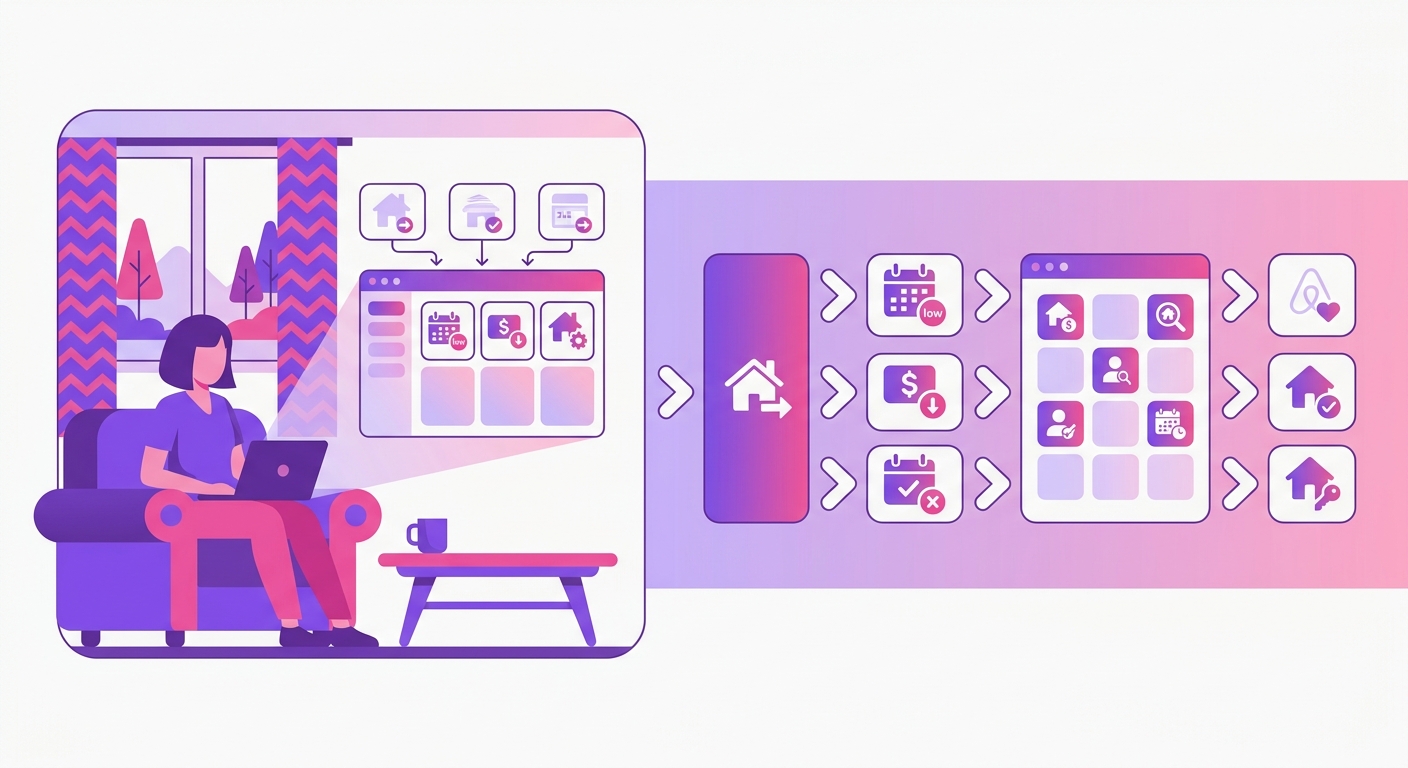
Low season doesn't just cut occupancy. It compresses every revenue metric at once, and the relationships matter more than most hosts track.
When demand drops, occupancy typically falls from a peak of 85–90% down to 45–55%. That alone reduces monthly revenue. But the real damage happens when you also drop your nightly rate, say from $180 to $130, to chase bookings.
RevPAN (revenue per available night) takes a double hit: lower occupancy multiplied by a lower ADR. A property earning $153 RevPAN in peak season can drop to $58–$65 in slow months under that strategy.
Holding your rate at $155–$160 and accepting 50% occupancy often produces better RevPAN than discounting to 65% occupancy at $110.
Find Your Low Season in Minutes
Mr. Props pulls occupancy and rate data for your listing so you can see exactly when your slow season hits and price accordingly.
No credit card required. Setup in under 5 minutes.