
What is Linen Turnover?
Linen Turnover Linen turnover is the process of removing, laundering, and replacing all bed…
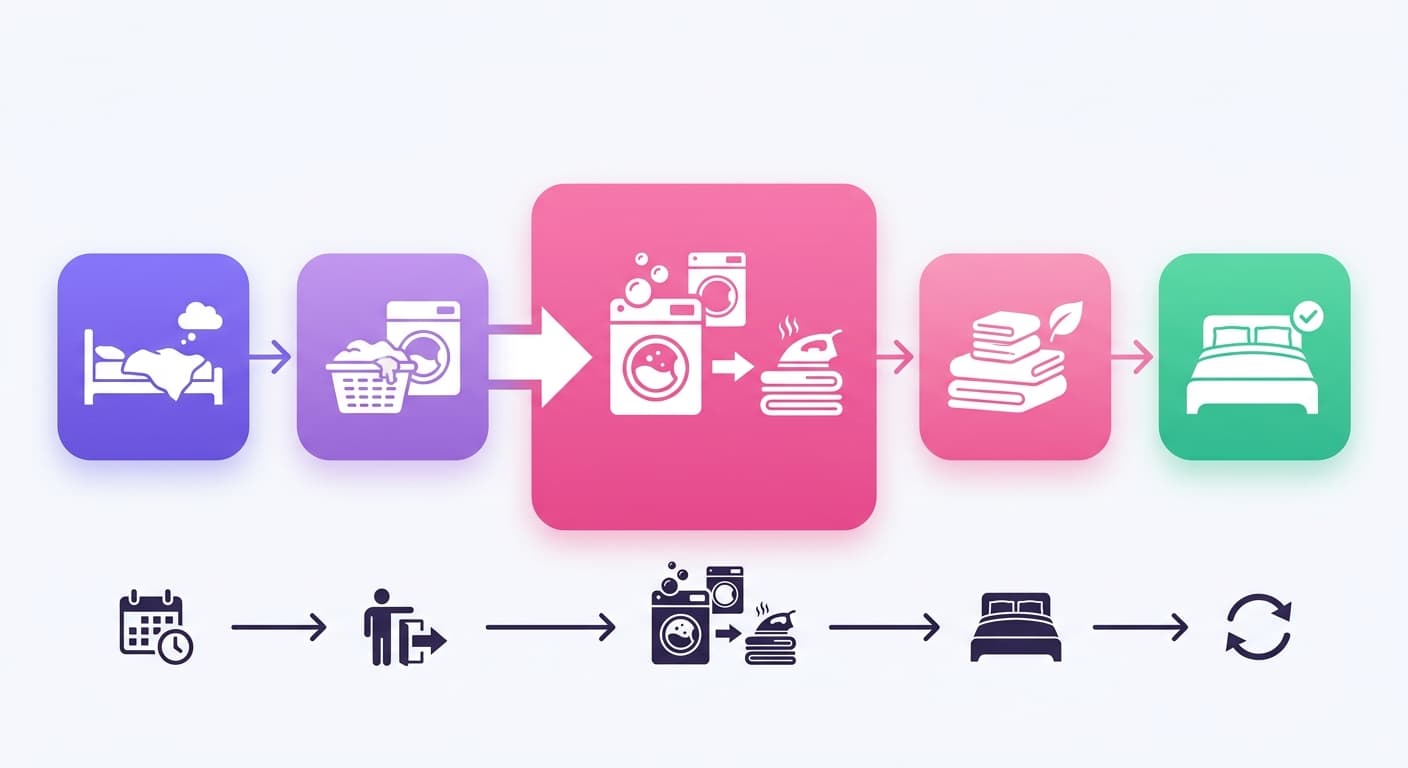
Linen turnover is the process of removing, laundering, and replacing all bed and bath linens between guest stays at a short-term rental property.
Managing short term rental linen effectively is one of the most operationally demanding parts of running a listing at scale.
Every checkout triggers it. Sheets, pillowcases, towels, and bath mats come off, go through a wash cycle, and return fresh before the next guest checks in.
At a property running 75% occupancy with a 2.3-night average stay, that's roughly 10 to 12 full linen changes per month per listing.
Why Linen Turnover Matters for Your STR Bottom Line
A botched linen swap costs more than the laundry bill. At a $150/night listing running 75% occupancy, one guest complaint about stained sheets can trigger a 1-star review that drops your search ranking and cuts your next 30 days of bookings by 10-15%.
That's $500+ in lost revenue from a single turnover failure.
The math on proper short-term rental linen management is straightforward. If your cleaning fee is $45 and linen replacement runs $8-12 per turnover, you're already at 18-27% of that fee just for linens.
Let that slip, and guests notice immediately, bedding is the #1 complaint category in Airbnb reviews after cleanliness overall.
Your linen turnover process is killing your review velocity. Hosts who standardize their linen swap process report a 23% drop in those dreaded "hair on the pillowcase" cleanliness flags from guests.
Linen Turnover in Practice: What the Numbers Look Like
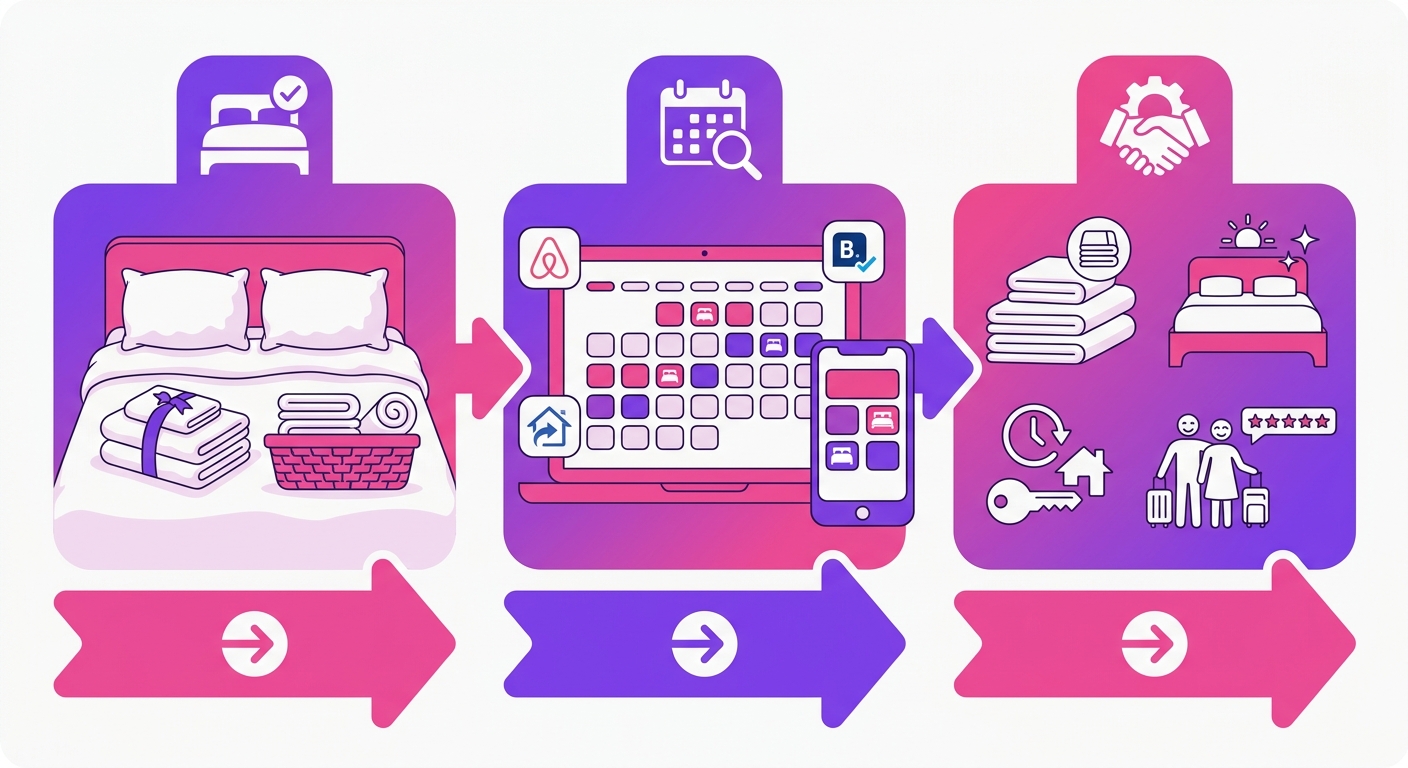
A property running at 75% occupancy with a 3-night average stay completes roughly 90 turnovers per year. Each one requires a full linen change.
That's 90 sets of sheets, duvet covers, and towels moving through your wash cycle or laundry service annually, per bedroom.
The cost adds up fast. A mid-range short-term rental linen service charges $18–$35 per turnover for a one-bedroom unit.
At $25 per turnover and 90 cycles, you're spending $2,250 per year just on linen handling for a single bedroom. Add a second bedroom and that figure doubles.
When to Use Linen Turnover: Seasonal Guidance
Your linen turnover frequency shouldn't stay fixed year-round. Market conditions change the math significantly.
Peak season (June–August or December–January depending on your market): back-to-back bookings with 1–2 day gaps mean you're turning linens every 48–72 hours.
High turnover periods: pre-stage extra sets so a same-day checkout/check-in doesn't stall your cleaner
Shoulder season: longer gaps between guests let you run fewer sets and air linens between uses
Low season: monthly deep-cleans and storage rotation prevent mildew on sets sitting unused
How Linen Turnover Affects Other Metrics

Slow linen turnover creates a hard ceiling on your occupancy. If a same-day back-to-back booking requires fresh sheets and your laundry takes four hours, you've effectively lost that booking or absorbed a rushed clean that guests notice.
The math is direct. At $150/night with 75% occupancy across 30 days, you're earning roughly $3,375/month per unit. A single blocked night from a linen delay costs you $150 gross. Two delays per month wipes out what most hosts spend on a full linen service contract.
ADR isn't immune either. Listings with consistent cleanliness reviews command 8-12% higher nightly rates than comparable properties with mixed feedback.
Your linen cycle is a direct input to your review score, and your review score sets your price ceiling.
Find Your Linen Turnover in Minutes
Track every turnover cost against your actual revenue, so you know exactly what your linen service is costing you per booking.
No credit card required. Set up in under 5 minutes.