
What is Advance Booking for Rental Property?
Advance Booking for Rental Property An advance booking for rental property is a reservation confirmed and paid…
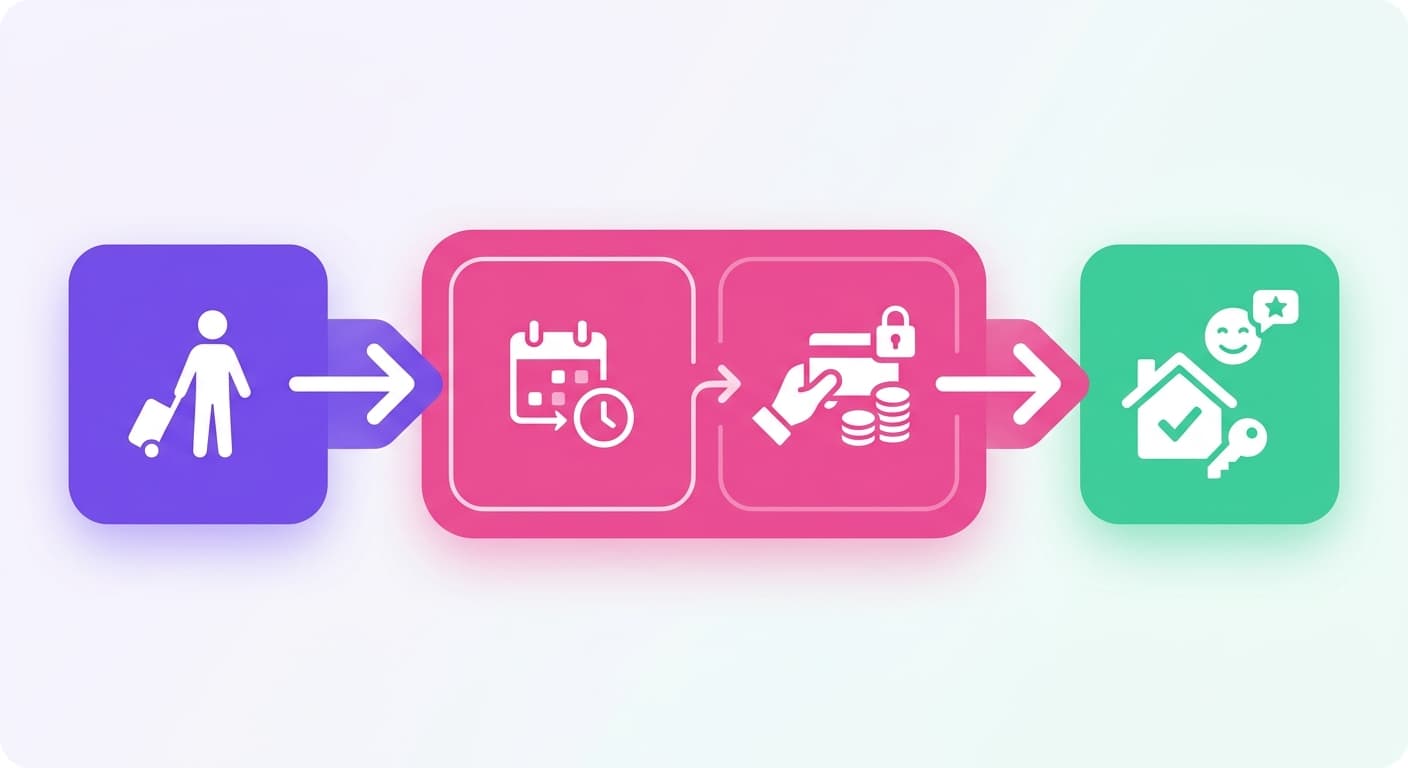
An advance booking for rental property is a reservation confirmed and paid before the guest's check-in date, giving you guaranteed income weeks or months ahead of the stay.
On Airbnb and Vrbo, guests don't pay on arrival. They pay the moment they book.
When a guest reserves your $150/night listing for five nights in August, that $750 (minus platform fees) immediately enters your payout queue, typically scheduled for release just 24 hours after check-in.
They haven't even packed a bag. That's what makes STR cash flow so different from a month-to-month residential lease, where getting paid in advance is a rare exception. It's a whole different world.
The Significance of Advance Booking for Your Rental Property
A confirmed reservation 60 days out is worth more than the same booking made tomorrow. Not because the nightly rate changes, but because of what early confirmation lets you do with your pricing and calendar.
Advance bookings are your best defense against discounting.
A property earning $150 per night at 75% occupancy brings in roughly $3,375 per month. But that's not guaranteed. Hosts who capture bookings 90+ days out lock in that revenue before a slow period forces their hand.
Without those early reservations, you're stuck offering last-minute discounts that typically run 15–25% below your normal rate, meaning you're suddenly accepting just $112–$127 per night. It's a painful haircut just to fill the calendar.
How Advance Booking Works in Practice
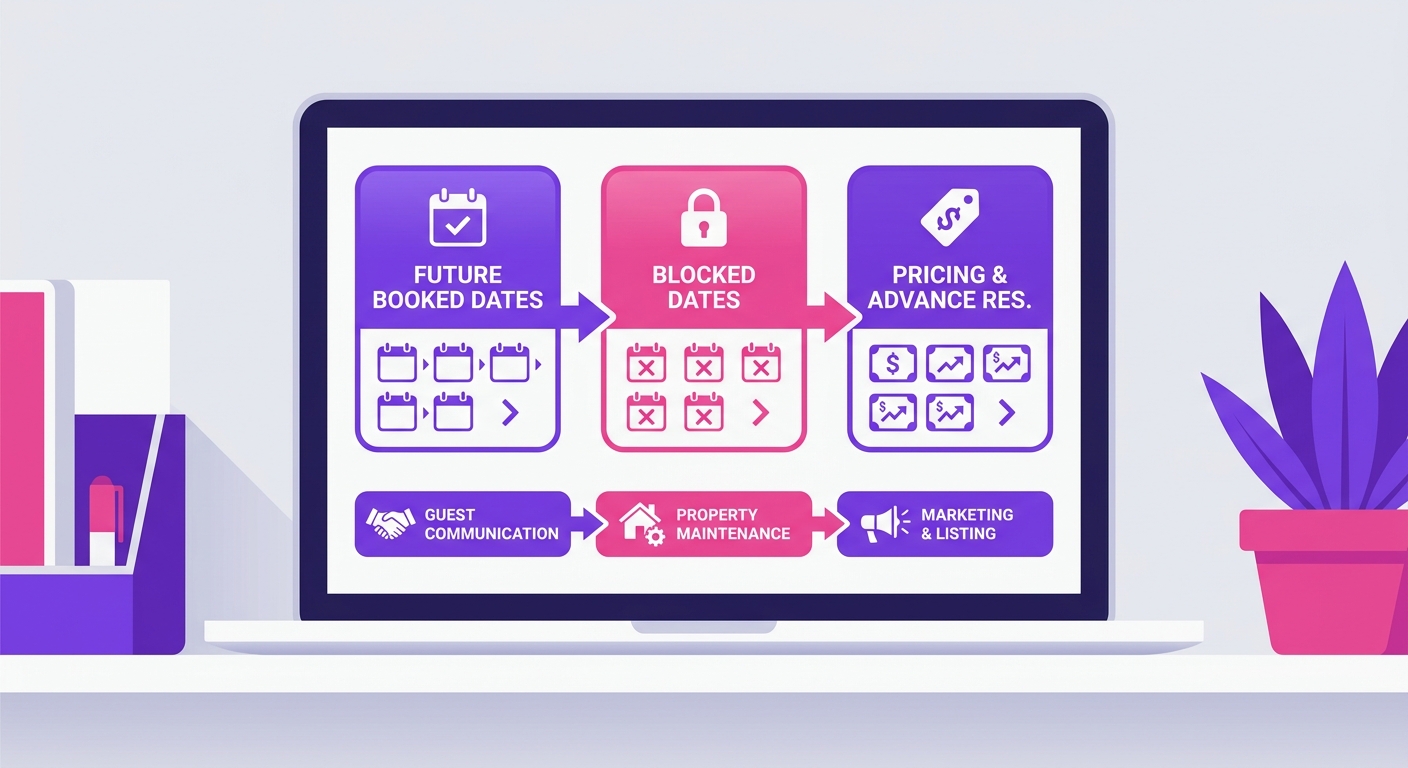
When a guest books your Airbnb three months out and pays the full amount at checkout, that payment sits as a liability on the platform until their stay completes. The money isn't yours to spend freely yet, Airbnb holds it and releases it 24 hours after check-in.
That gap between payment and payout is exactly what understanding an advance booking for rental property requires you to account for.
A typical scenario: a guest books a 3-night stay at $150/night with a $45 cleaning fee. Total collected upfront is $495. You see that reservation confirmed immediately, but the $495 doesn't hit your bank until after check-in day.
This matters for two reasons:
Your calendar blocks the dates the moment booking confirms, reducing double-booking risk
The advance payment protects you if the guest cancels, depending on your policy
When to Use Advance Booking
Your advance booking window shouldn't stay fixed year-round. The right setting shifts depending on demand patterns specific to your market and listing type.
Peak season (60-90 days out): If your Airbnb sits in a beach or ski market, open your booking window wide. Properties in high-demand areas fill 73% of their peak-season nights from reservations made 6-10 weeks in advance. Locking in those dates early protects your revenue floor.
Shoulder season (30-45 days out): Tighten your window here. Last-minute demand is thinner, so holding dates open too long costs you the guests who book 4-6 weeks out.
Urban listings year-round: Corporate and event-driven stays typically book 14-21 days out. A 30-day advance window captures that segment without leaving your calendar exposed for months.
How It Affects Other Metrics
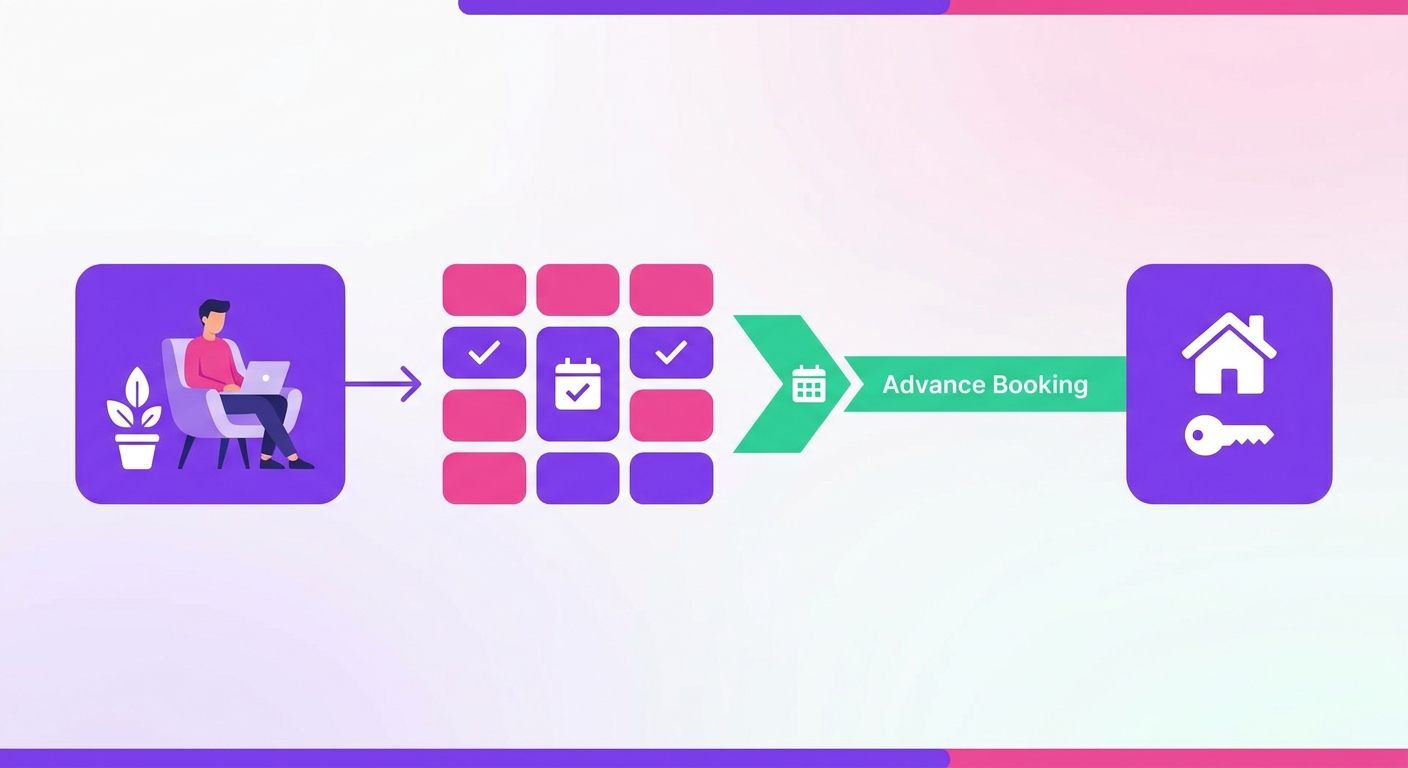
Advance bookings don't just fill your calendar, they shift core performance numbers in ways that compound over a season.
Occupancy rate is the most direct beneficiary. A property running 60% occupancy on rolling 30-day bookings can push to 75%+ when guests book 60–90 days out, eliminating last-minute gaps. That 15-point lift on a $150/night listing adds roughly $675/month at the same nightly rate.
The relationship with ADR (average daily rate) cuts the other way. Early bookers typically pay lower rates, you're trading peak-night pricing for certainty, often accepting a 5–10% ADR discount versus a last-minute booking on a high-demand weekend.
RevPAN (revenue per available night) captures both effects. Higher occupancy usually outweighs the ADR haircut, but only if minimum stay rules prevent cheap long-lead bookings from blocking premium short windows.
Track Every Advance Booking for Your Rental Property in One Place
Mr. Props gives you a clear view of prepaid reservations, advance payments, and upcoming cash flow across all your listings.
Start Free Trial See How It Works
No credit card required. Set up in under 5 minutes.