
What is Superhost on Airbnb?
Superhost on Airbnb Miss any single threshold and the badge disappears at the next review…
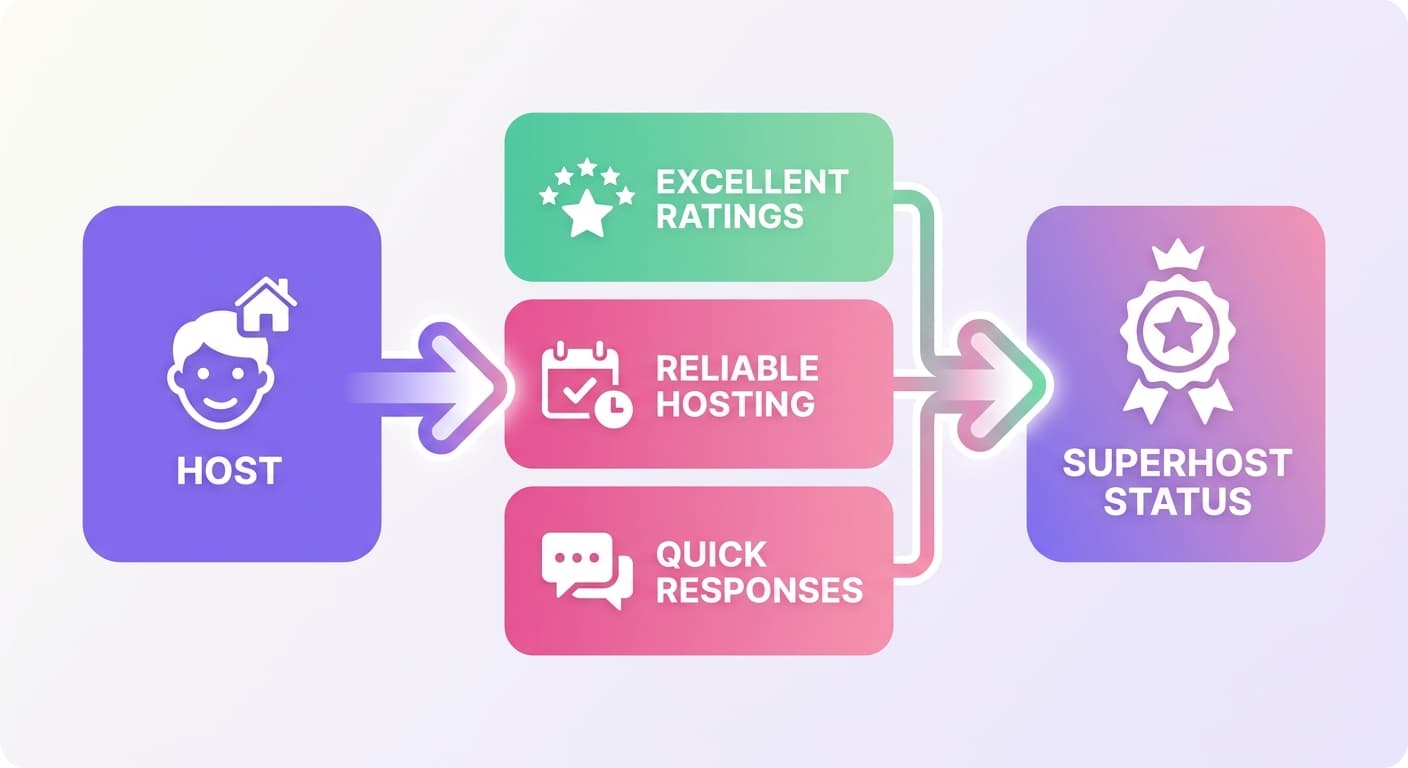
Superhost is an Airbnb status badge awarded to hosts who meet four specific performance thresholds over a rolling 12-month period.
A minimum 4.8 overall rating, at least 10 completed stays, a response rate of 90% or higher, and a cancellation rate below 1%. Airbnb evaluates your listing against these benchmarks every quarter.
Miss any single threshold and the badge disappears at the next review, regardless of how long you've held it. The status is listing-agnostic, it's tied to your host account, so it applies across every property you manage under that profile.
Why Superhost Status Matters for Your Bottom Line
Superhost listings earn 22% more revenue per available night than equivalent non-Superhost listings, according to Airbnb's own host data.
Guests filter by Superhost status on roughly 30% of searches, cutting non-Superhost listings out of consideration entirely
Superhost listings convert at a higher rate, which compounds over a full calendar year
Airbnb sends Superhost-exclusive travel coupons to hosts quarterly, worth up to $100 USD each
What Superhost Status Actually Looks Like in Practice

Here's what the four thresholds look like for a typical listing doing $150/night with 75% occupancy across 120 nights per year:
4.8+ overall rating across all reviews in the trailing 12 months, not just recent ones
10+ completed stays or 100+ nights across at least 3 bookings, whichever comes first
Less than 1% cancellation rate one host-initiated cancellation on 10 stays disqualifies you immediately
90%+ response rate measured on first responses within 24 hours
When to Use Superhost Status: Seasonal Guidance
Your Superhost badge does the most work when your market gets competitive.
The status won't move occupancy much when there's no competition to differentiate from.
High season: price 8–12% above non-Superhost comps and hold the rate
Shoulder season: keep rates flat but lead with the badge in your listing title
Low season: use Superhost status to justify a $15–$20/night floor premium
How It Affects Other Metrics

Superhost status pulls directly on your occupancy rate, average daily rate, and revenue per available night.
Airbnb's own data shows Superhost listings average 22% higher occupancy than comparable non-Superhost listings. At $150/night, that gap compounds fast.
A listing at 60% occupancy earns roughly $32,850 annually. Push that to 73% after earning Superhost status and you're looking at $39,967, same rate, same property.
ADR also shifts. Superhosts can hold rate during soft demand periods without losing bookings at the same rate non-Superhosts do, because the badge reduces perceived booking risk.
Find Your Superhost Status in Minutes
See exactly where your listing stands against Airbnb's thresholds, response rate, cancellation rate, and review score, before the quarterly assessment runs.
No credit card required. Set up in under 5 minutes.