
What is Short-Term Rental License?
Short-Term Rental License A short-term rental license is a government-issued permit that legally authorizes you…
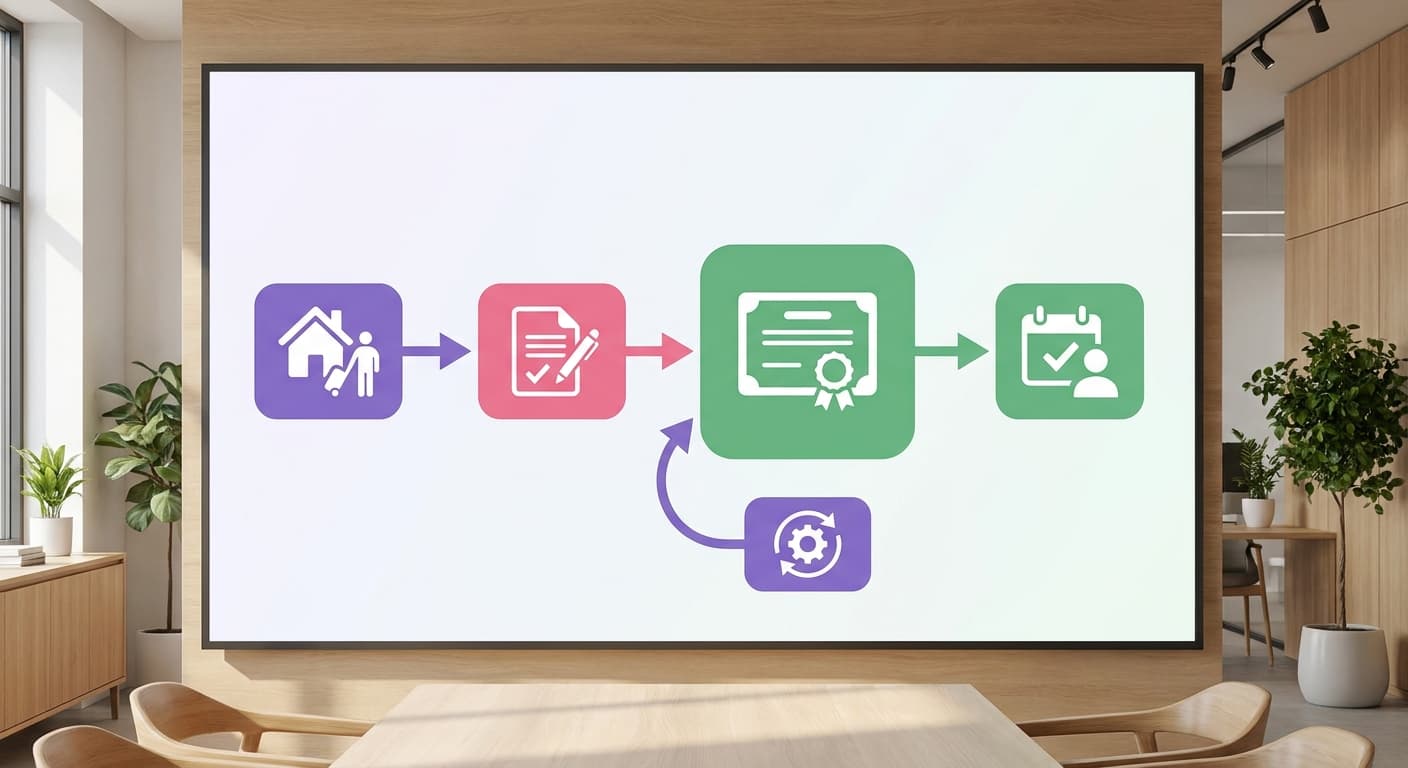
A short-term rental license is a government-issued permit that legally authorizes you to rent your property to guests for stays typically under 30 days, and without it, your Airbnb listing can be fined, delisted, or shut down entirely.
In most cities, completing your short term rental registration is the first legal step before accepting any bookings. New York, Barcelona, and San Francisco have revoked thousands of permits for missed renewals or zoning violations, with fines running $1,000 to $5,000 per infraction.
Keep in mind that short term rental registration requirements vary significantly by municipality, so always verify local rules before listing.
Why a Short-Term Rental License Matters for Your Bottom Line
Operating without the correct permit isn't a gray area. Cities including New York, Barcelona, and Denver have issued fines ranging from $1,000 to $5,000 per violation and platforms will delist your property if you can't supply a valid license number during compliance sweeps.
Short-term rental registration also affects your listing visibility directly. Airbnb and Vrbo now suppress or remove unlicensed listings in regulated markets, which means no license equals no bookings, not just a fine.
Permit fees typically run $50–$500/year, a minor cost against $38K+ in annual revenue
Non-compliance fines average 6–33x the annual permit cost
Platform delisting can trigger a 100% revenue loss for weeks during reinstatement
What It Actually Looks Like in Practice

Your new license is more than just a permit number from the city, it’s a public badge of legitimacy. You've got to post it on your Airbnb listing, your Vrbo page, and sometimes on a sign inside the property.
The short-term rental registration number also ties directly to your tax obligations. In most U.S. cities that require registration, your permit number links to your transient occupancy tax account.
One exception: some platforms like Airbnb collect and remit TOT on your behalf in certain jurisdictions, but that doesn't eliminate your obligation to hold a valid permit. The tax remittance and the license are separate requirements.
When Your License Status Actually Changes What You Should Do
Market conditions and seasonal patterns directly affect whether your license is working for or against your revenue.
Peak season is the highest-risk window. If your property runs at 85% occupancy in July at $195/night, an expired or non-compliant license can pull your listing offline at exactly the worst moment. Platforms including Airbnb now auto-flag listings in regulated markets when permit numbers are missing or invalid.
Pre-peak (60 days out): Confirm your short-term rental registration is current before summer or holiday demand hits. Renewal processing in cities like Denver averages 30-45 days.
Off-season: Use low-occupancy months to handle renewals, inspections, and address changes without revenue impact.
New regulations mid-year: Some municipalities (Austin, Nashville) push rule changes mid-calendar year, not January 1st.
How It Affects Your Key Metrics
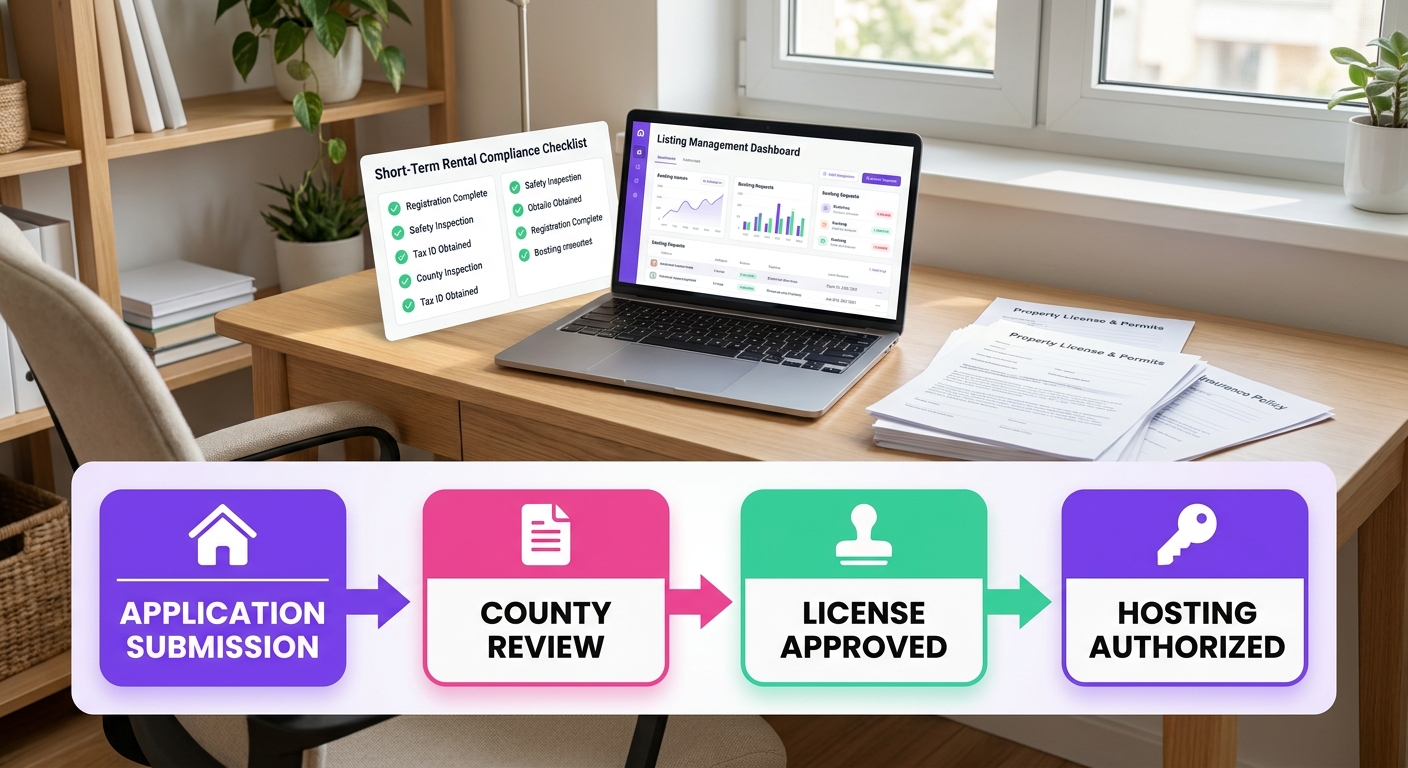
Your license status directly shapes three numbers that determine whether your listing makes money: occupancy, ADR, and RevPAR.
Occupancy takes the first hit. An unlicensed listing pulled mid-season can drop from 75% occupancy to zero overnight. Hosts in Nashville and Denver have reported losing $4,200–$6,800 in a single month after forced delistings.
ADR feels the pressure too. Licensed properties in regulated markets often command a 12–18% rate premium because guests trust compliant listings and inventory is tighter.
RevPAR compounds both effects. At $150/night with 75% occupancy, your monthly RevPAR sits around $3,375. Lose 30 days to a compliance suspension and that number collapses regardless of your pricing strategy.
(The exception: rural markets with no enforcement infrastructure. Those markets are shrinking fast.)
Find Your Short-term Rental License in Minutes
Stop guessing which permits your listing actually needs. Mr. Props maps local short-term rental registration requirements to your specific address, so you spend less time on city websites and more time booking guests at $150/night.