
What is Guest Satisfaction Score?
Guest Satisfaction Score A guest satisfaction score is a numeric rating that measures how well…
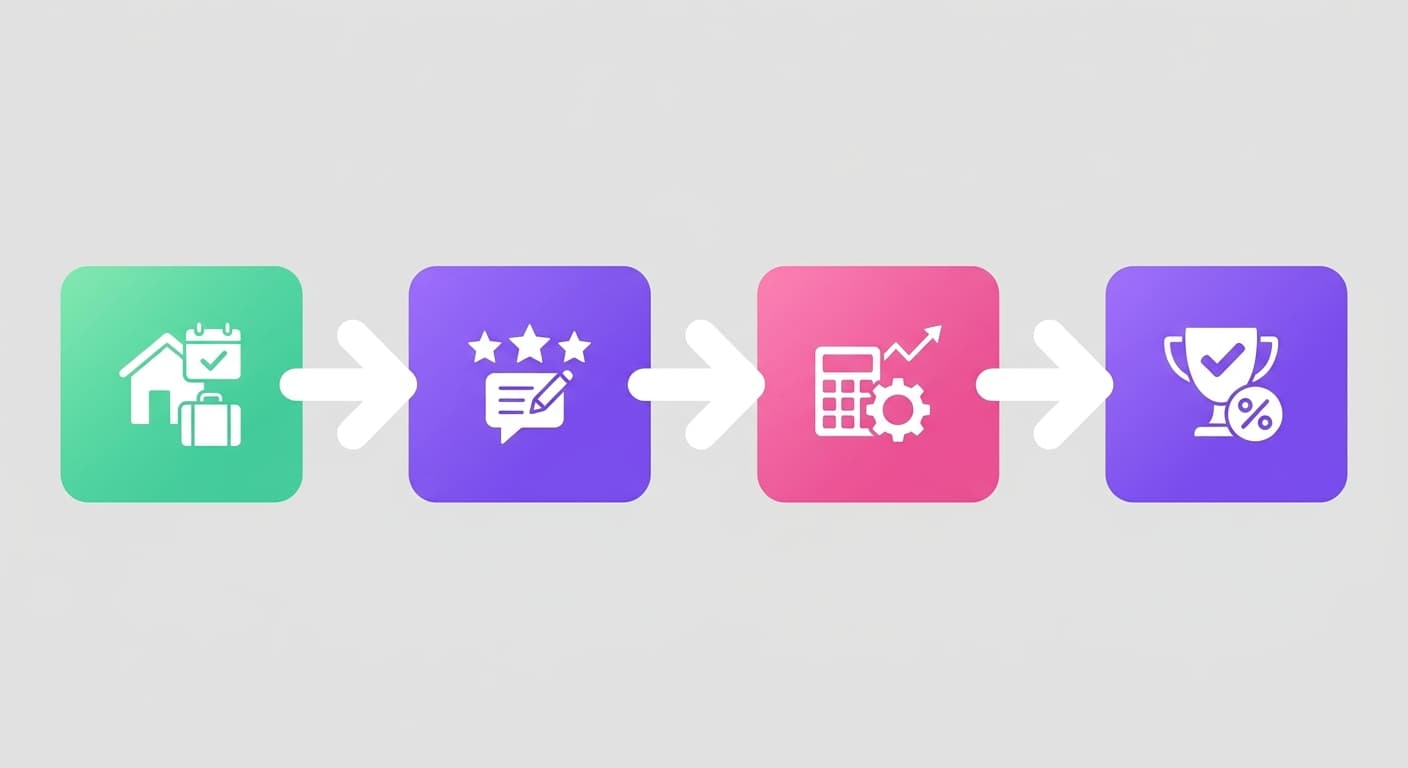
A guest satisfaction score is a numeric rating that measures how well your short-term rental met a guest's expectations across key experience factors, cleanliness, communication, accuracy, and value.
Most STR platforms calculate it from post-stay reviews.
On Airbnb, that means a 1–5 star rating across six categories; your overall score is the average.
Hotel customer satisfaction research supports this pattern, quality consistently outweighs volume when platforms rank properties, a principle that applies equally to short-term rentals.
Hosts who treat their hotel customer satisfaction benchmarks as a reference point often find useful context for setting internal performance targets, since hotels have decades of data on how small score drops translate into measurable revenue loss.
Why Is Guest Satisfaction Score Important

A single star drop can cost you real money. At $150/night with 75% occupancy a property running 274 nights per year grosses roughly $41,100.
Drop from a 4.9 to a 4.7 and Airbnb's algorithm quietly deprioritizes your listing, occupancy can slide to 65%, cutting annual revenue by about $4,100.
Hitting a 4.8 rating unlocks Superhost status. It's a huge deal.
Airbnb gives these hosts a 20% average rate premium over other listings, partly because guests can literally use a special filter to search only for Superhosts. On a $150 base rate, that's an extra $30 a night.
Visual Breakdown of the Score

Each checkout triggers a rating request across up to six criteria: cleanliness, accuracy, check-in, communication, location, and value.
Don't be fooled by a decent-looking 4.6 overall score. It almost always means one weak category is dragging the average down.
One exception worth knowing: Vrbo calculates its customer satisfaction metric differently, averaging only the categories the guest actually rates.
Guests frequently skip location when they booked knowing the trade-offs. That gap means your Vrbo score and your Airbnb score for the same property can diverge by 0.2 to 0.4 points without any real difference in guest experience.
Airbnb requires a minimum of 3 reviews before displaying a public score
Booking.com uses a 10-point scale; divide by 2 to compare against Airbnb's 5-point scale
Scores below 4.7 on Airbnb trigger a warning that can lead to listing suspension
When to Use Guest Satisfaction Score
Your guest satisfaction score a signal that shifts with your booking calendar and the timing of when you act on it matters as much as the score itself.
Three situations where your score should directly change what you do:
Pre-peak season (4-6 weeks out): Is your score sitting below 4.7 just before Memorial Day weekend? You need to fix it. Now.
Post-turnover dips: A sudden drop after switching cleaners or raising your nightly rate from $150 to $185 is a correlation worth investigating, not ignoring.
Slow seasons: Low occupancy (under 50%) gives you room to test changes, new check-in instructions, updated amenities, adjusted response templates, without risking your busiest revenue window.
Find Your Guest Satisfaction Score in Minutes
Mr. Props pulls your review data across Airbnb, Vrbo, and Booking.com into a single score, so you know exactly where your listing stands before the next booking arrives.
No credit card required. Works with existing listings.