
What is Check-Out Procedure?
Check-Out Procedure Your $150-per-night asset is completely vulnerable the second a guest leaves.
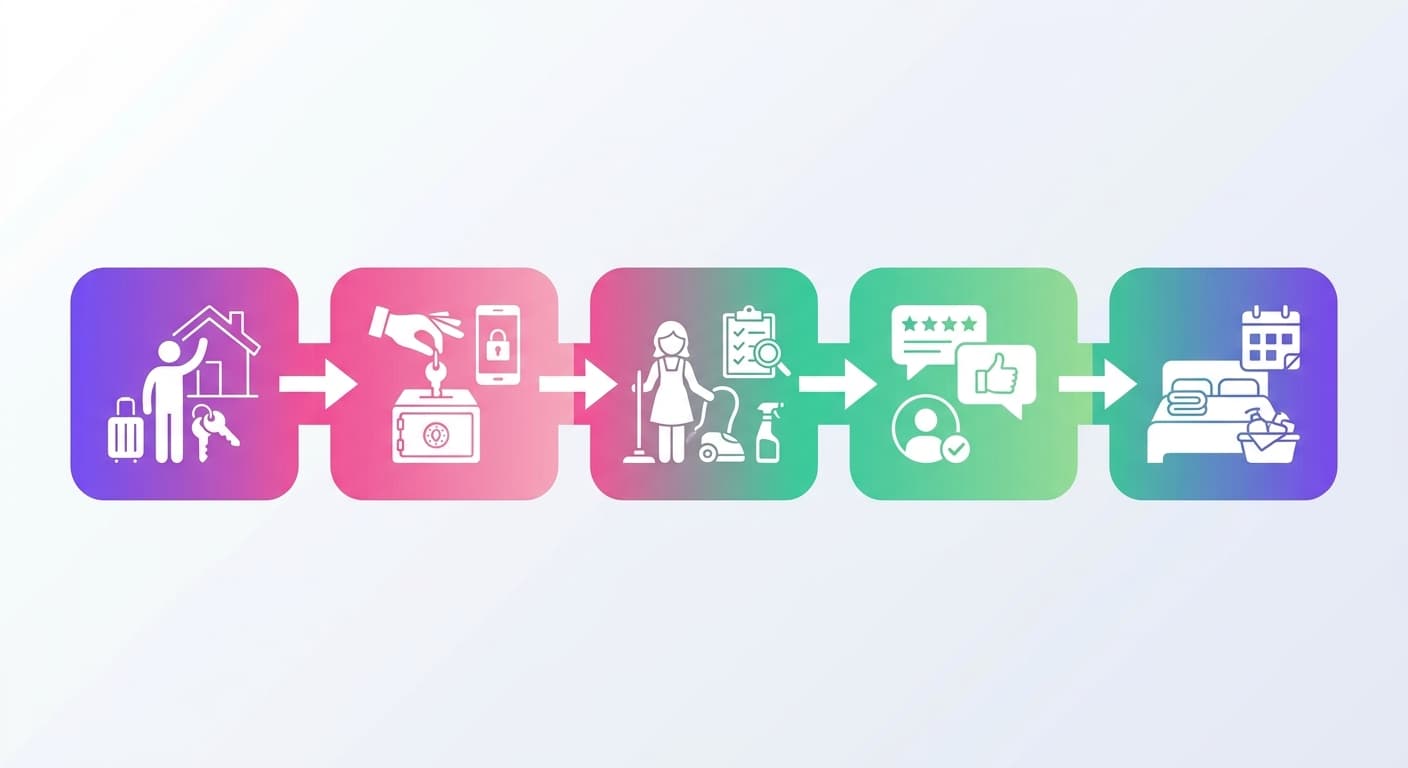
A check-out procedure is the structured sequence of steps a host sets for guests to follow when leaving a property, covering everything from key return and appliance shutdown to reporting damage and triggering the cleaning crew's arrival window.
Much like the check out process in hotel stays, where front desk staff walk guests through a defined departure routine, short-term rental hosts rely on clear instructions to ensure nothing is left to chance.
While traditional hotels have refined their departure workflows for over 70 years, you don't have their staff. The key difference is that your process has to work without anyone physically present.
Your instructions need to be so clear they replace a front desk agent, covering every single thing a guest must do before they walk out that door.
Why Check-out Procedure Matters for STR Hosts
A missed checkout step costs you real money. At $150/night with a $45 cleaning fee, a guest who leaves two hours late can push your turnover window past the point where your cleaner can finish before the next check-in.
That means a same-day rebooking gets cancelled, or your next guest arrives to an unready property and leaves a 3-star review that drags your ranking for weeks.
The financial exposure adds up fast. Hosts running 75% occupancy on a single property average roughly 22-23 stays per month. Even two botched turnovers per month can cost $300+ in lost bookings or refunds before you factor in the cleaner's overtime rate.
What a Check-out Procedure Looks Like in Practice

A check-out procedure isn't a checklist you hand guests on arrival day. It's the full sequence of steps that closes a booking, from the moment guests leave your property to the moment your cleaner confirms it's turnover-ready for the next reservation.
For a typical Airbnb listing at $150/night with a $45 cleaning fee, a broken check-out procedure bleeds cash. It’s a real problem. A guest who leaves at noon instead of the required 10 a.m. can completely destroy a same-day turnover before the 3 p.m.
This forces your cleaner into a mad dash, skipping essential tasks like mopping the kitchen floor just to get the basics done on time. It's a domino effect from hell, all because one step failed.
When to Use Check-out Procedures: Seasonal Guidance
Your check-out procedure isn't static. Peak seasons and market conditions change what you need to enforce and how strictly.
High season (summer, holidays): Same-day turnovers are common. With back-to-back bookings at $200+ per night, a guest who leaves at noon instead of 10 a.m. costs you a cleaning slot and risks a late check-in complaint. Lock the 10 a.m. departure in your messaging two days out.
Everything changes during shoulder season. The pressure is off. When your occupancy in a slow month like October drops to 55-60%, you've usually got entire days between guests. A 30-minute overstay rarely causes any damage to your schedule.
Winter/slow periods: Flexible late check-outs (noon, for a $25 fee) can increase revenue per booking by 8-12% without adding operational cost.
How Check-out Procedure Affects Other Metrics
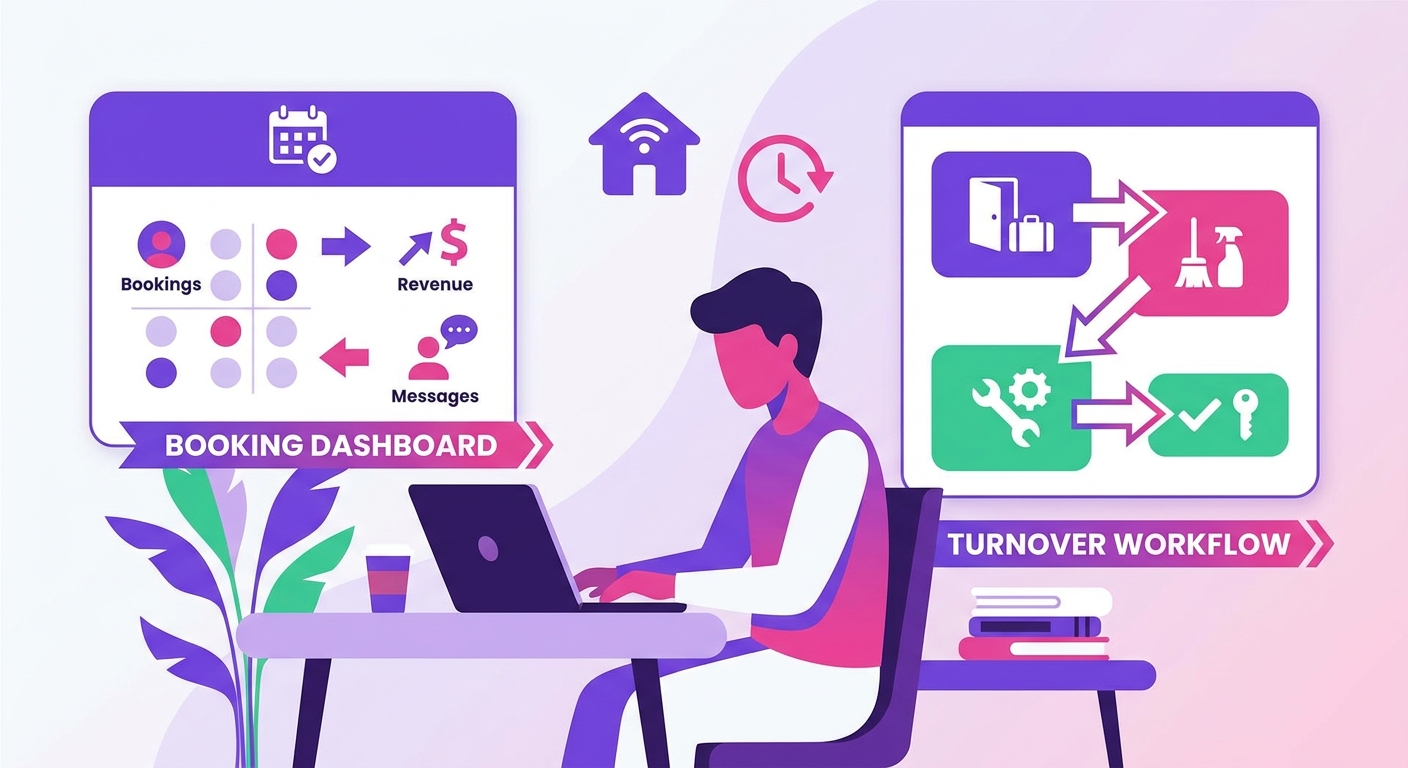
A slow or poorly communicated departure process creates a direct hit to your turnover window.
If guests check out at noon instead of 10 a.m. because your instructions were unclear, your cleaner loses two hours, and at $45/hour, that's a $90 buffer you didn't budget for.
The ripple effect goes further. Late checkouts compress same-day turnovers which forces you to block same-day bookings or absorb rushed cleaning costs. At 75% occupancy on a $150/night listing, a single blocked night costs roughly $112.50 in lost revenue.
Departure timing also shapes your review score. Guests who receive clear checkout steps rate communication 0.3–0.5 stars higher on average, and that score feeds directly into your listing's search placement.
Find Your Check-out Procedure in Minutes
Mr. Props gives you ready-to-send checkout instructions built for STR hosts, covering key returns, property condition, and timing, so your turnover runs on schedule.
Start Free Trial Browse Templates
Trusted by hosts managing 1 to 50+ listings on Airbnb, Vrbo, and Booking.com.