
What is Check-In Window in Rentals?
Check-In Window in Rentals A check-in window is the specific block of time during which guests…
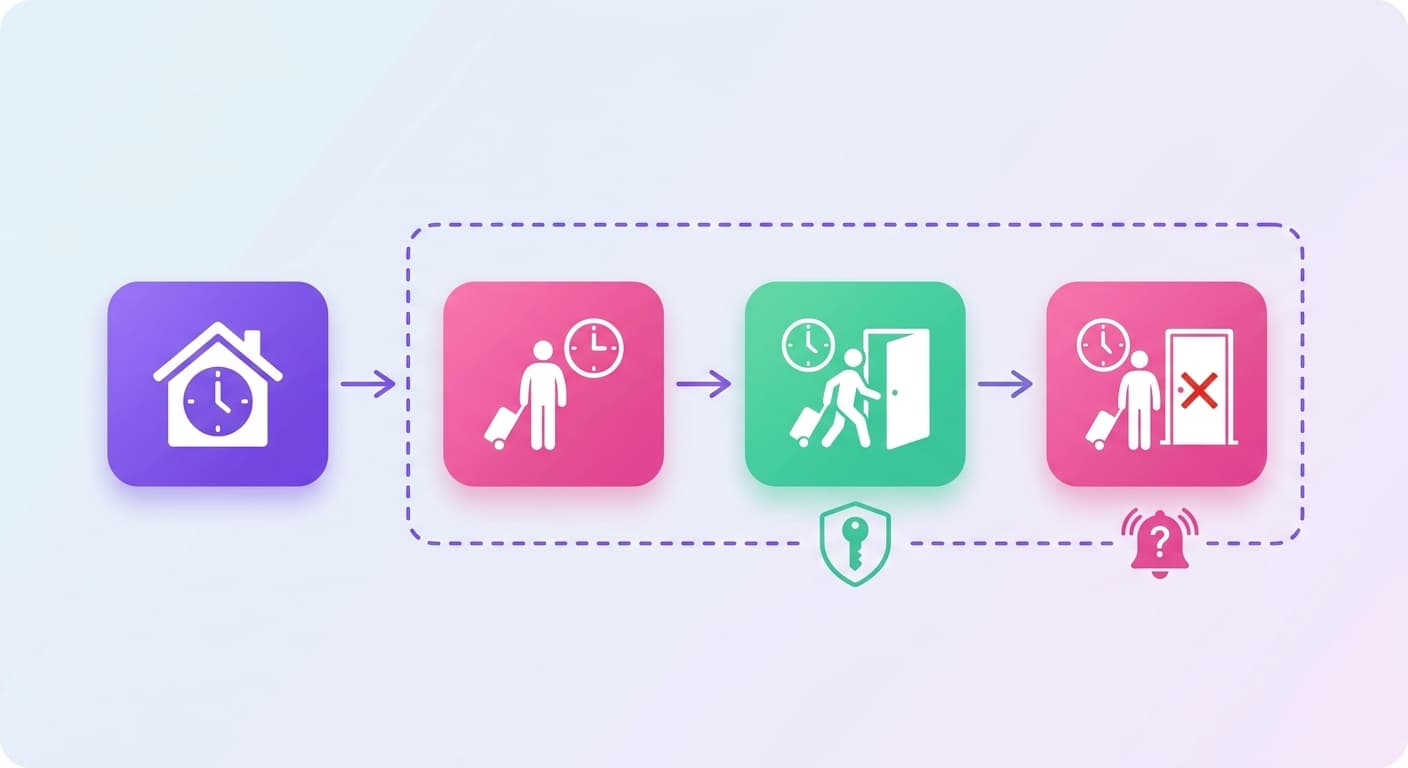
A check-in window is the specific block of time during which guests are permitted to arrive at your property on their first day of stay, for example, 3:00 PM to 10:00 PM, as distinct from a single fixed check-in time.
Understanding what is a check-in window in rentals matters because it directly controls when your cleaner must finish and when you're obligated to have the property ready.
A listing priced at $150/night with a 3:00 PM–8:00 PM window gives your turnover crew a hard deadline and caps late-arrival disruptions. Most hosts confuse this with a check-in time which is a single cutoff, not a range.
Why Check-in Window Matters for Your STR Bottom Line
A poorly set arrival window costs you bookings. Not occasionally, structurally. When your check-in window conflicts with your cleaner's schedule, you're either turning guests away or rushing a $45 cleaning job that should take three hours.
Run the numbers on a $150/night listing at 75% occupancy: that's roughly 274 booked nights per year.
Losing even 5% of those bookings to avoidable check-in friction guests who book elsewhere because your window is too narrow, costs you about $2,055 annually before you've touched your pricing.
Check-In Window Visualized

The diagram below maps a typical check-in window against the full day's timeline, so you can see exactly where the constraints stack up between your cleaner's departure and your guest's arrival.
Where hosts lose money isn't the window itself. It's setting the cutoff too late, a 10:00 PM hard stop sounds guest-friendly, but it means you're fielding access problems at 9:45 PM on a Friday.
Checkout: 11:00 AM
Cleaning buffer: 11:00 AM – 3:00 PM (2-4 hours depending on property size)
Check-in window opens: 3:00 PM
Hard cutoff: 8:00 PM (recommended for owner-operators without 24/7 support)
The 8:00 PM cutoff isn't universal. If you use a smart lock and have a co-host covering late messages, pushing to 10:00 PM adds flexibility without adding your personal labor.
When to Adjust Your Check-in Window by Season
Your check-in window isn't a set-and-forget setting. Turnover pressure, cleaner availability, and guest behavior all shift across the calendar, and your window should shift with them.
Peak summer (June–August): Same-day back-to-back bookings are common. Tighten your window to 3:00 PM–7:00 PM if your cleaner needs a full 4-hour block after an 11:00 AM checkout.
Shoulder season (April–May, September–October): Occupancy drops to roughly 55–65% on most urban listings. Fewer same-day turns means you can open a wider window, 2:00 PM–10:00 PM, without operational risk.
Holiday weekends (Memorial Day, Labor Day) behave like peak weeks even in slower markets. Treat them as peak-season windows regardless of your baseline occupancy.
How Check-in Window Affects Other Metrics

A narrow check-in window directly cuts your bookable nights. If you block same-day arrivals after 8 PM, you're refusing late-flight guests who often pay 15–20% above your base rate to secure last-minute availability.
The relationship with occupancy is mechanical. Every hour you shorten your arrival window is a segment of demand you've excluded. At $150/night and 70% occupancy, losing even two bookings per month costs roughly $300 in revenue before you factor in lost cleaning fee income.
RevPAN (revenue per available night) drops when your window is too rigid, because unsold nights carry full fixed costs regardless. Wider windows paired with a $45 early-check-in fee let you capture that revenue without disrupting turnovers.
Find Your Check-in Window in Minutes
Mr. Props helps you set the right check-in window for your listing, no guesswork, no lost bookings.
Start Free Trial See How It Works
Trusted by 10,000+ STR hosts on Airbnb, Vrbo, and Booking.com.