
What is RevPAR vs ADR?
In short-term rental and hospitality revenue management, RevPAR (Revenue Per Available Room) measures overall revenue efficiency by combining both…
What is RevPAR?

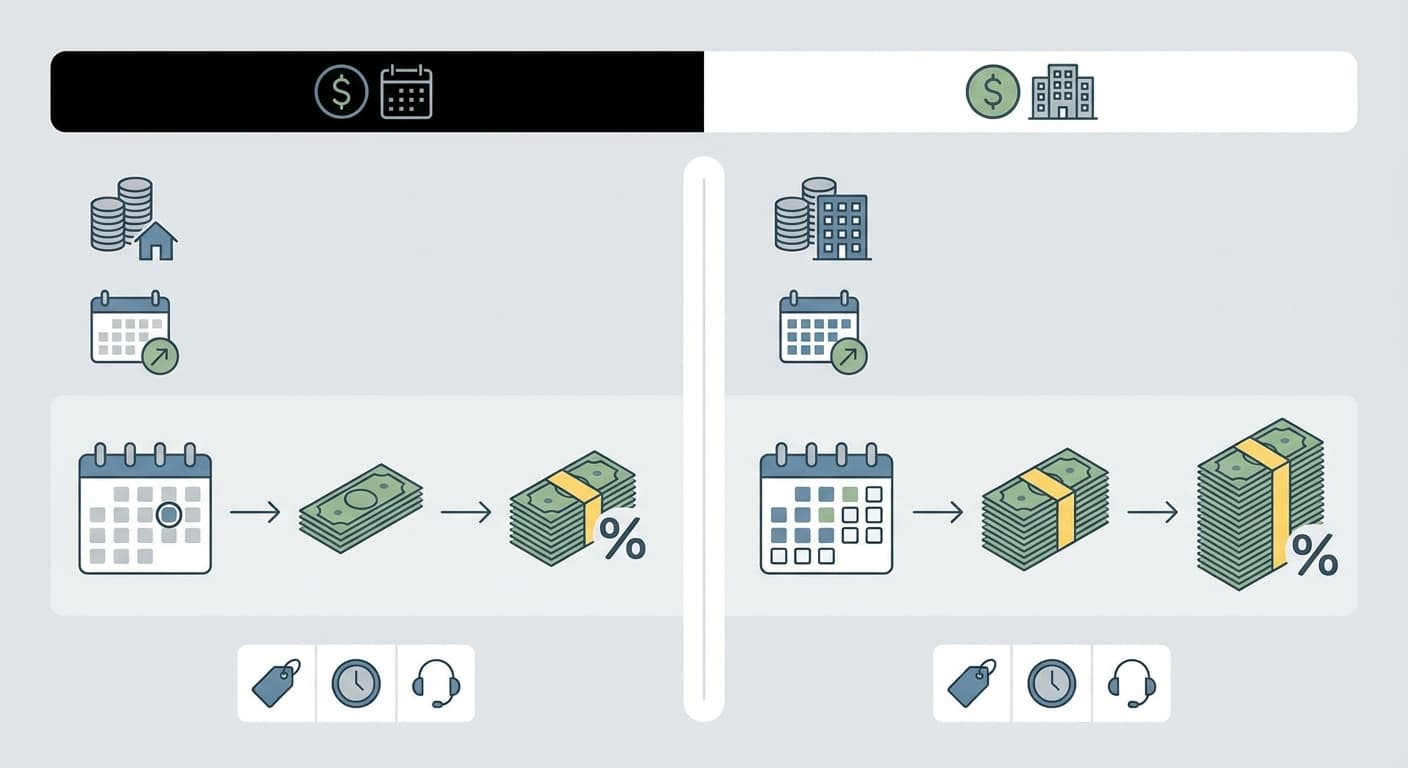
Revenue Per Available Room (RevPAR) is a key performance metric in the hospitality industry, used to assess a hotel's ability to generate revenue across its available inventory of rooms. It's calculated by multiplying the hotel's average daily room rate by its occupancy rate. Essentially, it provides a comprehensive view of a hotel's performance by integrating both occupancy and average rate. To illustrate, if a hotel charges an average daily rate of $150 and maintains an occupancy rate of 80%, the RevPAR would be $120. The debate of revpar vs adr often centers on which metric is more indicative of success, yet both offer valuable insights.
What is ADR?
The Average Daily Rate (ADR) is a key metric in the hospitality industry, reflecting the average income earned from occupied rooms per day. It's calculated by dividing the total room revenue by the number of rooms sold. For example, if a hotel earns $10,000 from 100 rooms, its ADR would be $100. This measure allows hotel managers to analyze the revenue potential of their property.
Understanding revpar vs adr helps in distinguishing how occupancy and pricing strategies affect revenue. While ADR focuses on the average rate charged per room, RevPAR includes occupancy rates, offering a broader perspective. So, which metric is more useful? That depends on your specific goals, whether it’s maximizing room rates or overall revenue. Comparing ADR and RevPAR is essential for a comprehensive revenue strategy.
Key Differences Between RevPAR and ADR

RevPAR and ADR are essential metrics for hoteliers, each offering distinct insights. RevPAR, or Revenue Per Available Room, reflects overall revenue efficiency by dividing total room revenue by the number of available rooms. Conversely, ADR, Average Daily Rate, measures the average revenue earned per occupied room, highlighting pricing strategy effectiveness.
For instance, imagine a hotel with a total room revenue of $50,000 from 200 available rooms. The RevPAR would be $250. If 150 rooms were occupied, the ADR would be approximately $333.33. In this scenario, understanding the difference between RevPAR and ADR helps determine whether the focus should be on occupancy or rate adjustments.
Why Understanding RevPAR and ADR Matters
In hotel management, understanding the difference between RevPAR and ADR is essential for optimizing revenue. RevPAR, or Revenue per Available Room, provides insight into how well a hotel is filling its rooms and at what average rate, while ADR, or Average Daily Rate, focuses solely on the average revenue earned per occupied room. So, which is more important? Both metrics serve different purposes. RevPAR gives a broader picture of the property's performance, including occupancy, while ADR highlights pricing strategy effectiveness.
For instance, if a hotel has a RevPAR of $100 and an ADR of $125, it indicates a 80% occupancy rate. This tells the management that their pricing might be effective but there's room to improve occupancy. Explore more about these metrics to enhance your hotel's operational strategies.
Examples of RevPAR and ADR in Action

Understanding the difference between RevPAR and ADR comes down to how each metric is calculated and used. For instance, a hotel with an ADR of $150 and an 80% occupancy rate would have a RevPAR of $120. This shows how RevPAR incorporates both the room rate and occupancy, providing a comprehensive view of revenue compared to ADR's focus on average rate.
In another scenario, a competitor hotel might have an ADR of $130 but a higher occupancy rate, leading to a similar RevPAR. This highlights the strategic value of balancing price and occupancy for optimal revenue.
Explore RevPAR strategies to maximize profitability. Learn about ADR optimization for revenue growth.Related Terms in Hotel Revenue Management
Occupancy Rate is the percentage of occupied rooms in a hotel at a given time. If a hotel has 100 rooms and 75 are booked, the occupancy rate is 75%.
GOPPAR stands for Gross Operating Profit Per Available Room. It measures a hotel's financial performance by dividing the gross operating profit by available rooms. A hotel with a GOP of $100,000 and 100 rooms has a GOPPAR of $1,000.
Knowing the difference between RevPAR and ADR helps hoteliers make informed decisions. Use these metrics with occupancy rate and GOPPAR for comprehensive revenue management.
Frequently Asked Questions
Optimize Your RevPAR and ADR With Mr. Props
Stop guessing which metric to prioritize. Mr. Props gives short-term rental hosts the revenue management tools to track RevPAR, ADR, and occupancy in one place — so every pricing decision is backed by data.
No credit card required. Cancel anytime.