
What is Vacation Rental Calendar Sync?
Vacation Rental Calendar Sync

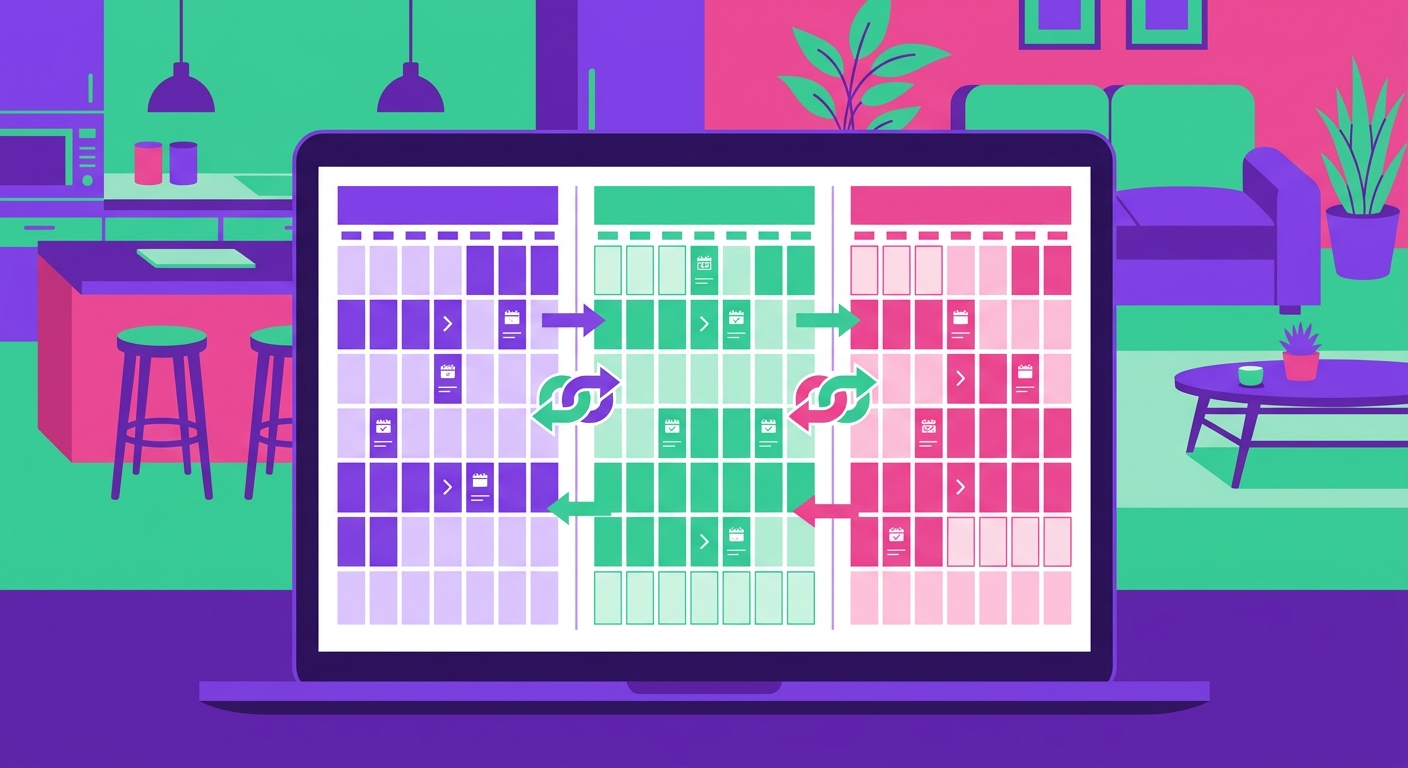
Vacation rental calendar sync is an automated process that pushes availability updates across every booking platform where your property is listed,
This way, a reservation made on Airbnb at 9 p.m. blocks that same date on Vrbo, Booking.com, and any direct booking site within seconds, without any manual input from you.
The core problem it solves is the double booking: two guests each paying a $150/night rate for the same night, both with confirmed reservations, and you stuck choosing who to turn away.
Calendar sync eliminates that risk entirely by treating all your listing calendars as a single source of truth.
The Significance of Vacation Rental Calendar Sync
A double booking doesn't just mean an awkward cancellation. It costs you the guest, the review, and often a platform penalty that suppresses your listing for weeks.
At $150 a night with 75% occupancy, losing even three nights of visibility on Airbnb can erase $450 in revenue before you've noticed the problem.
The risk compounds when you list on multiple platforms. Hosts running the same property on Airbnb, Vrbo, and a direct booking site are managing three separate availability grids.
Without automatic calendar updates, a booking confirmed on one channel can sit unblocked on the others for hours, sometimes longer.
When to Use It: Seasonal Guidance
Calendar sync isn't equally urgent year-round. The stakes change with your booking volume, and getting this wrong during peak periods costs real money.
High season (June–August, December holidays): Your listing may receive 15–20 booking inquiries per week across multiple platforms. Without sync active, a double-booking at $180/night means refunding a guest, absorbing platform penalties, and absorbing the reputational hit.
Shoulder season: Occupancy typically drops to 45–55%. This is the right window to audit your sync intervals, confirm your iCal refresh rate isn't set longer than 15 minutes.
Low season: Fewer collisions, but don't disable sync. Last-minute deals you push on one platform need to block your Airbnb calendar within minutes, not hours.
Market conditions matter too. If your market hosts a recurring local event, a festival that drives 90%+ occupancy for one weekend, activate sync at least 60 days before that window opens.
Calendar Sync as a Metric Mover in Vacation Rentals

When a host running a $150/night listing gets a double booking, they don't just lose that booking's income, they often face a platform penalty fee of $50 or more for the forced cancellation.
That single mistake immediately tanks your revenue per available night and leaves a calendar gap that's almost impossible to fill. Even two or three of these slip-ups per quarter can push your annual occupancy rate below that critical 70% threshold. That's just cash down the drain.
Cancellation penalties matter here. Airbnb's host cancellation policy can suppress your listing's search ranking for up to 30 days after a cancellation, extending revenue loss well beyond that single night.
Accurate availability data also affects your average daily rate indirectly. When your calendar reflects real-time availability, last-minute pricing rules fire correctly, a property with clean sync can capture 20–30% ADR premiums on 48-hour bookings that a stale calendar would simply block.
Find Your Vacation Rental Calendar Sync in Minutes
Stop losing $150-night bookings to double reservations. Connect your listings across every platform and keep your availability accurate automatically.
Start Free Trial See How It Works
No credit card required. Setup takes under 5 minutes.