
What is Local STR Compliance?
Local STR Compliance Local STR compliance is the ongoing process of meeting every permit, tax…

Local STR compliance is the ongoing process of meeting every permit, tax, zoning, and safety requirement that your city, county, or HOA imposes on short-term rental listings before and while you operate them.
Every layer matters: business licenses ($50–$300/year in most U.S. cities), transient occupancy tax registration, occupancy caps, parking rules, and fire safety certificates.
Miss any one layer and you're technically non-compliant even if you hold a permit.
Because municipalities update these rules frequently, treating compliance as a continuous process rather than a one-time checklist is the only reliable way to stay protected.
The Importance of Local STR Compliance
A single non-compliance fine in a city like Nashville or Denver runs $500 to $5,000 per violation. At $150/night and 75% occupancy, that's 11 to 111 nights of revenue erased in one enforcement action.
The financial exposure goes beyond fines. Most municipalities can force your listing off Airbnb while your permit appeal is pending, that process averages 60 to 90 days in cities with active STR enforcement.
At $150/night, a 75-day blackout costs roughly $8,400 in lost gross revenue on a single property.
Visual Breakdown: How Local STR Compliance Works
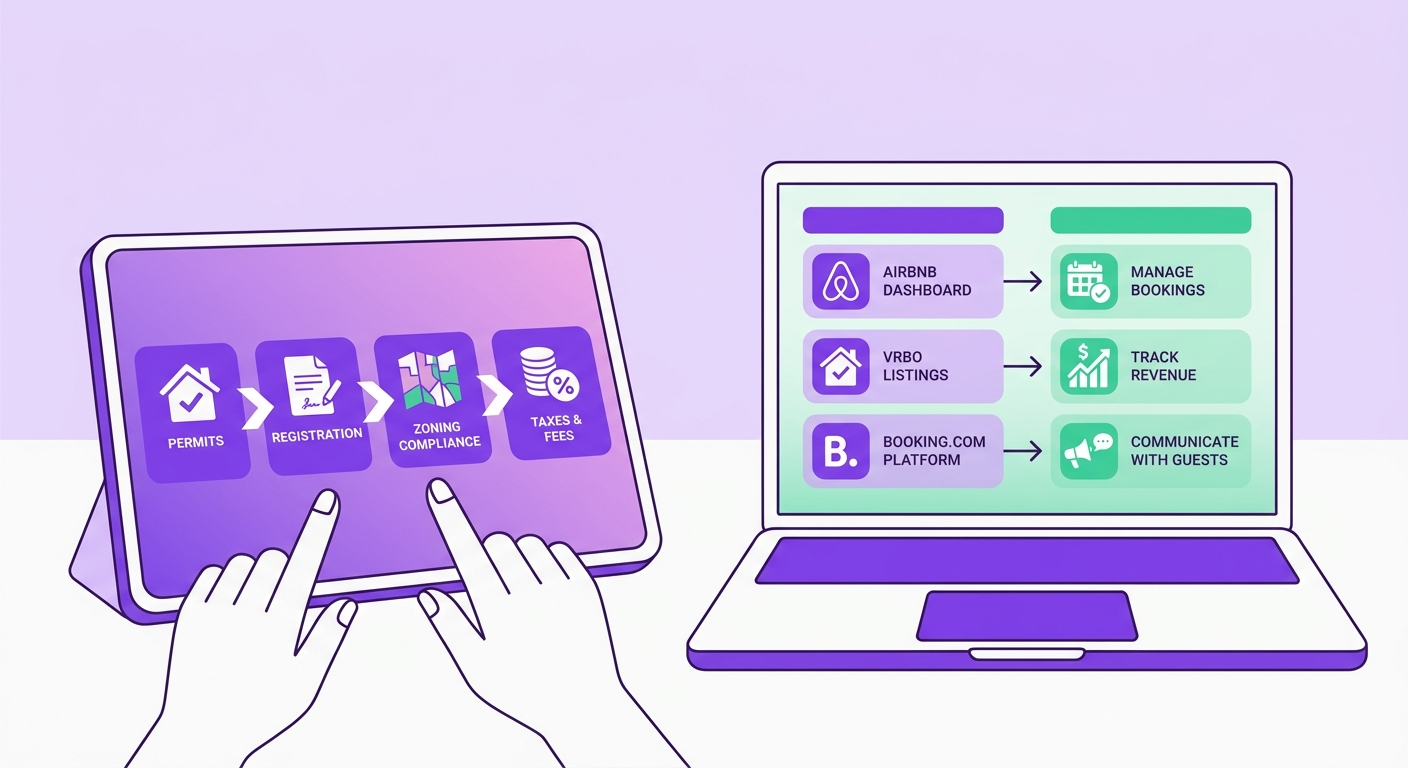
The diagram above maps the four layers most cities stack on top of each other. Miss any one of them and you're exposed, even if the other three are clean.
Here's what those layers look like with real numbers attached:
Permit fee: $50–$500/year depending on city, paid before your first booking
Occupancy tax registration: typically 6–15% of gross nightly revenue, remitted monthly or quarterly
Safety inspection: smoke detector, CO detector, egress window, one-time or annual, usually $75–$200
Platform reporting: Airbnb collects and remits tax in 40+ U.S. states, but your city permit number still needs to appear on your listing
A property earning $150/night at 70% occupancy generates roughly $38,325/year in gross revenue. At a 10% occupancy tax rate, that's $3,832 owed annually, money that flows through your listing whether or not you've registered to collect it.
Unregistered hosts don't avoid that liability; they just accumulate it silently.
When to Use Local STR Compliance

Your compliance obligations don't stay static across the calendar year. Many cities trigger additional permit requirements or occupancy caps during peak seasons, and missing those windows costs more than just a fine.
Practical situations where your local STR compliance status directly affects decisions:
Summer rate increases: If your Airbnb runs at $220/night in July versus $130/night in January, a mid-season license suspension wipes out your highest-margin weeks, not your slowest ones.
Municipal permit renewals: Roughly 60% of U.S. cities with STR ordinances set annual renewal deadlines between January and March, before the spring booking surge hits your calendar.
New regulations mid-year: Cities like New York's Local Law 18 activated enforcement mid-calendar, catching hosts with live bookings already confirmed.
One exception: rural markets with minimal municipal oversight rarely see seasonal compliance shifts. If your property sits outside city limits with no HOA restrictions, this timing pressure is largely irrelevant to your operation.
Find Your Local STR Compliance Requirements in Minutes
Mr. Props maps permit rules, occupancy limits, and tax registration requirements by address, so you're not guessing what your city actually enforces.
Start Free Trial See How It Works
No credit card required. Used by operators managing 1 to 50+ listings.