
What is Booking Lead Time?
Booking Lead Time Booking lead time is the number of days between the date a…
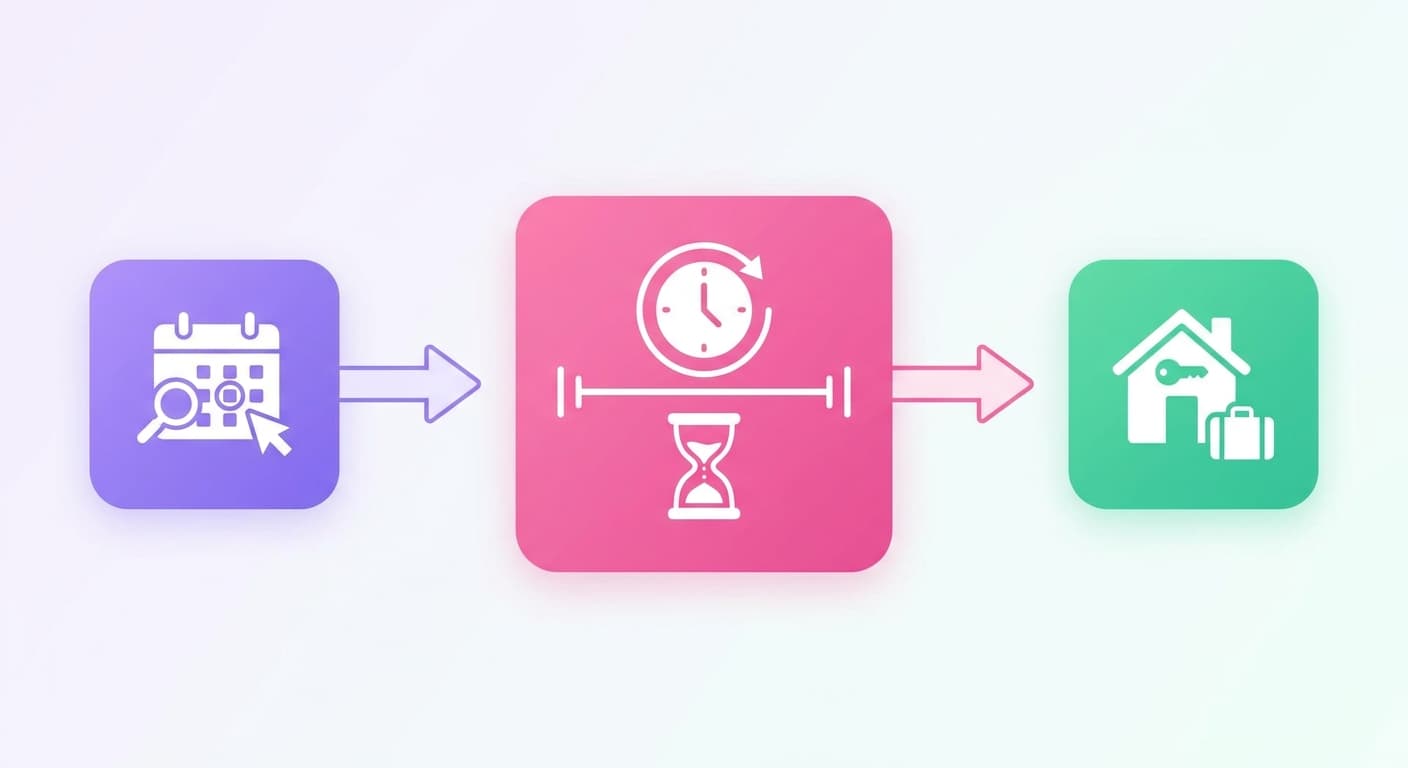
Booking lead time is the number of days between the date a guest makes a reservation and the date they're scheduled to check in to your property.
A guest who books your $150/night listing on May 1st for a May 8th arrival has a lead time of 7 days.
That single number tells you more about your pricing window than your occupancy rate does, because it shows how far in advance demand is actually forming for your specific listing.
Most hosts track occupancy and average nightly rate. Few track lead time by month, which means they're adjusting prices after demand signals have already passed.
The Significance of Booking Lead Time
That empty week on your calendar isn't just an inconvenience; it's a financial hole.
At your standard $150/night rate, just seven unbooked nights, say, from a last-minute cancellation for a local music festival, cost you a staggering $1,050 in lost revenue. It's a huge hit.
Your booking lead time is the only thing that controls how much warning you'll get before that gap appears on your calendar.
Lead time also shapes your pricing power.
Guests booking 45+ days out typically accept higher nightly rates because they're planning ahead and have fewer alternatives. Last-minute bookers expect discounts.
Booking Lead Time: A Visual Breakdown
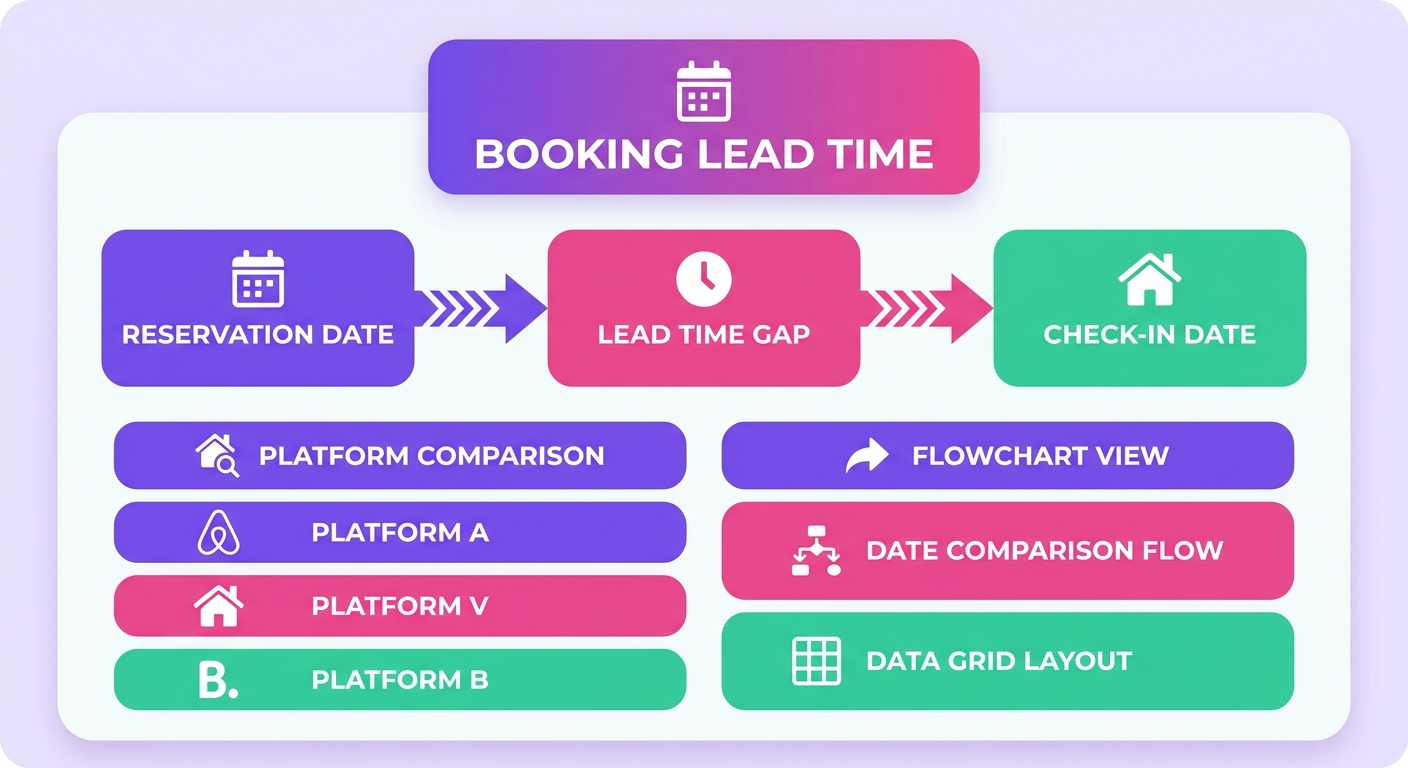
Let's trace how lead time works for a typical Airbnb booking.
A guest books on April 15 for a May 10 check-in. That's a 25-day lead time.
It’s a fantastic buffer, giving you plenty of runway to adjust your nightly rate if, for example, a major downtown conference suddenly gets announced for that same week. Basically, you're not stuck.
But short lead times absolutely crush that window for adjustments.
Two patterns show up consistently across STR markets:
Urban listings average 14-21 days of lead time, driven by business travel and last-minute weekend trips
Vacation/resort listings average 45-90 days, with peak-season bookings often landing 120+ days out
When to Use Booking Lead Time
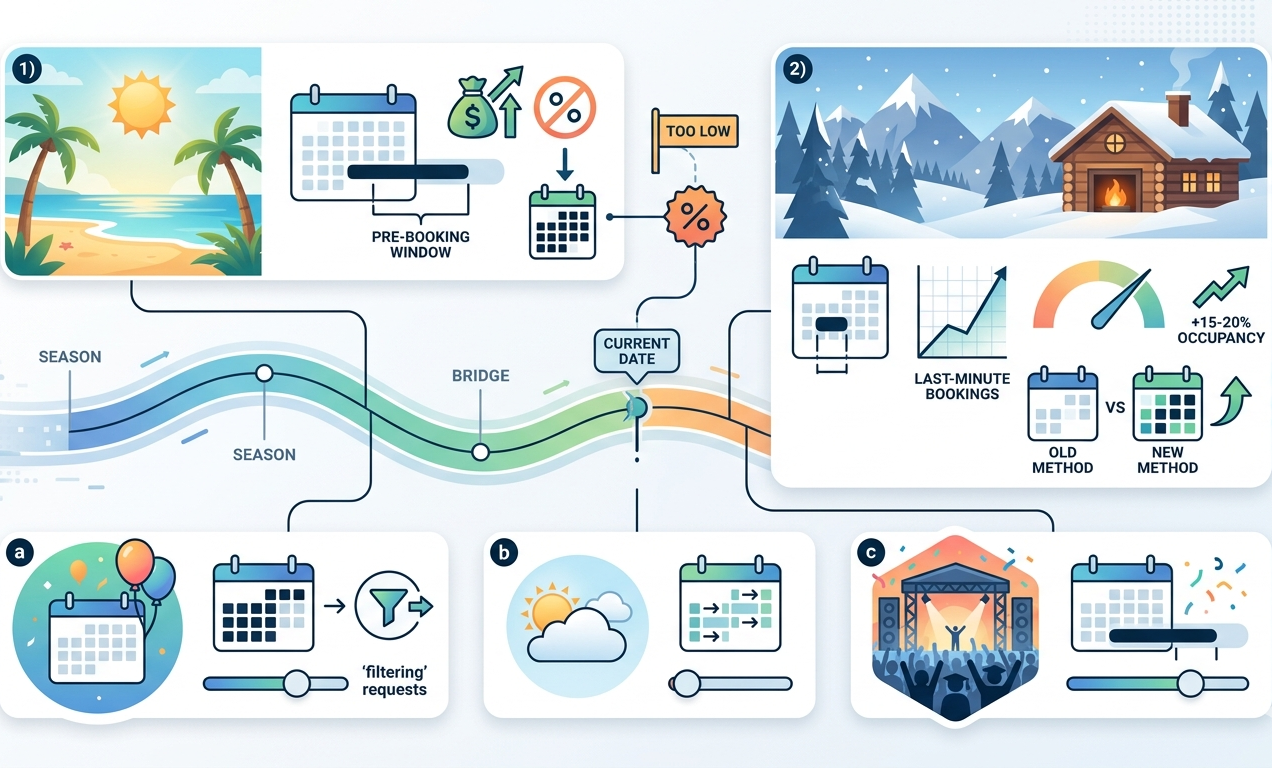
Your listing's average lead time shifts with the calendar, and ignoring that costs you money.
During peak season a beach property in June through August, for example, guests typically book 45 to 60 days out. Drop your minimum lead time too low and you'll fill gaps with last-minute discounts you didn't need to offer.
Off-season reverses the problem. A mountain cabin in February might see 80% of bookings arrive within 14 days. Tightening your minimum lead time to 1-2 days during slow periods can recover 15-20% more occupancy without touching your base rate.
Holiday weekends: extend your minimum to 5-7 days to filter low-quality last-minute requests
Shoulder season: drop the floor to 2 days and watch gap nights fill faster
Local events (festivals, graduations): treat them like peak season regardless of month
Find Your Booking Lead Time in Minutes
Mr. Props pulls your reservation data and calculates average lead time by season, listing, and channel, so you can set minimum notice windows and pricing rules on actual numbers, not guesswork.
No credit card required. Works with Airbnb, Vrbo, and Booking.com.