
What is Short Term Rental Cancellation Policy?
Short Term Rental Cancellation Policy
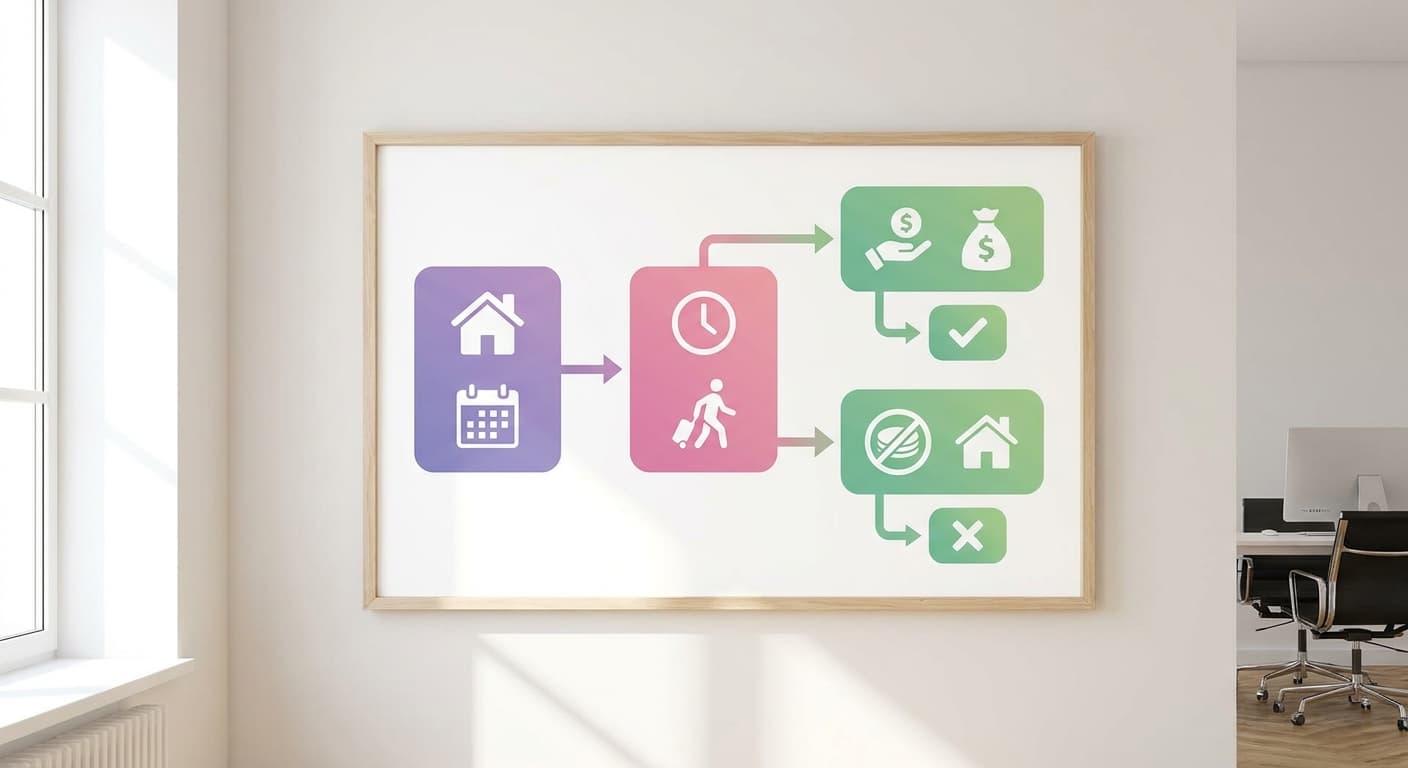
A short-term rental cancellation policy is the set of rules governing whether a guest receives a refund, and how much, when they cancel a confirmed booking at your Airbnb, Vrbo, or Booking.
Most hosts pick a platform default without thinking through the revenue math. A Flexible policy on a $180/night listing with a 3-night minimum means a same-day cancellation costs you $540 in confirmed revenue.
That's not a guest-friendly gesture, that's an unpriced risk sitting in your calendar.
Your rental cancellation policy is, in effect, a financial instrument, and treating it as an afterthought is one of the most common and costly mistakes new hosts make.
The Importance of Cancellation Policy for Short-Term Rentals
Your cancellation terms shape guest behavior before booking.
Guests who see a strict policy on a $1,200 weekend stay are more likely to add travel insurance or confirm dates carefully. That means fewer last-minute drops and more predictable income.
Here's what most hosts miss: a policy that's too lenient costs more than a policy that loses you a booking. A flexible policy on a property averaging $4,500/month in revenue can absorb two or three cancellations before you've effectively worked for free that month.
The policy you choose doesn't just protect one booking. It sets the baseline for every reservation on your listing.
Visual Breakdown: How Cancellation Refunds Actually Calculate

A $150/night listing with a 3-night minimum sit at $450 in total accommodation revenue before fees. Here's what a Moderate policy does to that number depending on when the guest cancels.
The three stages above aren't hypothetical. On Airbnb's Moderate policy, a guest who cancels 6 days out forfeits 50% of accommodation fees. On a $450 booking, that's $225 you keep, minus the cleaning fee.
The disappearing cleaning fee is a nasty surprise. Because the guest never actually checked in, Airbnb's policy means your standard $85 fee vanishes from the payout even if they cancel just two days before arrival.
The practical formula:
Host payout = (nightly rate × nights) × refund percentage retained
Cleaning fee: always refunded to guest on Airbnb cancellations
Vrbo: cleaning fee refund depends on your custom policy settings
Vrbo gives you more control here. You can set cleaning fees as non-refundable on cancellations past a defined window, a meaningful difference if your turnover costs run $100 or higher per stay.
When to Use This Policy
Your cancellation policy isn't a set-and-forget decision. Market conditions should push you to revisit it at least twice a year.
High-demand periods: Strict policy with a 30-day full-refund window
Shoulder season: Moderate policy to keep your 65-70% occupancy target reachable
Low season: Flexible policy to capture last-minute bookings at discounted rates ($120/night vs. your $180 peak rate)
How Your Cancellation Policy Affects Other Metrics

Your cancellation terms don't sit in isolation. They directly shape the three numbers that determine whether your listing is profitable: ADR, occupancy rate, and RevPAN.
A strict policy on a $150/night listing can push your ADR up by 8-12% because guests who book non-refundable rates often pay a premium.
But that same policy can drop your occupancy by 5-7 percentage points if your market skews toward last-minute, flexible bookers.
Your market dictates everything when it comes to cancellation policies and their effect on your RevPAN.
Find Your Short Term Rental Cancellation Policy in Minutes
Mr. Props pulls the cancellation rules for your Airbnb, Vrbo, or Booking.com listing into one place, no digging through platform help docs.
No credit card required · Set up in under 5 minutes · Used by 2,400+ STR operators