
What is Comp Set in Vacation Rentals?
Comp Set in Vacation Rentals A comp set (short for competitive set) is the group of listings…

A comp set (short for competitive set) is the group of listings you benchmark your Airbnb or Vrbo against when making pricing, positioning, and availability decisions.
Most guides define it as "similar properties nearby." That's too loose to be useful. A real comp set is built on four overlapping filters: property type, bedroom count, location radius, and guest capacity.
Your comp set isn't static, either. Seasonal inventory shifts mean a market with 40 active 3-bedroom listings in July may have only 22 in February, which changes your pricing position entirely.
Why Comp Set Matters for Your STR Bottom Line
A $20 mispricing mistake doesn't sound like much. At 75% occupancy on a 365-night calendar, that's $5,475 left on the table annually, or charged over market, costing you bookings worth far more.
Your comp set is the benchmark that tells you whether your $150/night listing is priced right or bleeding revenue. Without one, you're guessing.
With one, you're comparing your actual nightly rate, occupancy, and cleaning fee structure against the specific properties guests are choosing instead of yours.
A well-defined competitive set also surfaces non-rate gaps: a competing 2-bedroom in your ZIP code running a $35 cleaning fee versus your $65 will win price-sensitive guests on identical nightly rates every time.
Visual Breakdown: How a Comp Set Works
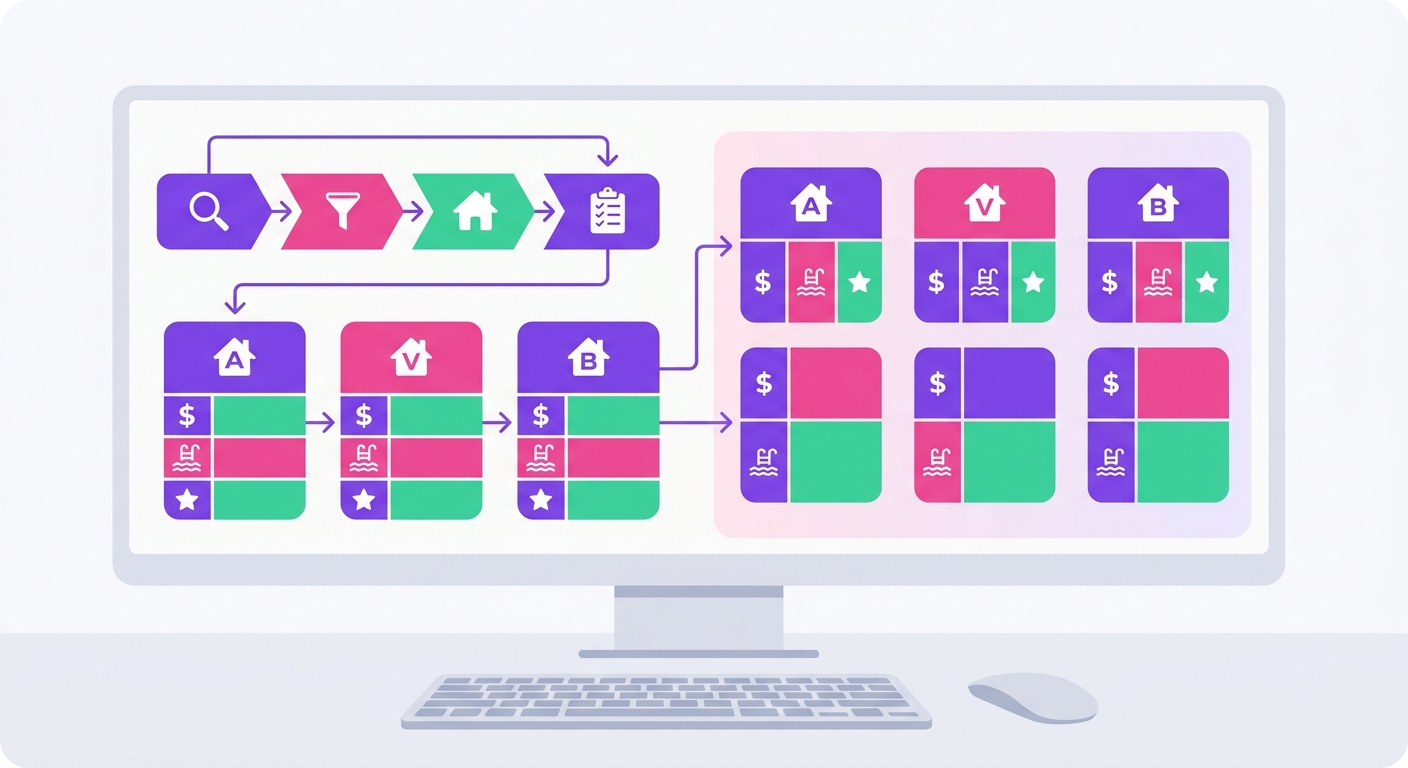
The diagram above shows the core mechanic: your listing sits on the left, your competitive set occupies the middle, and the pricing gap (or parity) you need to act on appears on the right.
Let's get specific. Imagine it's February and your 2-bedroom in Scottsdale is stuck at $155/night with only 68% occupancy, even with the Phoenix Open just weeks away.
Meanwhile, your comp set, four nearly identical 2-bedrooms within a 1.5-mile radius, is crushing it at an average of $172/night and 79% occupancy. You're losing on two fronts. That's an 11% rate gap and an 11-point occupancy gap, and they're both costing you money.
Both gaps matter. A host chasing only the rate gap while ignoring occupancy will raise prices and watch bookings drop. The comp set tells you which lever to pull.
Comp Set & Seasonality: When It Works Best
Your comp set isn't a set-it-and-forget-it benchmark. The listings that matter to your pricing change depending on the time of year.
Something strange happens during peak season, like 4th of July week in Lake Tahoe, when market occupancy skyrockets past 85%. Suddenly, your competition isn't who you think it is.
Desperate guests will book whatever's available, which means a 3-bedroom at $280/night is now competing directly with your 2-bedroom at $220/night. You have to expand your comp set. Otherwise, you're just leaving cash on the table.
Off-season is the opposite problem. At 45% occupancy, only the listings actually converting bookings tell you anything useful. Drop properties from your group that have gone dark or paused availability, their rates are noise, not signal.
Review your comp set at least quarterly, not annually
Add a higher-tier property in summer; remove inactive listings in winter
Track 30-day forward occupancy on your comps, not just nightly rate
Comp Set: Metric Interactions
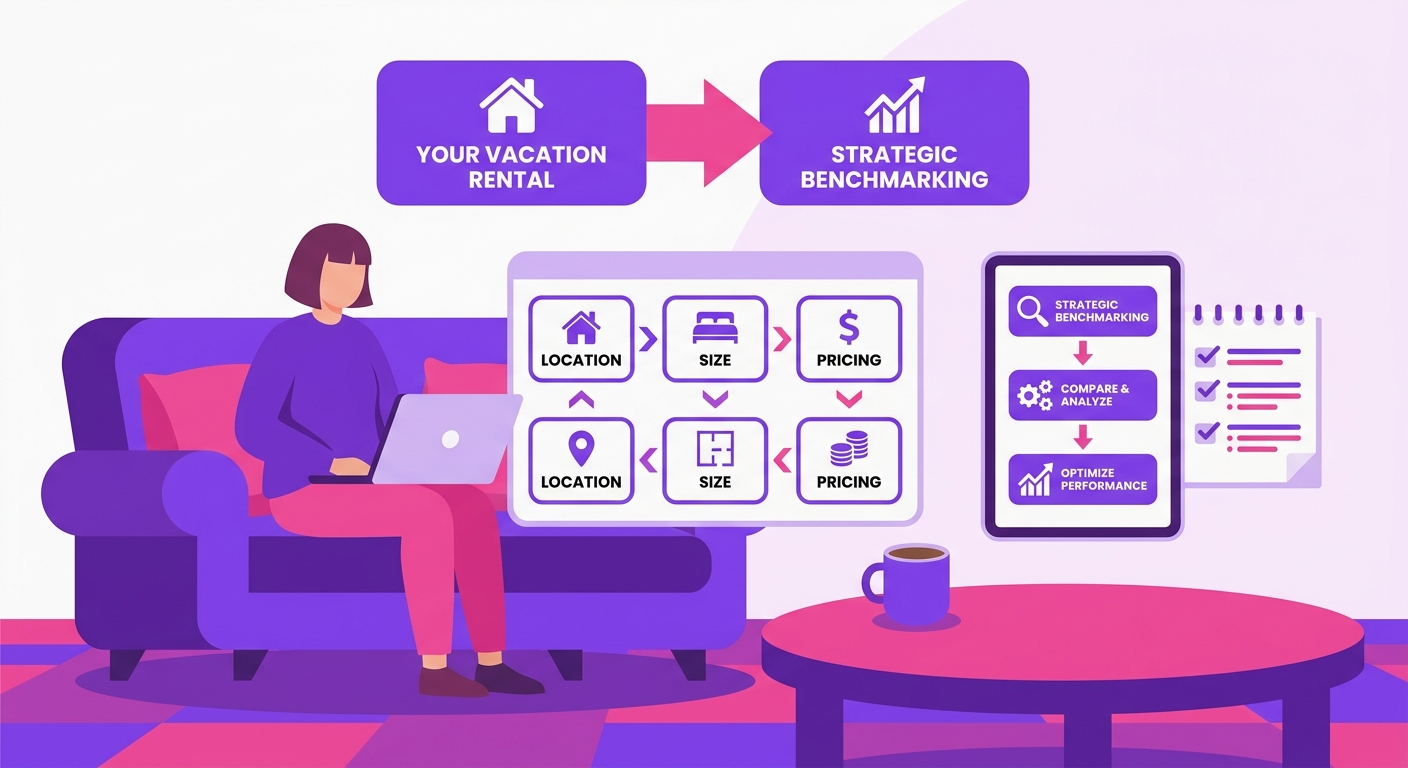
Your comp set doesn't just inform pricing. It sets the benchmark for every revenue metric you track.
ADR moves in direct relation to your competitive position. If your comp set averages $185/night and you're listing at $210, you need a clear advantage, better photos, higher review scores, or a genuine amenity difference, to justify it. Without one, your occupancy drops first.
RevPAN (revenue per available night) cuts through the noise. It's the ultimate scorecard.
Let's say your comp set is running 72% occupancy at $175/night, which gives them a solid $126 RevPAN. If your listing hits just 65% occupancy at a higher $185 rate, you're only at $120.25, that's a $172 monthly shortfall even though you're technically charging more per night.
Find Your Comp Set in Minutes
Mr. Props pulls live Airbnb and Vrbo data so you can build your competitive set, benchmark your $150/night rate, and spot gaps before the next booking window closes.
Start Free Trial See a Live Demo
No credit card required. Setup takes under 5 minutes.