
Hostaway Alternatives: Why Hosts Are Switching to Mr. Props in 2026
The Best Hostaway Alternative for STR Hosts in 2026
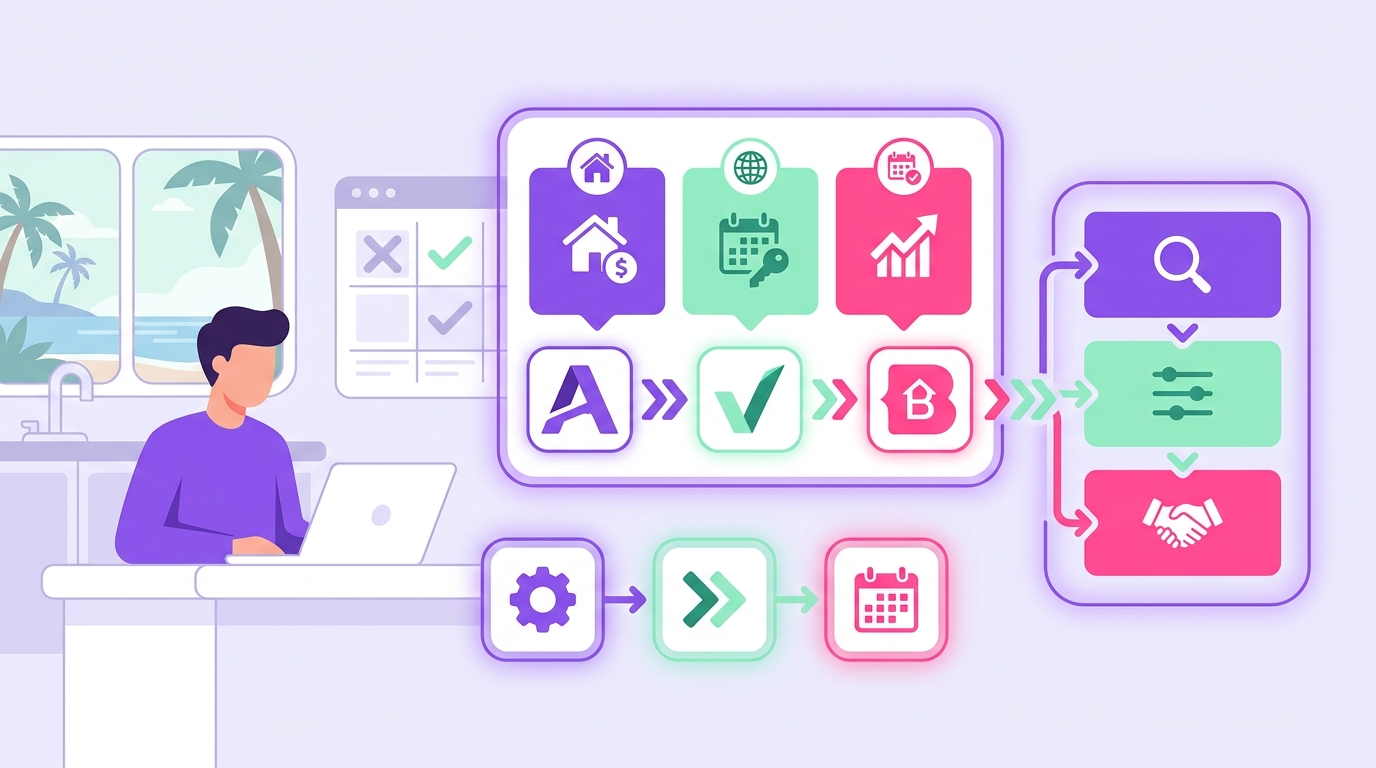
Hostaway built its reputation when most hosts managed a handful of listings and needed basic channel sync. That era is over. Hosts running Airbnb, Vrbo, and Booking.com portfolios today need automated guest messaging, real-time calendar sync, and revenue tracking that doesn't require a 45-minute onboarding call to understand. Mr. Props is the operating system built for exactly that, no bloated feature tiers, no per-listing fees that quietly double your bill at scale, no support tickets that take 72 hours to answer.
No credit card required · Join 2,400+ hosts already managing smarter
Mr. Props Vs. Hostaway: at a Glance
Most hostaway alternatives promise simplicity but deliver another dashboard you have to learn around. The comparison below shows where that friction actually lives for hosts managing listings across Airbnb, Vrbo, and Booking.com.
Hostaway surfaces a lot of data. Too much of it requires manual interpretation. Mr. Props surfaces the right data at the right moment, so your next action is obvious without digging through sub-menus or exporting reports to find out why occupancy dropped.
Operational drag is the real cost most hosts don't track: time spent reconciling calendars, chasing cleaning confirmations, and cross-checking channel payouts. That's what the visual comparison to the right quantifies.
Why Hosts Switch From Hostaway to Mr. Props
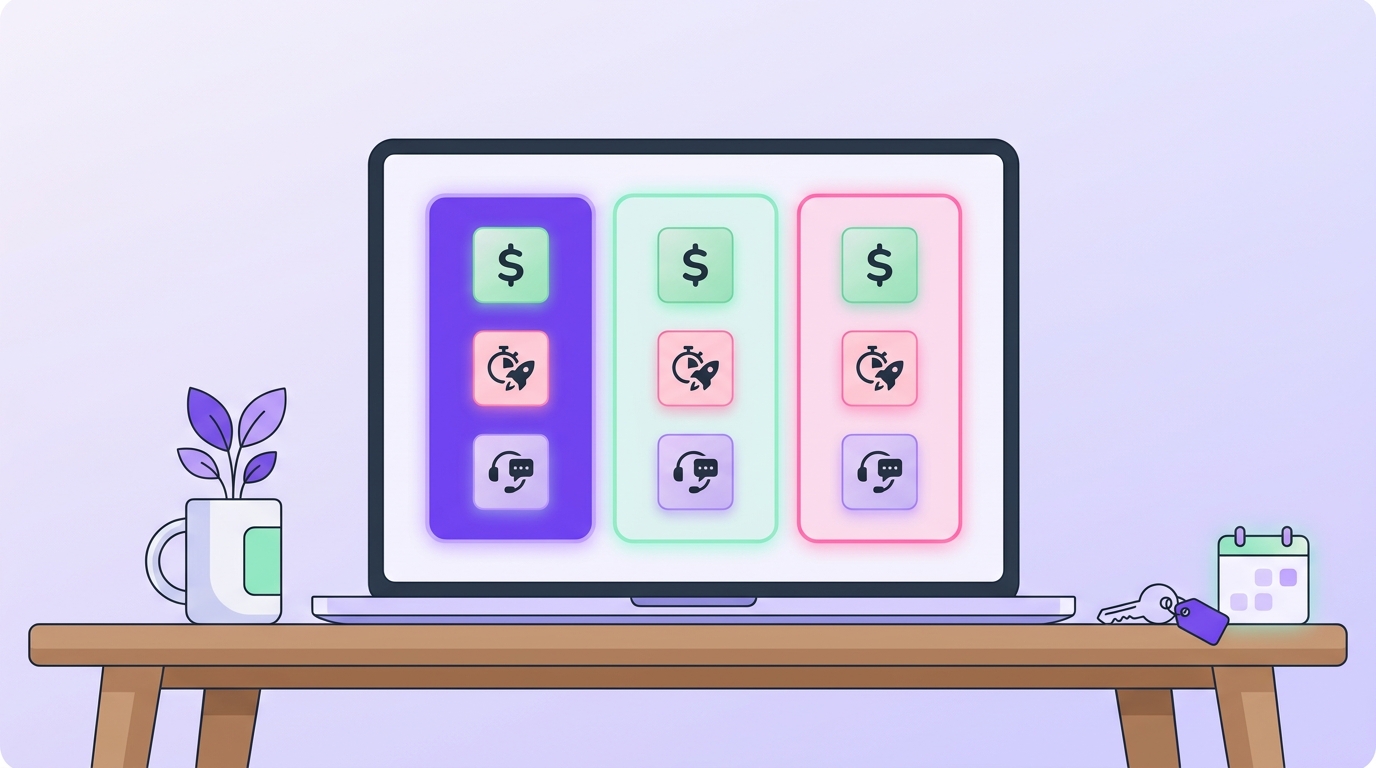
Most hosts don't leave Hostaway because it's broken. They leave because small frustrations compound into real revenue loss. Fees that weren't obvious at signup, automation that stops short of what you actually need, reporting that looks detailed until you try to act on it. These three cards show exactly where that friction shows up and what changes when you move to Mr.
Fee Creep at Scale
Automation That Stops Too Early
Reporting You Can't Act on
Mr. Props Vs. Hostaway: Feature-by-feature Comparison
Most comparisons of hostaway alternatives start with a feature checklist and end with a shrug. This one won't. Hostaway is a capable platform with genuine strengths, but it's built for scale-first operators who can absorb a learning curve. Mr. Props is built for hosts who want operational control without hiring a software administrator to get it.
Here's what that distinction looks like in practice, section by section.
Operator Fit: Who Each Platform is Actually Built for
Hostaway targets property managers running 20+ units who need enterprise-level channel management and don't mind a multi-week onboarding process. Its feature set reflects that: deep API integrations, a developer-friendly architecture, and a pricing structure that starts around $100/month per unit at the lower tiers. That's defensible if you're managing 50 properties. It's harder to justify at 5.
Mr. Props targets the 1-to-20 unit operator, hosts who co-host for friends, small portfolio builders, and property managers who want automation without an IT project. The setup timeline is measured in hours, not weeks. That matters when you're also handling guest communication, cleaning schedules, and listing maintenance yourself.
- Hostaway's onboarding typically involves a dedicated account manager and a structured implementation plan, useful for large teams, slower for solo operators.
- Mr. Props uses a guided self-serve setup that most hosts complete in under four hours, with live support available if something breaks.
- Neither platform is wrong for the right operator. The mistake is choosing Hostaway because it has more features when you'll realistically use 30% of them.
Pricing Logic: What You're Actually Paying Per Unit
Hostaway doesn't publish flat pricing publicly, which is a tell. Quotes from hosts in 2025 ranged from $90 to $150 per unit per month depending on channels connected and features enabled. At 10 properties, that's $900 to $1,500 monthly before add-ons. That figure doesn't include payment processing, premium support, or API access which are often gated behind higher tiers.
Mr. Props flips the script on pricing. It's a flat rate per portfolio, not per unit. That means a host with 8 properties pays the exact same base rate as a host with just 3, which completely changes the math as you scale. Don't get too excited, though; the model isn't infinitely scalable, as very large portfolios over 50 units will likely find per-unit pricing competitive again.
Automation Differences That Actually Affect Daily Operations
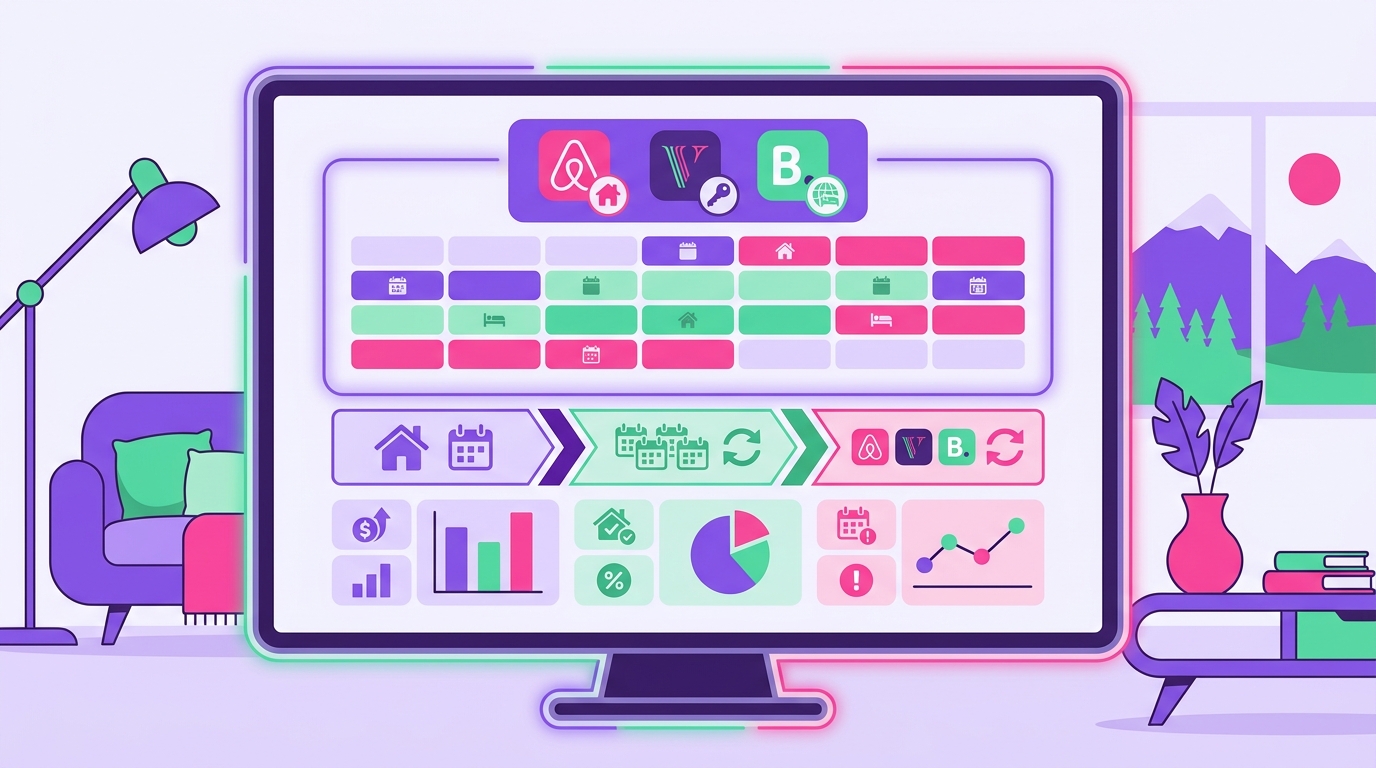
Both platforms automate guest messaging, but the implementation gap is wider than most comparison articles admit. Hostaway's automation engine is built around triggers, check-in time, booking confirmed, review request, and hosts can chain these into sequences. The problem is setup complexity: a host with 5 properties running different cleaning schedules, check-in types, and house rules across three channels needs to build separate automation trees for each configuration.
Mr. Props uses a portfolio-level automation approach, where rules apply across properties by default and exceptions get layered in. For a host managing a mix of urban apartments and a lakehouse, that means one messaging template handles 80% of cases and the exceptions get flagged rather than requiring a separate workflow from scratch.
Where Hostaway's Automation Pulls Ahead
Hostaway's trigger depth is genuinely stronger for edge cases. If a host needs to send different instructions based on whether a guest booked through Vrbo versus Airbnb, Hostaway can handle that natively. Mr. Props handles channel-specific messaging but with fewer conditional branches. For hosts running corporate travel bookings alongside leisure stays, that conditional logic matters, the guest experience for a 30-night business stay is not the same as a weekend trip.
- Hostaway supports nested automation conditions (if/then branching by channel, booking length, and guest type)
- Mr. Props handles standard trigger sequences across the full portfolio with simpler configuration
- Both platforms integrate with Zapier for custom automation where native options fall short
Reporting and Revenue Visibility
Hostaway's reporting dashboard covers occupancy rate, average daily rate, revenue by channel, and booking lead time. Those metrics are accurate. The limitation is that the reports are largely static, hosts can filter by date range and property, but building a custom view of, say, net revenue after cleaning costs and platform fees requires exporting to a spreadsheet.
Mr. Props builds expense tracking into the reporting layer, so net operating income per property is visible without a spreadsheet detour. For a host who pays a co-host 20% per booking and has variable cleaning costs by property type, seeing gross revenue versus net in the same view cuts an hour of monthly reconciliation.
The Reporting Ceiling for Growing Portfolios
Don't fire your property management accountant. Neither platform can handle a 20-unit portfolio with multiple ownership structures, because their net revenue reporting simply isn't the same as true tax-ready financial statements. : you're getting operational data, not GAAP-compliant accounting output that can generate a P&L for three different LLCs. It's why most hosts scaling past 15 units end up connecting their platform to QuickBooks or a dedicated STR accounting tool anyway.
| Reporting Feature | Hostaway | Mr. Props |
|---|---|---|
| Occupancy and ADR tracking | Yes | Yes |
| Revenue by channel | Yes | Yes |
| Expense and net revenue view | Export required | Native |
| Custom report builder | Limited | Limited |
| Owner statement generation | Yes (higher tiers) | Yes |
Onboarding: the Part Nobody Talks About Until It Goes Wrong
Hostaway's onboarding is structured and documented, there's a reason it's a default
Choice for Operators Who've Been Burned Before
Hostaway's onboarding follows a defined checklist: a kickoff call, a channel-by-channel setup sequence, and a dedicated implementation window that averages 2-3 weeks for portfolios under 20 units. The documentation is thorough. For hosts who've migrated platforms before and know what questions to ask, it works well.
Where it breaks down is speed. If a host is switching mid-season because their current tool is causing double-bookings or missed guest messages, a 3-week timeline isn't acceptable. Mr. Props targets a 5-7 business day activation for portfolios under 25 units, with channel connections validated before the host fully cuts over from their previous tool. That overlap period matters more than most hosts expect, running both systems in parallel for even 3 days catches edge cases that a clean cutover misses.
Hostaway's support tier during onboarding is also plan-dependent. Hosts on the entry-level pricing get guided documentation; live implementation support is a premium add-on. Mr. Props includes onboarding support at all plan levels, which is a meaningful difference for a 5-unit operator who doesn't have an operations manager to handle the transition independently.
Where Hostaway Still Has the Advantage
A feature comparison that doesn't acknowledge where Hostaway outperforms Mr. Props isn't useful to anyone making an actual decision.
API Integrations and Third-party Connections
Hostaway's integration library is larger. As of early 2026, it connects to over 100 third-party tools including noise monitoring systems, smart lock providers, and revenue management platforms like PriceLabs and Wheelhouse. Mr. Props covers the integrations that most hosts use daily, but if a host runs a tech-heavy operation with custom hardware at each property, Hostaway's integration depth is a real advantage, not a marketing claim.
Hosts managing furnished corporate rentals with keypad systems, noise sensors, and automated supply ordering will feel the gap. Mr. Props is actively expanding this layer, but today it doesn't match Hostaway's breadth in IoT and property-tech connections.
Enterprise-Level Portfolio Management
Above 50 units with multiple co-host arrangements, Hostaway's role and permission structure becomes relevant in ways that smaller operators rarely notice. Granular staff access controls, multi-owner reporting with separate logins, and API access for building custom internal tools are areas where Hostaway has invested significantly.
Mr. Props is built for operators running 1 to 40 units who want a platform that doesn't require a dedicated systems administrator to configure. Hosts who've grown past that range and need enterprise-grade permission architecture should weigh that honestly before switching.
Which Operator Profile Fits Each Platform
The honest answer isn't that one platform is objectively better, it's that they're built for different operator profiles at different stages.
| Operator Profile | Stronger Fit |
|---|---|
| 1-15 units, cost-sensitive, needs fast setup | Mr. Props |
| 15-50 units, needs broad third-party integrations | Hostaway |
| Growing portfolio, wants transparent per-unit pricing | Mr. Props |
| Tech-heavy properties with smart locks and noise monitors | Hostaway |
| Multi-owner structures above 50 units | Hostaway |
| Mid-term rentals needing native net revenue views |
How to Switch From Hostaway to Mr. Props
Switching platforms feels risky when you're managing active bookings across Airbnb, Vrbo, and Booking.com. Mr. Props removes that risk with a guided migration process that carries your listings, calendar data, and future reservations across without gaps or double-bookings.
What Moves Over
- Listings and photos from every connected channel, imported in bulk
- Future reservations and blocked dates, synced before your first live day
- Guest messaging templates and automated rules, rebuilt inside Mr. Props in minutes
Most hosts complete the full switch in under 48 hours. Your channels stay connected throughout, so no booking window goes dark during the move.
The migration team handles the technical side. You confirm, review, and go live.
Frequently Asked Questions About Switching
How Long Does It Take to Migrate From Hostaway to a Different Platform?
You can expect a full migration to take between 5 and 14 days. That's not so bad. Your core channel connections to Airbnb Vrbo and Booking.com will usually go live within 48 hours, getting your calendars synced and your listings visible. The real slog isn't the technical setup; it's painstakingly rebuilding your 25 custom message templates and all the little automation rules that save you time every day.
Will Switching Cause Calendar Gaps or Double Bookings During the Transition?
Only if you disconnect channels before the new platform is fully configured. The safe approach is to connect the new platform first, run both in parallel for 24 to 48 hours to confirm sync accuracy, then remove Hostaway's channel connections. Never disconnect first and connect second.
Do Hostaway Alternatives Typically Charge Setup or Onboarding Fees?
Guesty and Lodgify will hold your hand with dedicated onboarding support but it'll probably cost you a one-time fee depending on your tier. Then you've got platforms like Hospitable and OwnerRez. They're built for you to do it yourself, so they don't have a setup fee. Don't just assume, always ask if there's a setup cost before you sign, because a surprise $500 fee can easily wipe out the first three months of any subscription savings you thought you were getting.
What Integrations Should Hosts Verify Before Committing to a Hostaway Alternative?
Confirm native connections to your pricing tool (Wheelhouse, PriceLabs, or Beyond), your cleaning and turnover software, and your direct booking payment processor. A platform that covers your channels but breaks your pricing automation costs more than it saves.
Which Type of STR Operator is Best Suited to Stay on Hostaway Rather Than Switch?
Operators managing 20 or more units across multiple markets, with a dedicated ops team, get the most from Hostaway's depth. Hosts running under 10 properties who want fast setup and lower monthly spend will almost always find better value elsewhere.
Connect your listings and get a clear picture of what you're leaving on the table with your current platform.
Start Free Trial Book a DemoNo credit card required. Setup takes under 15 minutes.